Sleeping in a Tree House

It was dark, so dark that we couldn’t see anything beyond the truck’s headlights, only the faint outlines of the dam and Umlani’s tree house, our home for the night.
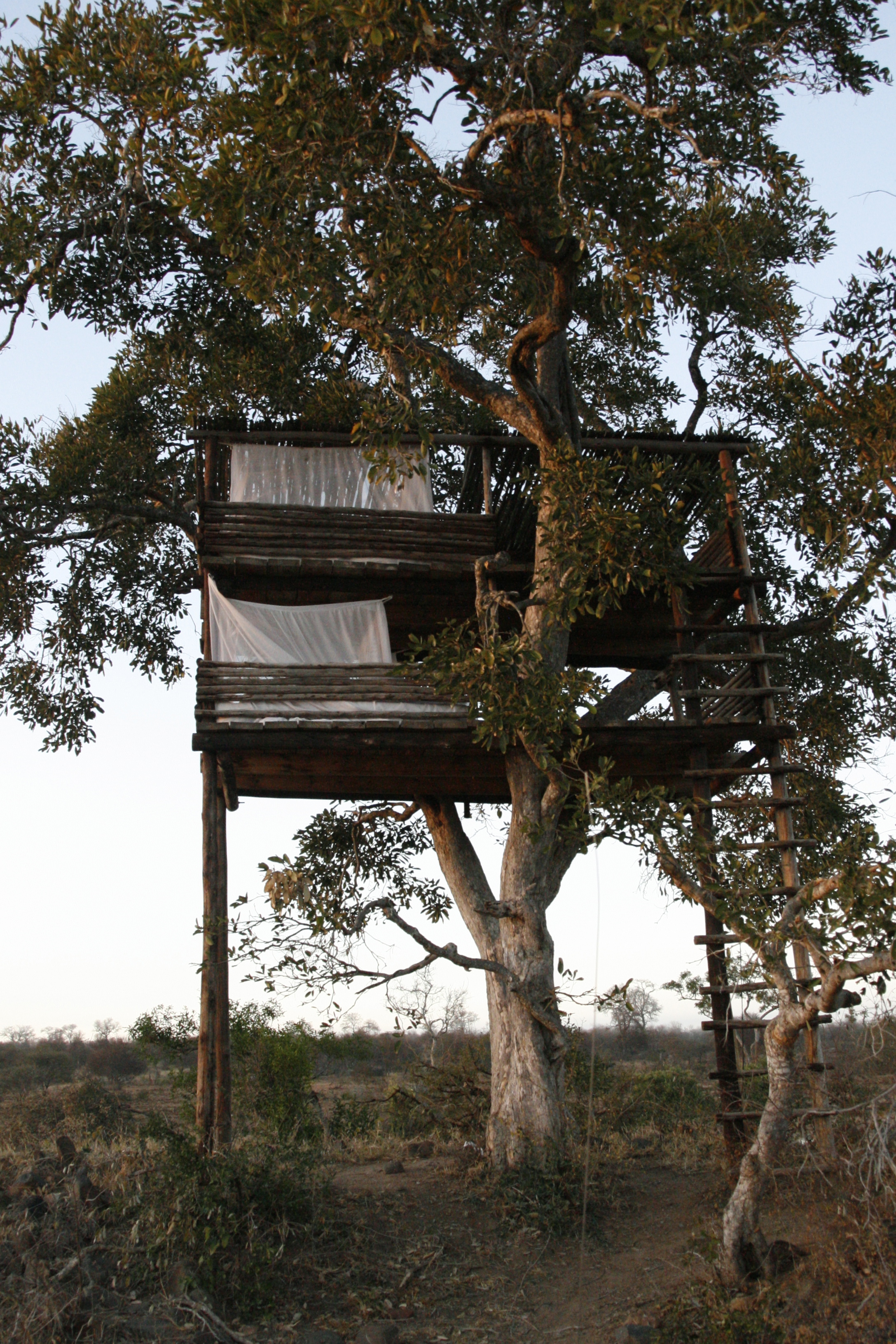
The moon had not yet risen, and the stars were not yet bright. Hendrick stopped the truck and scoped out the area first before he would let us out. He climbed up the tree house ladder and shone his big flashlight around the tree and the platform. When all was clear, he warned us, “Don’t leave the tree house. If you do, and a lion or a leopard is nearby, something bad could happen.” Hendrick’s tone was serious; he did not smile or joke. Equipping us with a radio and spot lamp, he waited while we climbed up the steep ladder; the girls to the first floor, boys to the second. Then he left, and the night was silent.
I sat on the wooden platform and listened and strained to see as my son pointed the spot light around the dam. Nothing but a flash of white. A bird on the water’s edge. I was scared of what I could not see or hear. Only hours earlier, in daylight and with a guide, we’d seen elephants at this very dam and lions not too far away. And rhinos, too, and cape buffalo and hyena. At least a half a mile from the lodge, we were out in the bush, in the Timbavati National Reserve in South Africa.

The moon rose, and we listened to the lions calling to each other across the bush, interrupted only by birds. I peered intently but could only see trees and bushes shadowed against the sky and the land. After an hour or so of watching and listening to the night’s blackness, we settled down to sleep on mattresses with sheets and comforters and pillows all enclosed in white mosquito netting. Or rather everyone else slept and slept well. I awoke at 1:30 a.m. and listened and peered through the tree house boards at the sky. I crawled out from under the netting and sat on the wooden floor but only for a moment, before I crept back to the false security of my enclosed bed.
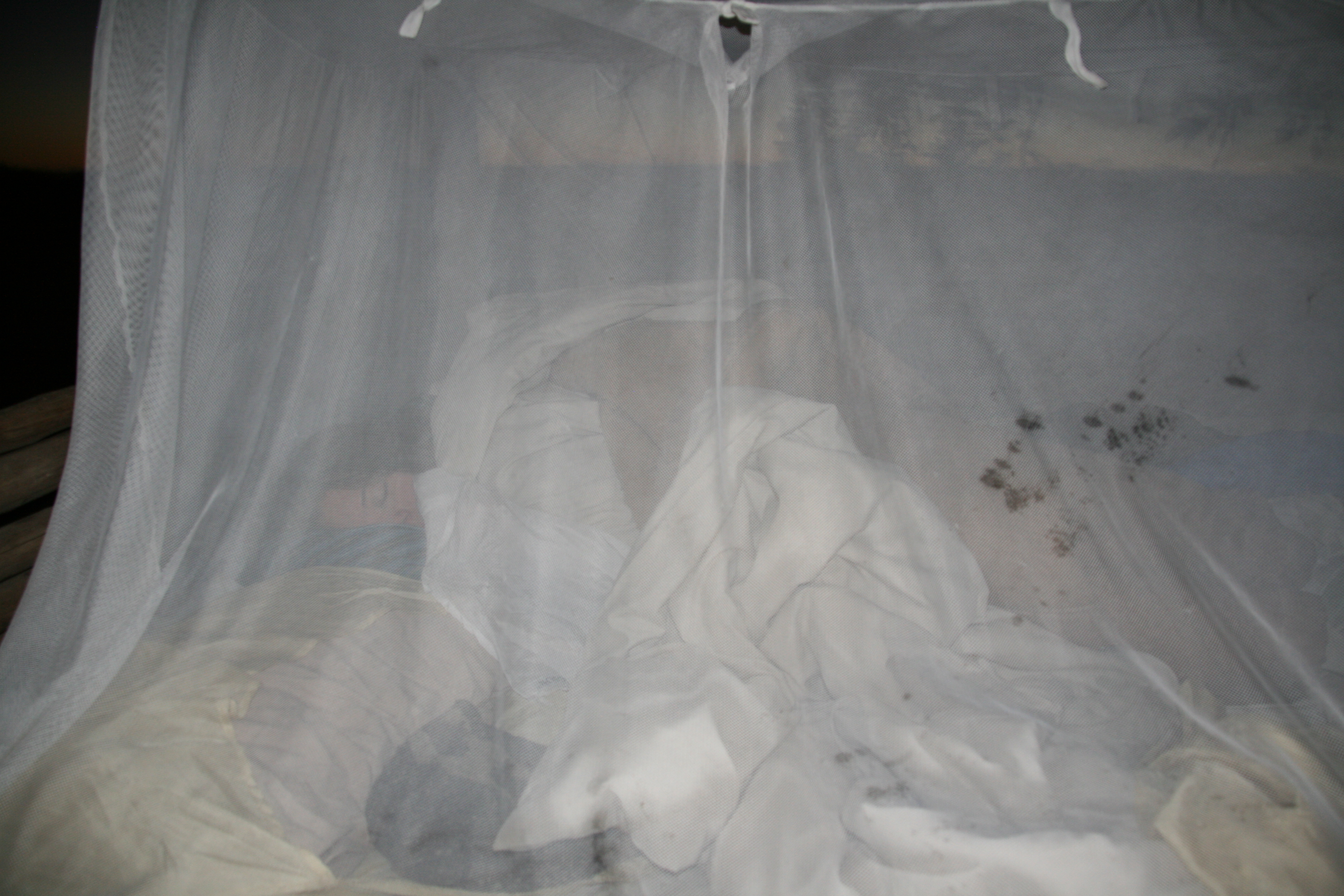
Two hours later I awoke again, this time determined not to miss a sound or a sight. Wrapping myself in a blanket, I sat outside my bed and watched and listened. Not seeing anything and hearing only the piercing calls of the birds, I wished then that our guide was with us, to identify the sounds of the night. I listened and reveled in the experience, my eyes wide open.
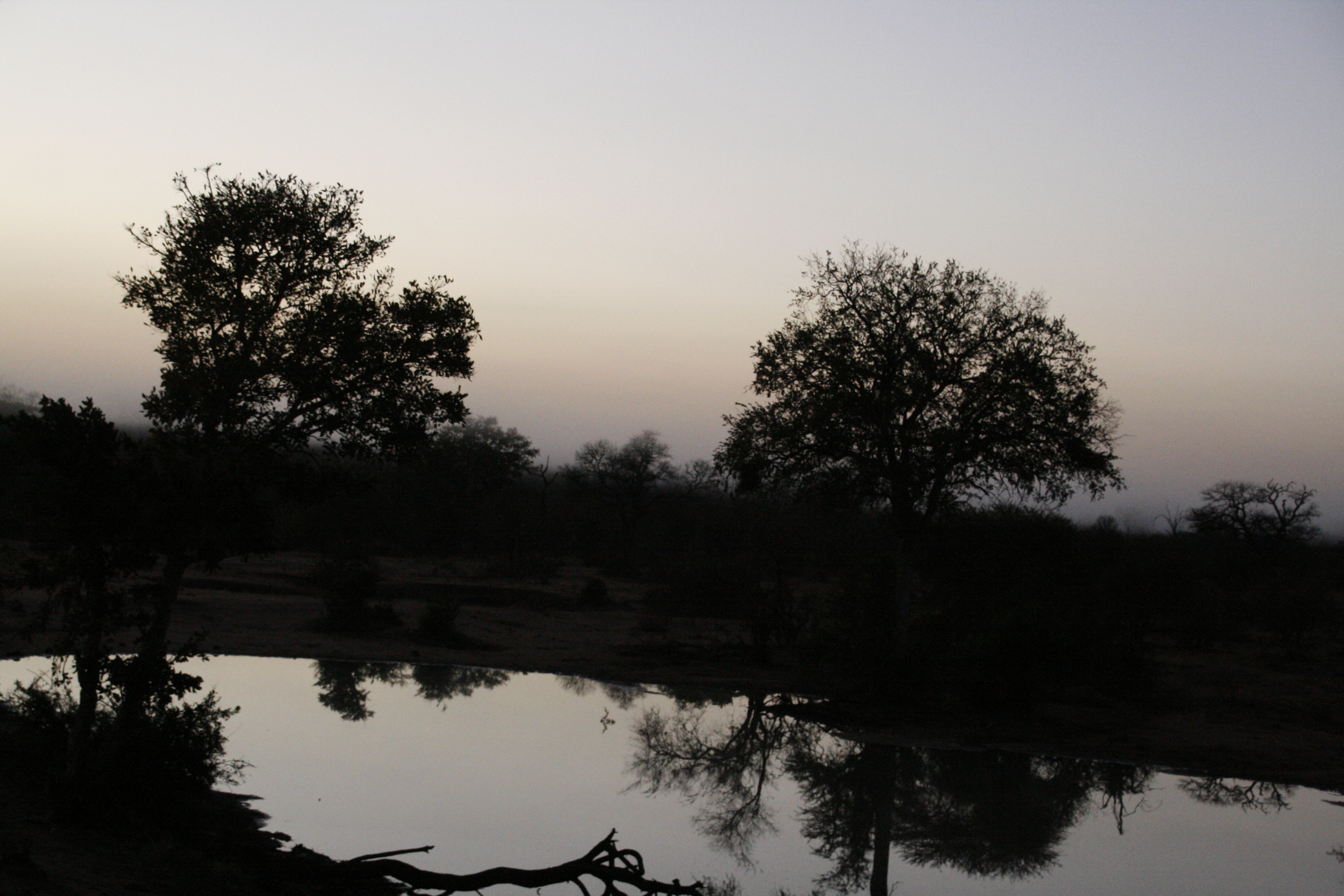
When I woke my sleeping family just before sunrise, my daughter said in surprise, “We made it!” The four of us watched the bush reappear in the rising sun’s light, eventually hearing the sounds of the truck coming to pick us up.

Moses, our ranger called up to us, “Hurry, the lions are nearby.” We grabbed our things and scurried down the ladder, eager to begin another safari.

Trip taken in August  2011.

Lions at Night

Back from another game drive, I warmed my hands on a mug of tea. Others were drinking wine; the kids, hot chocolate. We sat around a fire in a boma or enclosure, waiting for dinner to be served at the game lodge.

Conversation was interrupted as the land rovers returned. The lions were on the hunt. Would we mind being late for dinner? Adrenaline rushing, I left my drink behind, ran to the trucks and hopped on the one in front. I covered my lap with a wool blanket as others clambered aboard with me. As we drove away, I saw the rest of my family in the truck behind.

The drive was fast and brief, the lions were near the rangers’ camp. We stopped short, and as our driver, Ginger, shone the spotlight around the bush, we saw only the hunt’s aftermath, a hyena hanging out; a lion licking its paws, bloody from the cape buffalo who got away; a few cubs playfully running in the dark.

Our hearts pounding, we returned to the lodge, wishing for more, but happy with the thrill. As I jumped off the truck and began walking into the boma, I was stopped. Rhinos were spotted in camp while we were gone. I needed a chaperone and a flashlight.

Escorted to our hut, we grabbed what we needed then headed back for dinner, hearing the sounds of hyenas on our way. Exhilarated, we sat on benches around big tables, sharing food and wine with guests from Australia and London and locals who work at the lodge. Laughter and stories were easy that night, and we slept well, ready for another day of adventure on safari.

Photos on this post by Tommy Taft on trip taken in August 2011.

Rhinos in South Africa

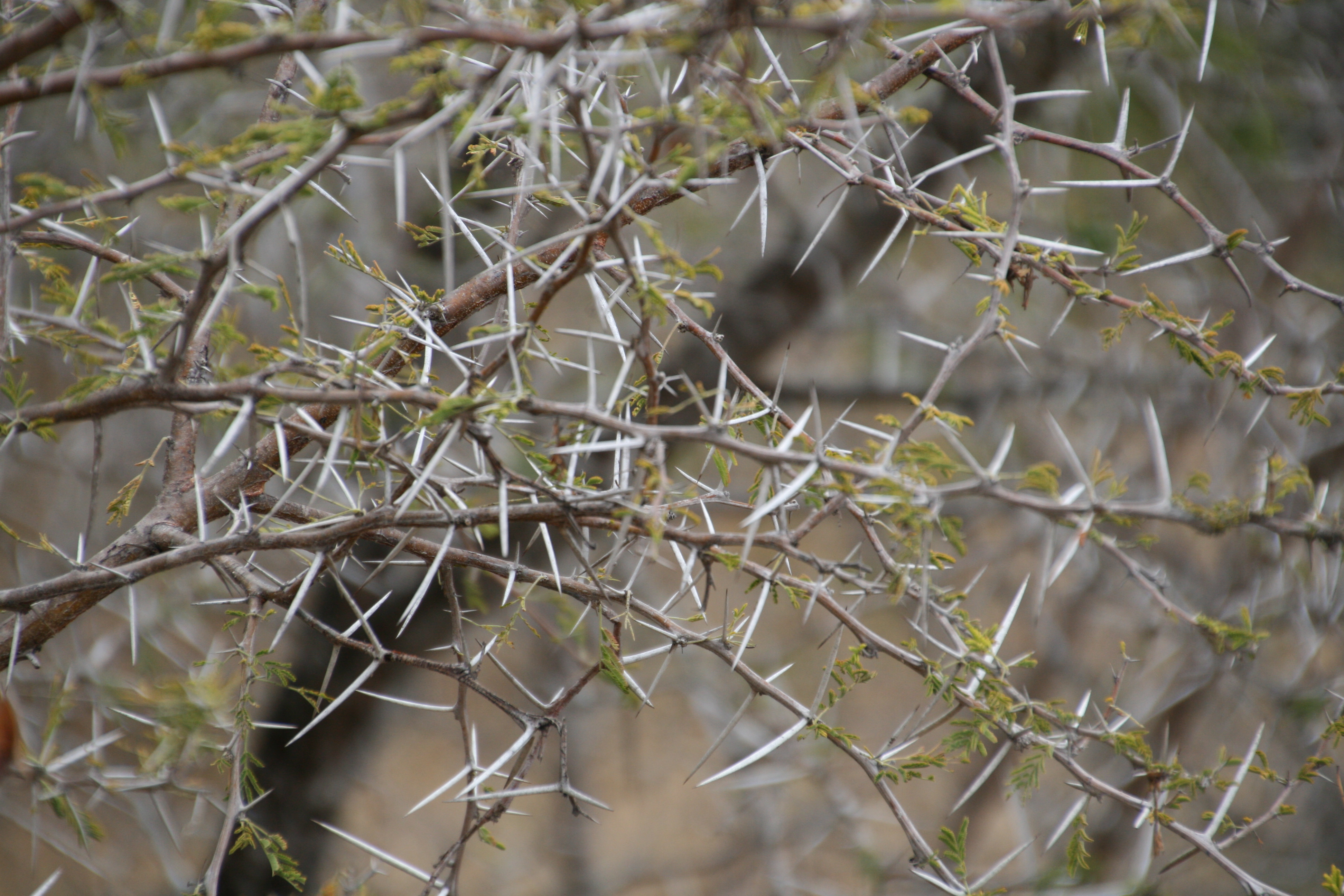
Our first guided game drive in the Timbavati Game Reserve in South Africa was one of the most exciting, heart-pounding, white-knuckle adventures I’ve been on. More exhilarating than a roller coaster ride, our ranger took us off road and into the bush. We drove over and through thorn covered acacia trees, ducking our heads or leaning to one side to avoid being scratched. We held on to the bar in front of us as we were bumped and jostled. We were hunting rhinos, one of the “big five,” the most sought after animals of Africa.

When the ranger asked us if we wanted to track the rhinos on foot, I said, “Yes!”  We walked then drove again, spotting the rhinos and driving crazily to catch them from the front instead of from behind. Then back in the land rover, driving quickly, turning sharply, ducking and searching, the adults skittish with one of their babies nearby.

The ranger stopped the truck, and we watched; no talking, just listening and taking photos of their broad dark grey backsides with an occasional profile, amazed by the proximity of these prehistoric animals.

“Did you kill any rhinos?” My friend back in the U.S. asked me, a twinkle in his eye. “No,” I replied. “But we shot a lot, and we have the photos to prove it.”

To learn about the current status of rhinos in South Africa, read the article “Rhino Wars” in the March 2012 issue of “National Geographic” or listen to an interview with the author, Peter Gwin here.  To read about or listen to Namibia’s approach to saving wildlife and communal conservancies, click here.

Trip taken in August 2011.

Elephants!

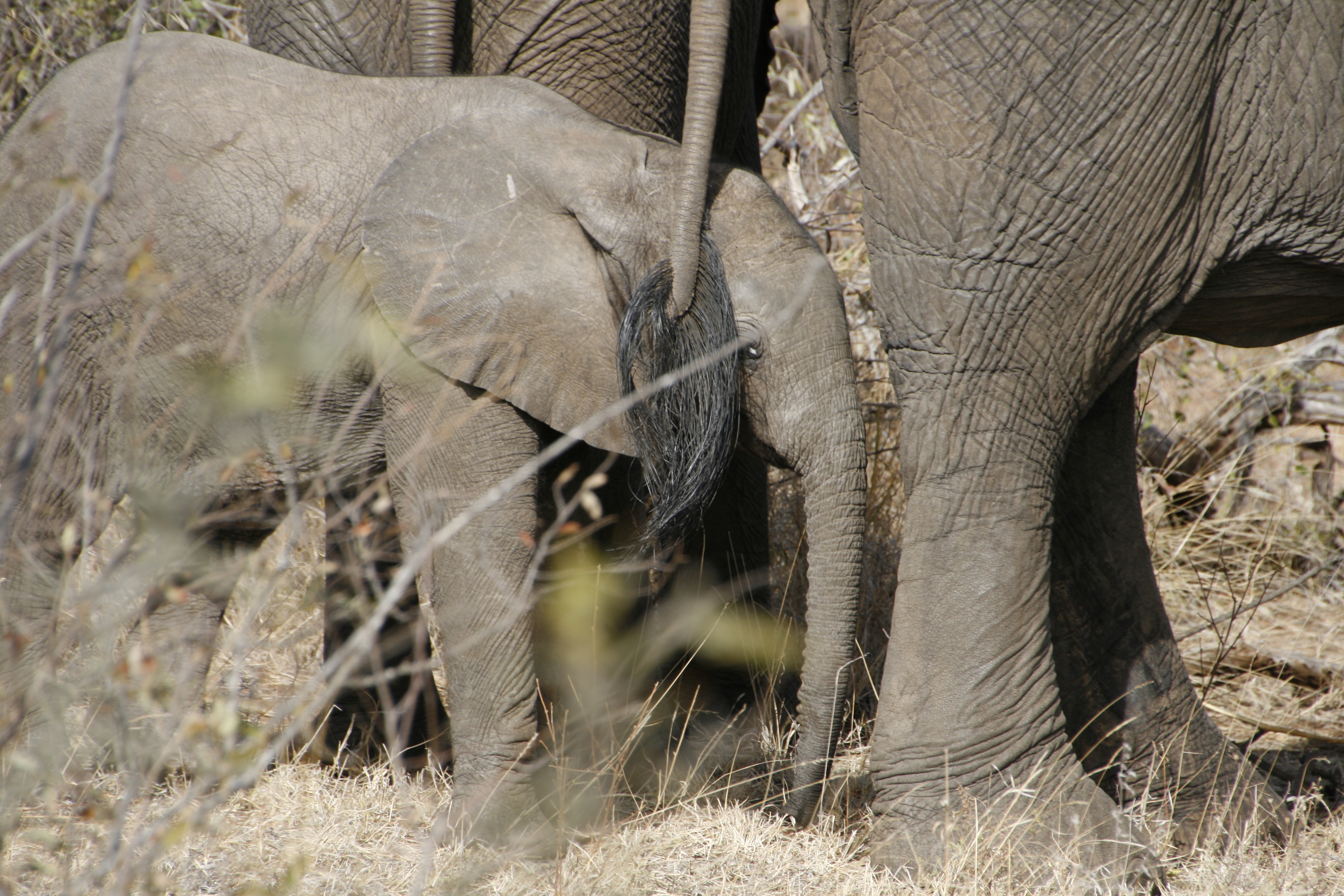
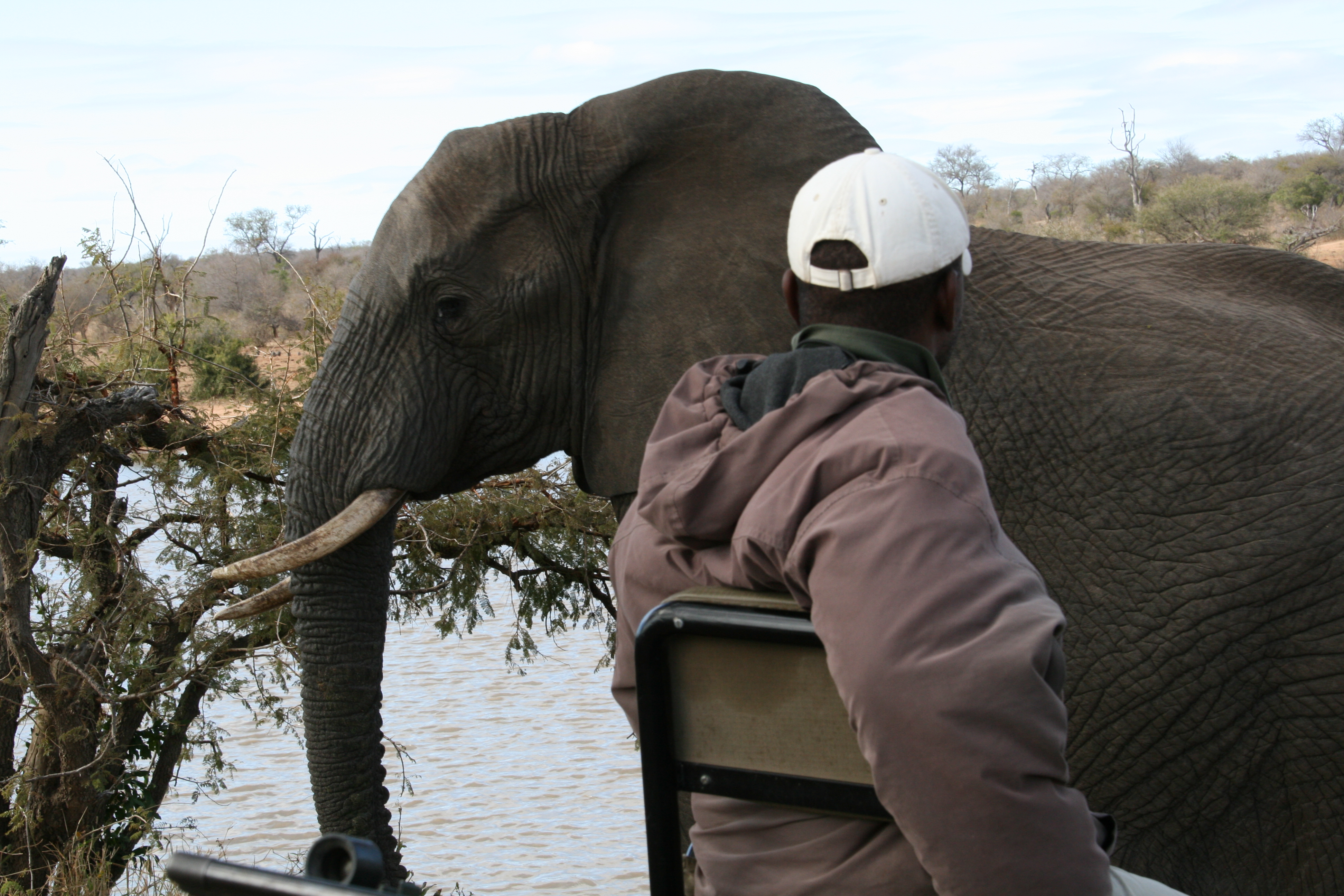
Elephants! Big and grey with small eyes and long eyelashes, wrinkled skin and large ears, trunks swaying, they drank the water and ate the bushes, the young ones playing with each other, the even younger ones nursing or following their moms.

We were on a game drive, searching for the Big Five. We’d found one.

I sat still, my eyes big, watching these powerful animals lumber toward us, grazing the side of our game vehicle, unthreatened, unthreatening, except for the mock charge by one of the young elephants who seemed to scare only himself.

Eating in NYC (Gluten Free!)

In New York City, we all ate well, and the gluten eaters were as satisfied as the gluten-free eater. We ate crepes, bread sticks and pizza, panini and Reuben sandwiches, macaroni and cheese, French fries, cupcakes and cheesecake, and all were gluten free.

Risotteria in Greenwich Village for dinner:  What celiac wouldn’t love a place where the bread sticks are gluten free? We shared so much pizza and panini that we were too full to try any of the gluten-free desserts.

Crepes in Chelsea Market for breakfast: Ask for the gluten-free crepes at Bar Suzette. Made with lentil and rice flour, the crepes are delicious with Nutella and strawberries.

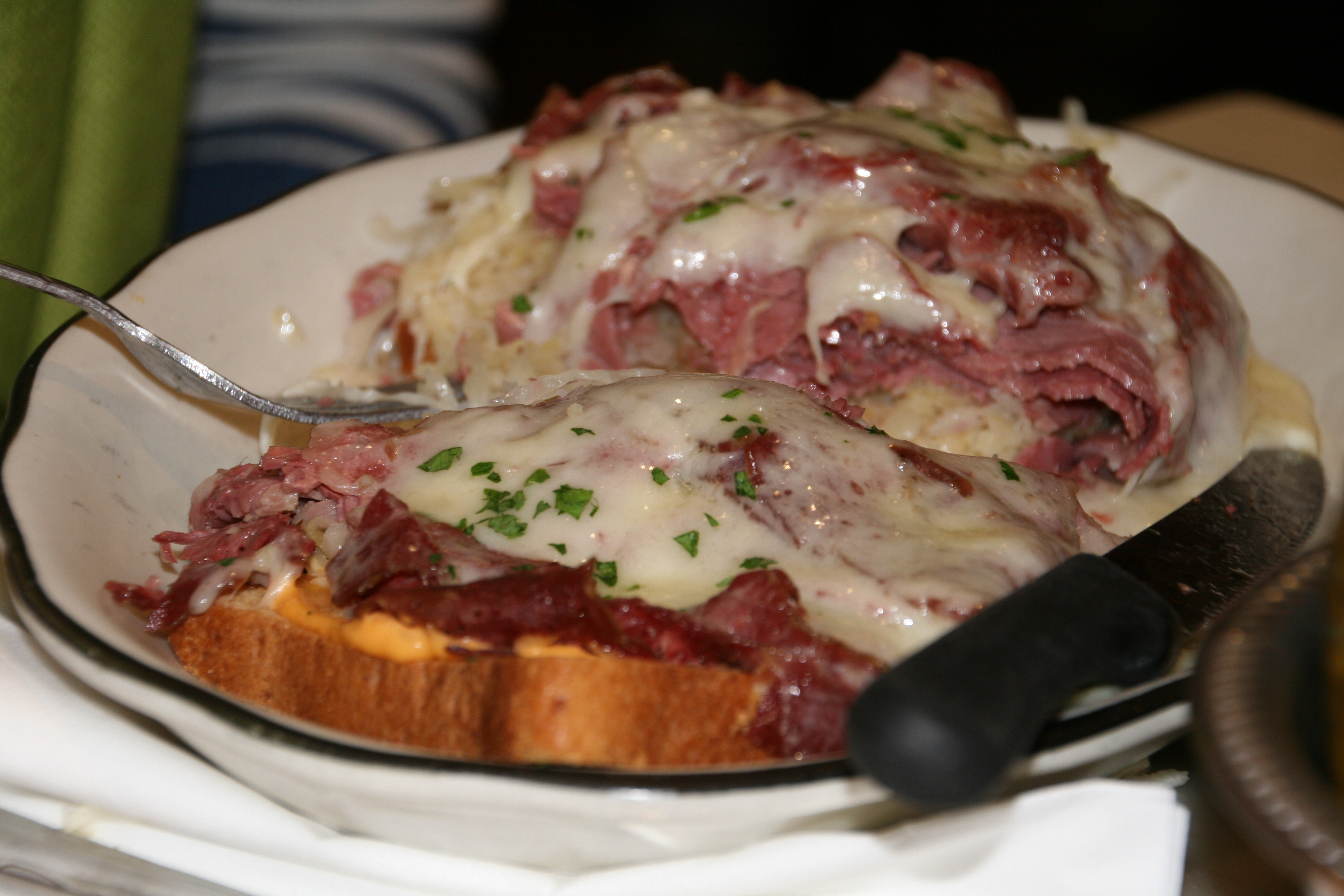
Lunch at a New York Deli: The gluten-free Reuben sandwich at Bloom’s Deli was piled so high with corned beef, my daughter could eat less than half at one sitting. We brought the rest back to our hotel fridge.

Dinner on the Upper East Side: Another deli, we ate this time at Peters’ Restaurant where everything can be made gluten free except for a few items marked with an x (e.g., wraps, focaccia, bagels). While some of us ate pasta and Greek chicken, our gluten-free diner chose meatloaf and French fries.

Macaroni and cheese in the East Village: S’Mac cooks up a variety of macaroni and cheese options though we all chose the gluten-free pasta so we could share and sample the different flavors we chose (spinach, olives, garlic and goat cheese; Manchego cheese, fennel and onions; Gruyere and bacon). S’Mac offers regular elbow macaroni as well as whole wheat and rice pasta. You can eat vegan there, too.

Cupcakes: We tried two gluten-free cupcake establishments, both located on the Lower East Side. Most everything (banana bread, cupcakes, brownies) at Babycakes is not only gluten-free but vegan as well. They also offer a few baked goods made with spelt flour. Tu-Lu’s Gluten-Free Bakery, a few blocks away, caters to those looking for the gluten-free not so healthy but delicious alternative. And when the gluten eaters elected to imbibe at Magnolia Bakery on Fifth Avenue (which is NOT gluten free), my daughter was happy with a Klondike bar bought at a market down the street.

Our only disappointment was trekking across town for gluten-free bagels at Vic’s Bagel Bar on 36th Street and 3rd Avenue, only to discover that they had none that day. Another day, we called and they were all out. So, if you want to check out this place, be sure to call and to show up early. They only make one batch of gluten-free bagels first thing each morning before making the regular bagels.

New York, Two Teens, Three and a Half Days

With all its lights and energy, shows, museums, restaurants, and tours, New York City will stimulate and entertain even the most disinterested of teenagers. Here’s how we spent a few action packed days during February break in New York City.

Day 1: Arrival in NYC, NBC Studios Tour, Dinner in Greenwich Village, Walk through Times Square.

After an early check in at our hotel, we walked a few blocks to Rockefeller Center for a tour of NBC Studios. The highlight – seeing the Saturday Night Live set and learning how much of what we see on TV is an illusion. Dinner in Greenwich Village followed by an after dinner stroll through Times Square and a visit to Apple’s flagship store on Fifth Avenue.

Day 2: Chelsea Market, High Line Park, Lunch at a New York Deli. Broadway Matinee, Dinner on Fifth Avenue.

After energizing ourselves with lattes from Ninth Street Espresso and crepes at Bar Suzette in Chelsea Market, we walked the High Line. The High Line is an elevated railroad bed turned into park and walking path along the lower west side of New York. Instead of walking on the streets between the buildings, we walked above or among them, seeing the city from a different perspective.  Lunch was consumed at a deli before a 2 p.m. Broadway show (“Wicked”). Dinner was followed by cupcakes at Magnolia Bakery.

Day 3: Liberty and Ellis Islands, 9/11 Memorial, Tenement Museum, Dinner on the Upper East Side.

After going through airport-like security, we boarded the 9:30 a.m. ferry to Liberty and Ellis Islands (buy your tickets in advance and arrive plenty of time before departure). Although the Statue of Liberty is closed for renovations, we were able to walk around Liberty Island while listening to an audio tour and learning why the French gave the U.S. her gift. On Ellis Island, our audio tour taught us about the many trials and tribulations of immigrants arriving in New York during the first part of the 20th century.

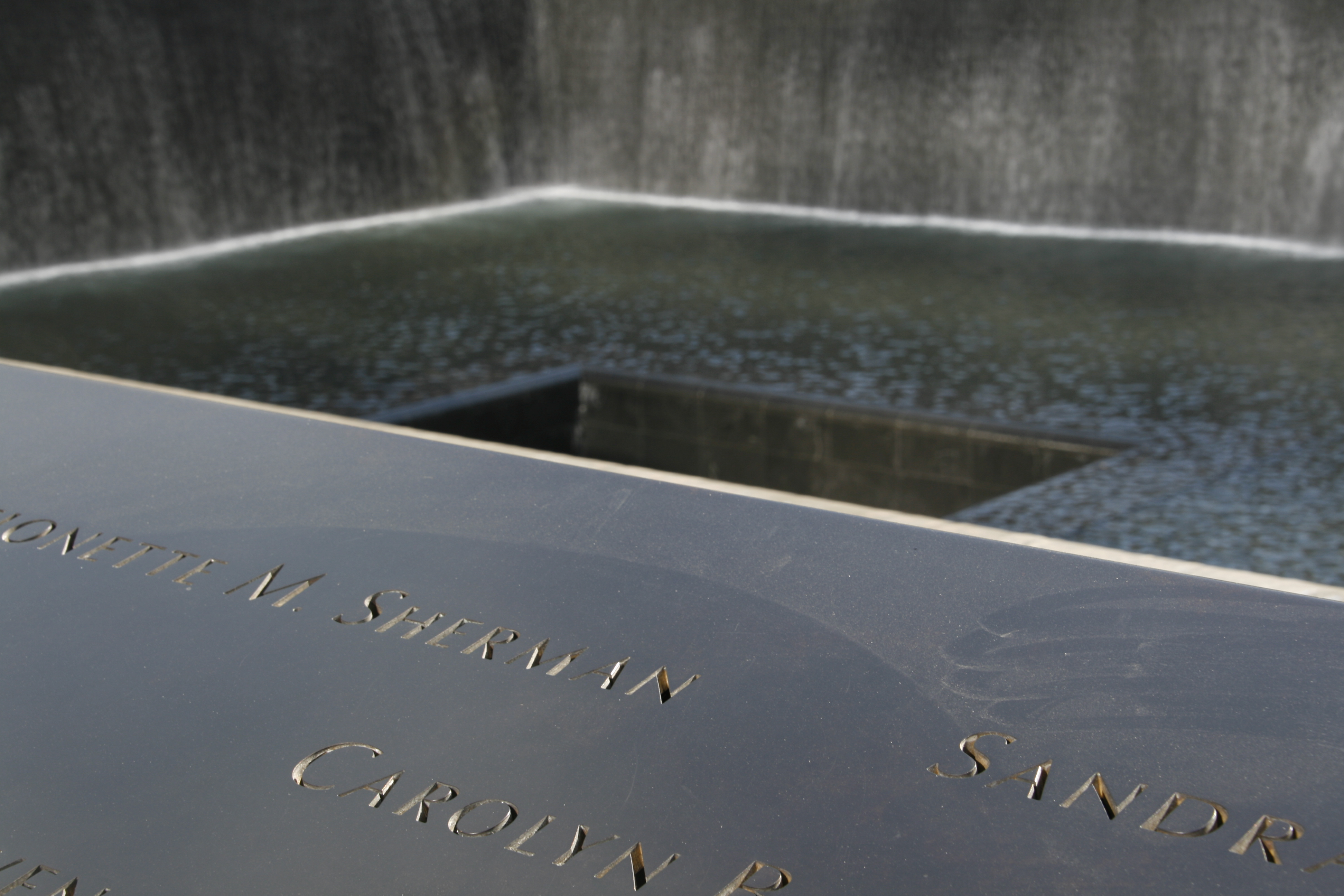
Back to Manhattan, snacks from a street vendor and a quick walk to the 9/11 Memorial (tickets are free but must be reserved in advance) where we waited in line to remember and to reflect.

Later at the Lower East Side Tenement Museum, our engaging tour guide took us into the apartments of a family who lived in the building during the 1870s and another family who lived in the building during the Great Depression.

Day 4: Museum of Modern Art, Tour of the UN, Dinner on the Lower East Side.

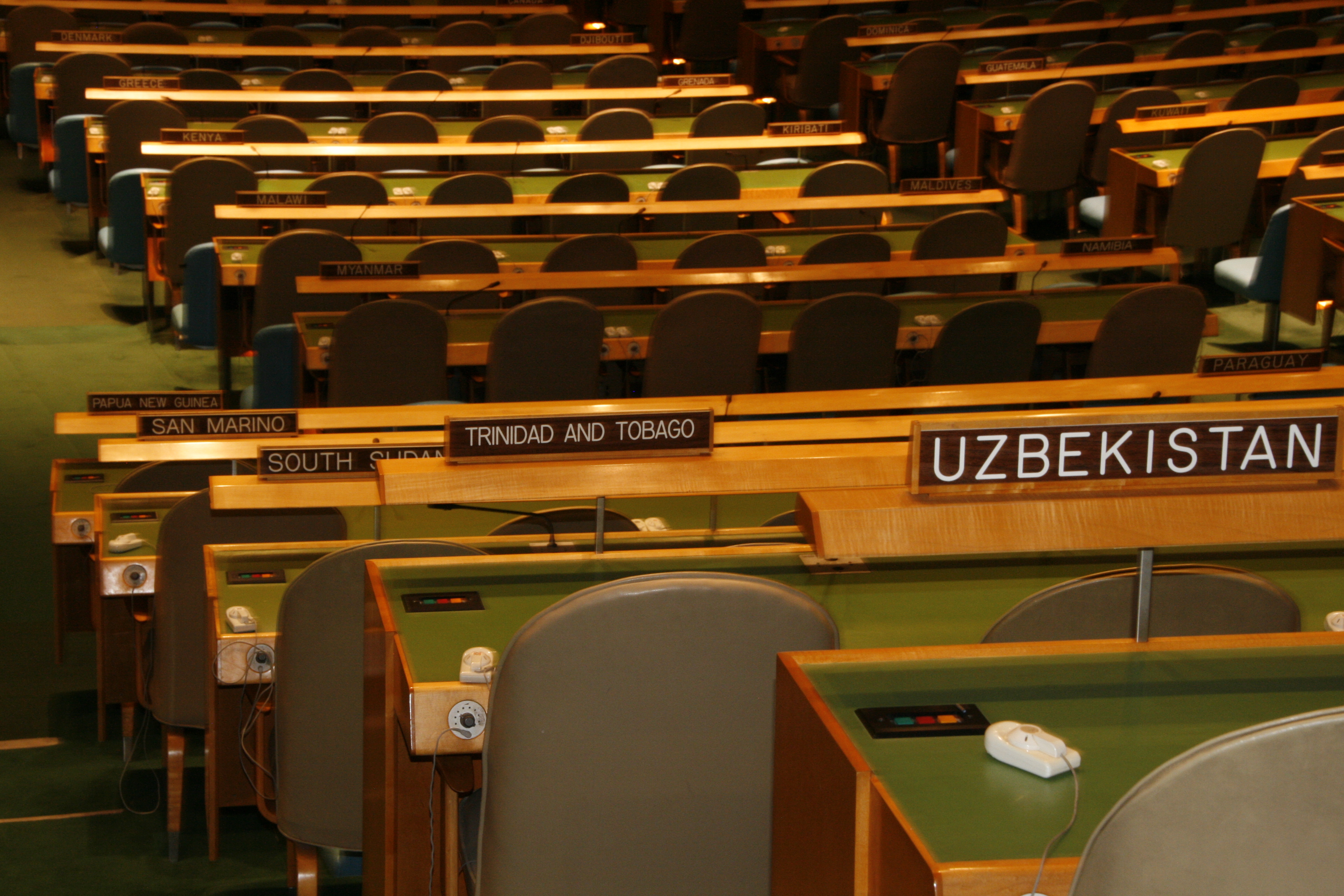
After a leisurely morning and late breakfast, we headed to the Museum of Modern Art (MOMA), a short walk from our hotel. We took another audio tour (this one was free with admission) and browsed art by Monet, Picasso, Chagall, Rousseau, Cezanne, Matisse and many others, learning about a few of the artists’ techniques and inspirations and pondering what actually makes art. Then across town to the United Nations Headquarters where our tour guide, a young man from Peru, took us into the Security Council Chamber and the General Assembly Hall. Fascinating for all of us but especially for my kids, who both participated in Model UN during middle school. After a quick dinner, we headed home to our small town a few hours away, happy but exhausted from a few days in the Big City.

Getting there. Whether you fly, take the train, bus or drive yourself, allow plenty of time to acclimate to the hustle and bustle once you arrive before any scheduled tickets or tours. We found a great online deal and parked for $16 per day in a garage on 38th and 1st, much better than the $56 a day our hotel was offering. For parking deals before you arrive, check out Trip Advisor’s parking website guide.

Staying there:  Staying in NYC is not cheap, but there are many options and many promotions or deals. This trip we stayed at the Marriott Residence Inn, only a short walk to Times Square. The hotel’s price included two bedrooms, a sitting area and kitchenette plus a large buffet breakfast.

Trip taken February 2012.

Gluten Free on Safari

When I made reservations to stay at Umlani Bush Camp in South Africa, I told them my daughter had celiac disease and was on a gluten-free diet. “Not a problem,” I was told. “We’ve had several guests who eat gluten free.” So I relaxed a bit, knowing that Umlani was one of our last stops at the end of a 4-week trip.

Arriving at Umlani just in time for lunch, I was apprehensive, wondering what she would eat for the next 3 days. The light lunch was anything but: butternut squash and sweet potato soup with fresh bread, salad, pasta with sundried tomatoes, chicken and artichoke hearts in a creamy sauce, and cheese and chutney for dessert. The soup was gluten free but not the bread and not the pasta. Then the owner appeared with a small dish of gluten-free pasta made just for her.

Before the animal game drives, while everyone congregated in the boma for wheat rusks and coffee, my daughter drank the hot chocolate (after verifying that it was gluten free) and skipped the rusks or brought her own, bought in a supermarket near Kruger National Park.

At breakfast, she ate eggs, tomato, bacon, and fresh fruit and gluten-free muffins baked especially for her. When lunch included spring rolls for the rest of us, the chef cooked the spring roll ingredients in eggs and served it without the skin. When lunch included lasagna, a gluten-free potato version was offered instead. Sundowners (a stop for a cocktail in the bush as the sun was setting) included potato chips and biltong (which she avoided, just in case) and Appletisers or Grapetisers for the kids.

Dinners included pork on skewers with pineapple and apricots, vegetables and potatoes and salad; impala stew with veggies, polenta and salad, strawberries and cream for dessert; and chicken (made without bread crumbs for the gluten-free eaters), risotto, veggies and salad.

Eating gluten free was easy and delicious at Umlani. At no time did my daughter feel deprived. At no time did she feel nauseous or sick. Instead, she ate well like the rest of us, and maybe even gained a little weight.

Trip taken 2011.

Where Is the Man on the Moon?

At the end of a quiet road in Hobart, Tazmania, I waited outside the phone booth while my friend called home thousands of miles away. The night was dark except for the moon and as I gazed up, I wondered what was missing. The moon was full and round and bright, but it looked different. There was no face. The man on the moon was gone.

“You don’t have a man on the moon!” my friend and I exclaimed, breathless and incredulous. “Oh yes, we do!” the hostel’s caretaker replied, laughing. Though we tried to describe the different moon we see in the Northern Hemisphere, his tone was placating, like those of the other Aussie guests in the hostel.

Since that trip to Australia, I’ve wondered if my friend and I imagined the different moon we described. Now many years later in South Africa, the moon was full, and it was time to find out.

My family and I scanned the sky, straining our eyes while searching for constellations and shooting stars. While others oohed and awed at meteors moving across the Milky Way, I focused on the moon.

From the deck of the lodge, I watched as the moon rose above the savannah, a yellow orange orb twinkling in the dark sky. Just as I remembered, there was no face; no eyes, no nose and no open mouth. I pointed to the moon. “There is no man on the moon,” I said to the Australians and South Africans around me. They laughed, but I knew what they didn’t. Just south of the equator, where Orion and the Southern Cross punctuate the sky, but the Big Dipper and the Northern Star are nowhere to be found, the moon looks different. In South Africa, the moon has no face. There is no man on the moon.

Unfortunately, none of us took any photos of the full moon. The photo below was taken by Tommy Taft 2 weeks before on the Wild Coast of South Africa.

Monkeys vs. Squirrels

Brown and gray and furry, they grasp small things with their human-like hands, stopping on their haunches to chew. They’re cute and resourceful, nimble and mischievous and in almost everyone’s backyards. In the U.S. we have squirrels and raccoons, but in South Africa they have monkeys and baboons.

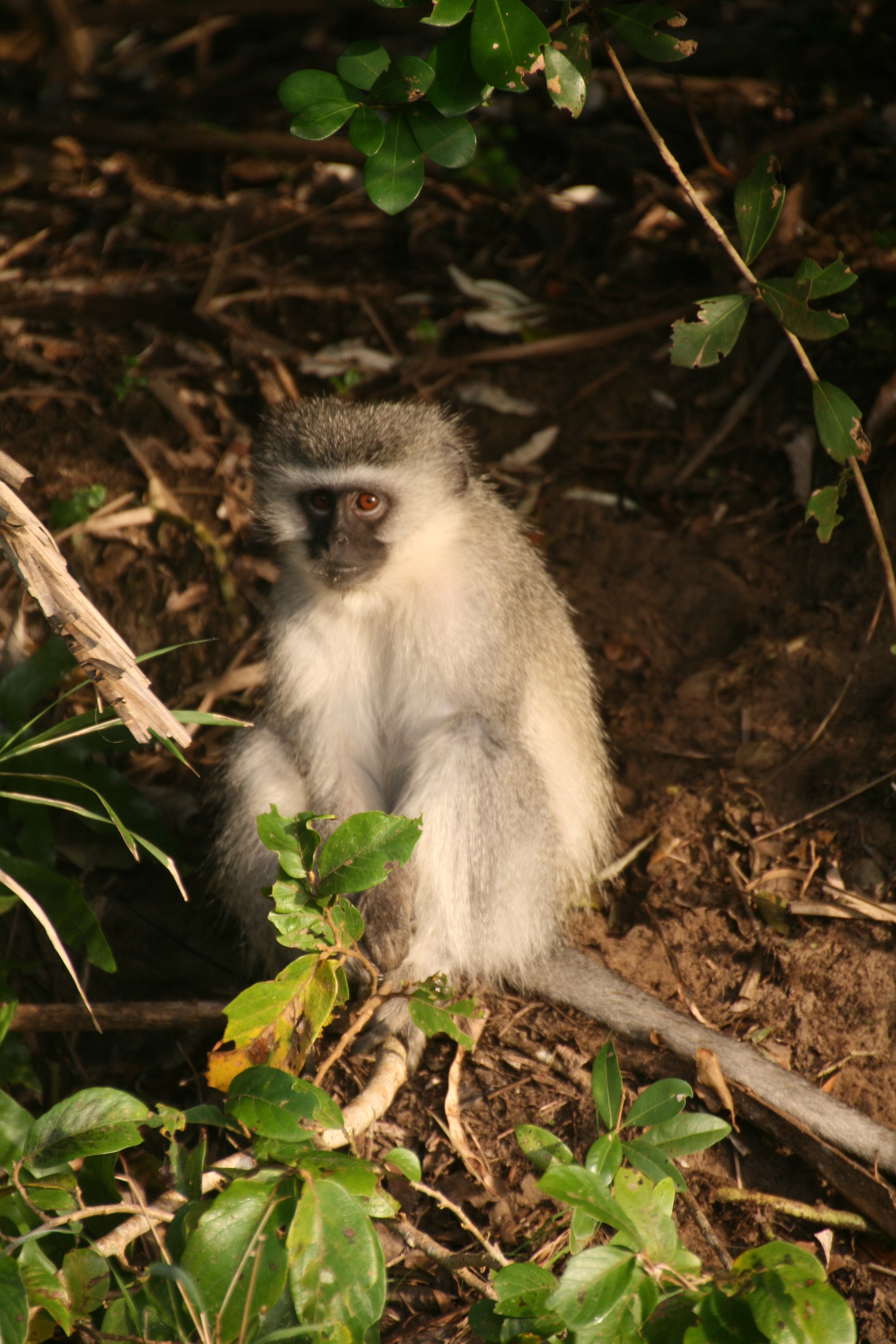
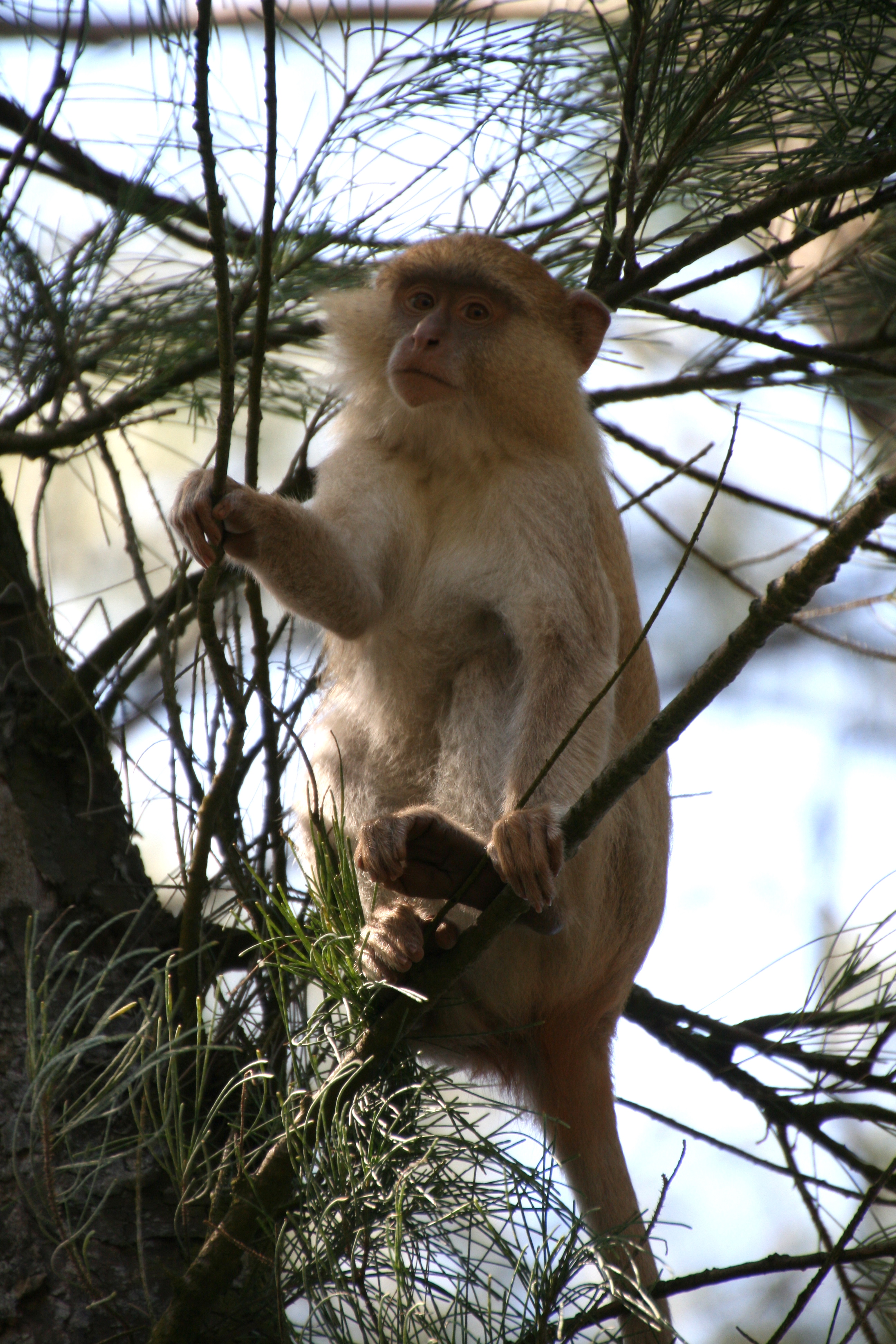
When we visited Cape Point and Cape Vidal, we saw evidence of the nuisances they have become: signs posted, “Beware of baboons” and “Don’t feed the monkeys.” We watched a woman feeding the monkeys in St. Lucia and took photographs of their innocent looking faces in the trees.

In Durban, we discovered how much more trouble these animals can be. As our friend and host drove home one afternoon, she noticed several monkeys carrying food as they loped along her driveway. Inside, the kitchen was a mess. A bowl of fruit was eaten, bread and cookies left on the counter nibbled, stolen, or devoured. Her son was home sick, a window was left open, the house was too quiet and the monkeys, ever the opportunists, jumped in. When was the last time you had a squirrel in your house?

In Kruger National Park, we were warned. Garbage can lids were held together with rubber bands and signs were posted, but scattered garbage was everywhere, indicating the park rangers’ ploys were not working. Yet we were still surprised at the aggressive behavior of these “cute” animals. While enjoying breakfast on the deck of our tent cabin one morning, a monkey appeared on the railing ready to pounce on our food. We yelled, and he hissed with bold animosity. We scurried inside the tent and heard his feet running along the canvas roof.

We met Australians a few days later who reminisced about the cute squirrels they’d seen while visiting the States. The cuteness level seems to increase with the unknown, the unusual versus the usual, the uniqueness versus the common.

Though fighting with squirrels can become quite a sport, as bird lovers try to outsmart the squirrels from stealing food from their bird feeders, and raccoons may raid a garbage can, visiting the monkeys helped me appreciate my neighbors back home.

Soweto Gospel Choir in Boston

Six months ago we were in South Africa, and two weeks ago we were there again, as we watched and listened to the Soweto Gospel Choir in Boston’s Symphony Hall on February 12.

The New England audience was staid at first, barely swaying or tapping to the beat as the choir sang and moved in brightly colored costumes to the syncopation of two djembe drums at stage left. Their voices blended and melded as the 15 or so men and women sang traditional African songs as well as more contemporary American spirituals including, “Shosholoza,” “Bridge Over Troubled Water,” “Many Rivers to Cross,” and “Swing Low.”

By the middle of the second act, the almost full house was rid of any inhibitions and the audience was standing, clapping and waving their arms as the dancers jumped, flipped and kicked, the drummers beated, the singers crooned and trilled, the choir harmonized.  As the music slowed, the audience swayed to the sensual sounds and lyrics of “Arms of an Angel,” a performance which inspired its own standing ovation.

With a tribute to Miriam Makeba, the choir ended the second act with “Pata Pata” bringing the audience to their feet, its clapping ceasing only when the drums and the melodies began again for two encores.

Since the Soweto Gospel Choir was formed in 2002 to celebrate inspirational African gospel music, the group has won three Grammy awards for their albums “Blessed” and “African Spirit” and for Best Movie Song “Down to Earth,” from the movie “Wall-E,” a collaboration with Peter Gabriel. The choir has performed all over the world for various dignitaries and with many leading performers.

Photo from artpropelled.blogspot.com.