When National Parks Become Monopoly Properties

Before our kids could read, they could play Monopoly. Recognizing the properties by their colors and learning to count the money, they loved to play, especially my oldest, quickly learning to bargain with other players and create his own monopolies.

We never played the Monopoly Junior version. Instead, we played National Parks Monopoly, where Yosemite replaces Park Place and Yellowstone takes over the Boardwalk.

With my canoe, bear, tent, or ranger hat token, I traveled around the board, from national park to trail to national monument, paying $75 to eat dinner at Yosemite’s Ahwahnee Lodge or becoming park ranger of the year. Although equivalent to the least expensive dark purple properties, I couldn’t resist buying Mount Rushmore, but I always hoped to be the first to land on the magenta properties of Hawaii Volcanoes, the Grand Canyon, and Glacier Bay.

Monopoly

Playing National Parks Monopoly is always an adventure. Once I stepped on a cactus at Saguaro National Park. Another time I got caught looting an archaeological dig and had to go to jail. But when I discovered fossils at Agate Fossil Beds, I got out of jail free.

So when our family was planning a drive from Colorado to South Dakota, we were excited to find Agate Fossil Beds National Monument, one of the red properties on our Monopoly game, located in the northwest corner of Nebraska. With only a slight detour, we spent a morning exploring the park.

Agate Fossil Beds

When we returned from our trip, we played the game with a renewed interest.
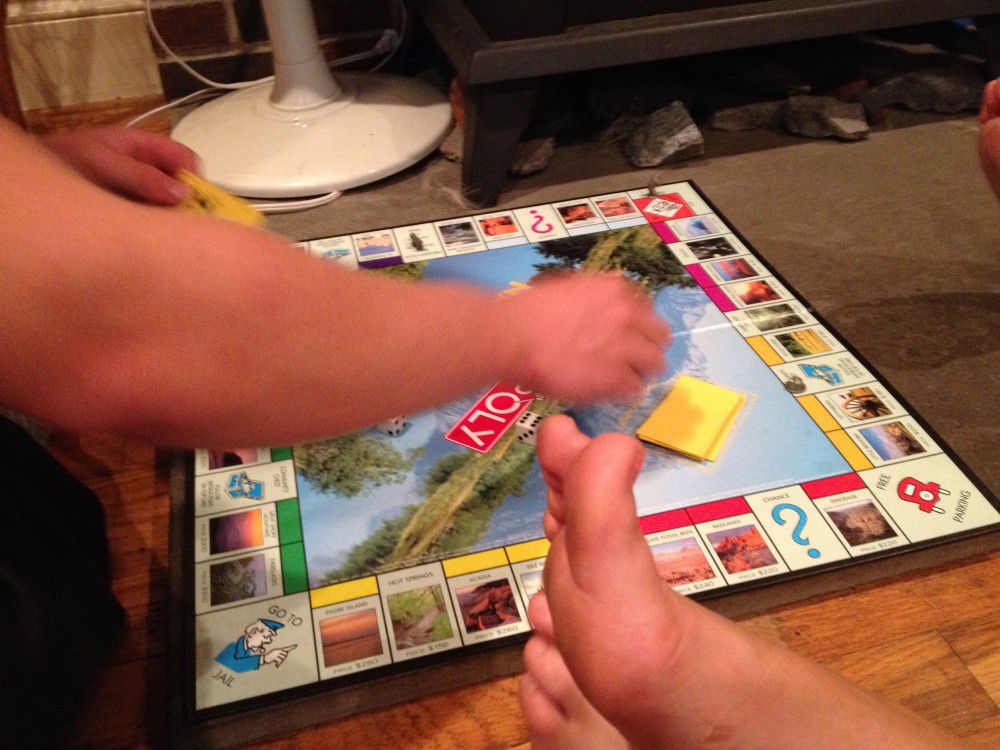
Playing  Monopoloy

Over the years, I’ve visited only 12 of the 27 properties on our Monopoly game board, but the places I haven’t been still intrigue me: the Everglades, Isle Royale, Mesa Verde, the Limberlost Trail. Which park, or which property, should I explore next?

Trip to Agate Fossil Beds National Monument taken in 2005.

Walking Across the Brooklyn Bridge

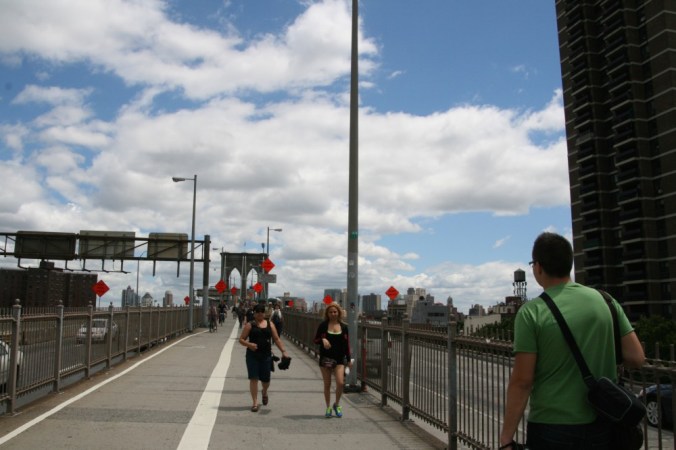
I’d never walked across the Brooklyn Bridge until I met up with some California friends in Manhattan. They were on a mission to see and take in as much of New York as possible in the few days they were there. I tagged along as they ventured to walk across the Brooklyn Bridge.

We found the entrance to the bridge announced by a hand painted sign,

Brooklyn  Bridge 4

and discovered that we weren’t the only tourists with the idea for a walk.

Brooklyn Bridge 1

We gazed up at the tower,

Brooklyn Bridge 5

and played the ukelele in the middle of the bridge.

Brooklyn Bridge 7

We paused along the way to enjoy the view.

Brooklyn Bridge 3

We walked across the Brooklyn Bridge, then turned around, saving the exploration of Brooklyn for another day.

Brooklyn Bridge 6

 Trip taken June 2012.

Single in New York in 1954

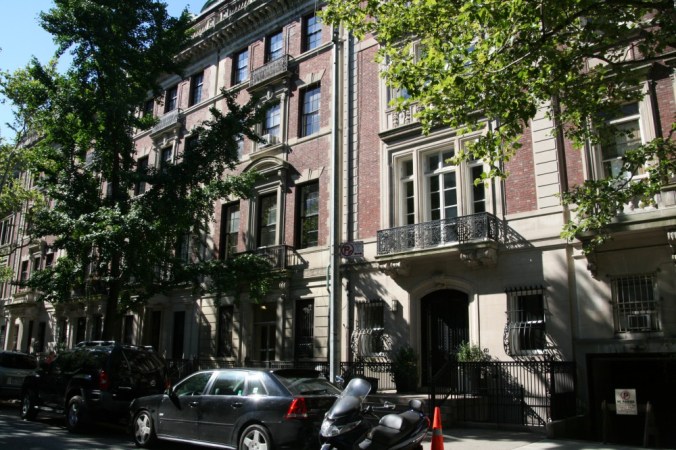
When you want to be an actress, living in New York City is a dream, especially for a girl from the midwest. For Marialyce Tyler, moving from South Dakota to the Big City in 1954 was exciting. With a couple of college friends, she lived in two different apartments on the Upper West Side of New York, right near Central Park, on West 74th Street and West 68th Street.

West 74th Street

Rusty described the apartment on West 74th Street as the old Borden Mansion. According to Rusty, they lived in what was the old library.

We were on the first floor, a 14-foot ceilinged room with a huge marble fireplace, tall windows draped in dark red velvet and then beyond a huge room that had three twin-sized beds, a very large and long dark mahogany dining table, chairs, etc., a small one-person-at-a-time kitchen, and beyond that a bathroom that had been made out of a closet.

From The Tucker – Tyler Adventure, written by Katherine Tucker and Marialyce Tyler and edited by Nancy Cowan and Tara Taft.

Blackie: The Horse That Won’t Be Forgotten

I don’t remember sitting on Blackie’s back. I don’t remember seeing him stand in the same spot day after day, year after year, in a field now known as Blackie’s Pasture. What I do remember is visiting his grave at the end of the bike path in Tiburon, California, and hearing stories about the love for this gentle and swaybacked horse.

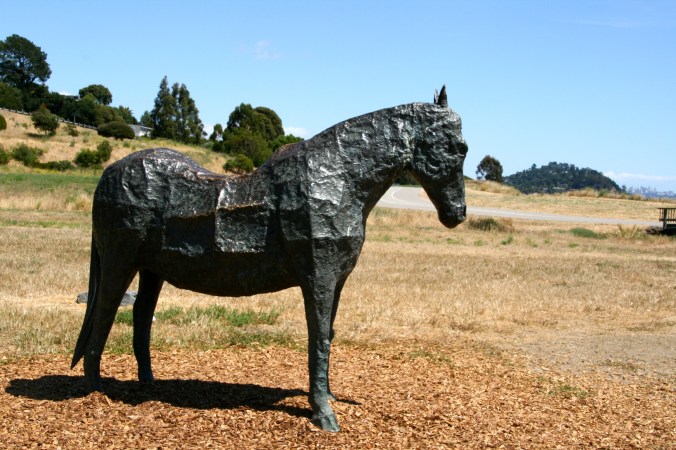
Although he died in 1966, children can still sit on his back.

Climbing on Blackie

In 1995, the Tiburon Peninsula Foundation erected a life size statue in the same spot where Blackie spent his last 28 years. In 2006, Christopher Cerf and Paige Peterson published a children’s picture book, Blackie, the Horse That Stood Still about Blackie.

IMG_8512The next time you visit San Francisco, consider making a trip across the Golden Gate Bridge to visit Blackie. He stands alongside the bay in Tiburon among the many cyclists, joggers, kite flyers, and walkers just out to enjoy the view.

If you want to learn more about Blackie’s life, click here.     If you want to visit Blackie, click here.

Where Can You Get a Good Steak in South Dakota?

When you’re in cattle country, there’s not much you should eat but steak. Unless it’s fresh water fish caught in a nearby stream or river. So when we wanted steak, our local friends told us to dine at Cattleman’s Club Steakhouse east of Pierre, where steak is the menu.

Cattlemen's

With sawdust on the floor and a view of the Missouri River, the restaurant has a lot of atmosphere. Don’t be surprised if you find the place filled with hunters and cowboys, exchanging stories over a steak and a beer.

Inside Cattlemen's

Choose your favorite steak (prime rib, sirloin, porterhouse, t-bone, or ribeye), the size, and the degree of doneness. You can get the prime rib in 10, 16, or 20 ounce cuts and the top sirloin in a 8, 12, 16-ounce cut. Determine your degree of doneness. Do you want it rare (red cool center), medium rare (red hot center), medium (pink hot center), medium well (very little pink), or well done (cooked through)?

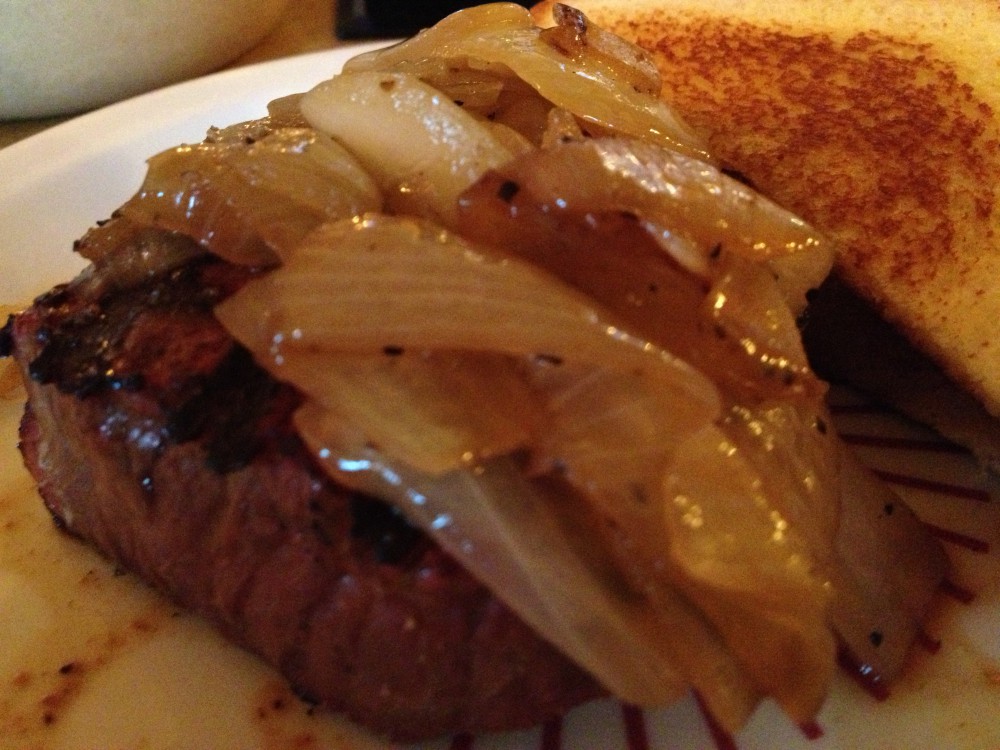
Add grilled onions or mushrooms. If you don’t want steak, they do have burgers and shrimp. But whatever you have (unless you’re gluten free!), be sure to try the breaded green beans served with cucumber ranch wasabi sauce or the fried dill pickles. Yum!

Steak and Onions

Pretend You’re a Cowboy

Where can you ride a bucking bronco without getting hurt? Watch National Finals Rodeo championship rides and see rodeo artifacts of rodeo clowns and cowboys? You can pretend you’re a cowboy or just learn about them at the Casey Tibbs South Dakota Rodeo Center in Fort Pierre, South Dakota.

Casey Tibbs South Dakota Rodeo Center

When Life Magazine published its October 22, 1951 issue, they put Casey Tibbs, a South Dakota born and raised cowboy, on its cover.

Casey was not just a cowboy, he was a rodeo cowboy, and a national champion as well. At age 19, Casey won his first national saddle bronc-riding crown. He went on to win a total of nine national saddle bronc riding championships during his rodeo career. At age 22, he was the first and only cowboy to ever be on the cover of Life Magazine.

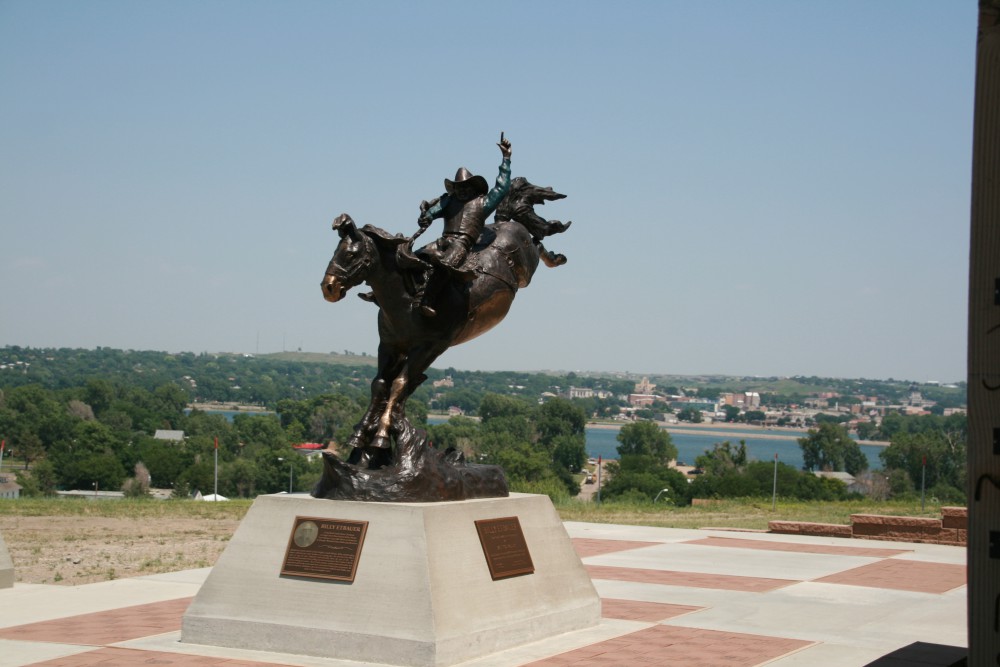
In 2009, the town of Fort Pierre built a museum honoring Casey’s life and rodeo career. The Casey Tibbs South Dakota Rodeo Center is located on a hill in Fort Pierre overlooking the Missouri River. And if you happen to see the list of Casey’s 8th grade classmates, look for the name Marialyce Tyler. Marialyce, my mom, went to school with Casey.

Casey Tibbs Statue

Trip taken July 2013.


When Ice Cream is Retro

Ready for a little retro ice cream? This place was discovered (well, revisited) one hot summer evening while I was in Pierre, South Dakota.

Zestos

After a visit to the Flaming Fountain Memorial at the Capitol Building, we walked less than half a mile down Capitol Avenue to get some ice cream. Although they offer shakes (for $5.25) and banana splits (for $4.75), I was happy with my $2 vanilla and chocolate twist.

Zesto’s is the only place around to get an ice cream cone from March to October so be prepared. The lines are long but well worth the wait.

Trip taken July 2013.

Chiggers and Chokecherries and Jelly

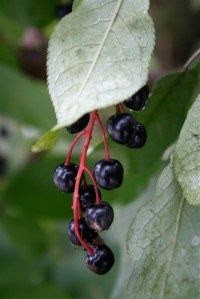
Chokecherry

For those of you who don’t live out west, and don’t live where the chokecherries grow, chokecherries are tiny berries with a big pit (relative to the size of the berry) and tart, but flavorful juice, good when made into jelly. I learned about chokecherries when I spent a summer in South Dakota as a teen.

With buckets in hand, we walked along the railroad tracks and along the Bad River searching for the tiny berries. It took awhile (at least in teenage time), but finally we had enough and stopped picking berries for a much needed swim. At home, my grandfather painted our chigger bites with nail polish to relieve the itch their tiny bites inspired.

We spent the next afternoon around the stove of our friend’s kitchen. I remember seeding the berries (that was a job!) and watching the big pot of bubbling juice. I remember skimming off the white foam and pouring the juice into the sterilized jars.

We brought jars of our chokecherry jelly home to California. Last summer, my brother discovered a jar of chokecherry jelly for sale at the general store in Custer State Park. He bought the jar and the memories it provoked back to California. I went home to Massachusetts and make Concord grape jelly instead.

If you live where the chokecherries grow, here’s a recipe to make your own jelly.

Chokecherry photo by Cindy Zackowitz licensed by CC under 2.0.

Swimming in Sylvan Lake

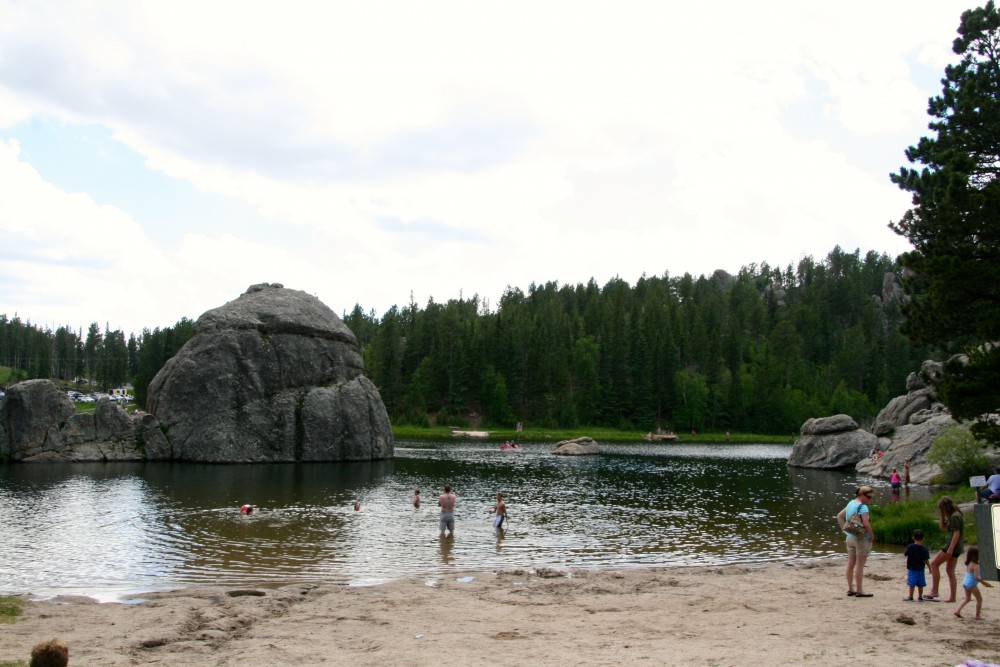
If you’ve seen the movie National Treasure: Book of Secrets, then you’ve seen a bit of Sylvan Lake, a crystal clear lake set amidst granite spires in the Black Hills of South Dakota. Spoiler Alert: The movie’s treasure hunt brings Nicholas Cage to Sylvan Lake for another clue.

Sylvan Lake

After a day of touring, we cooled off in the spring fed waters of Sylvan Lake. The water was cold and the altitude (at 6,200 feet) enough to take our breath away.

swimming at Sylvan Lake

The man-made lake is located on the Needles Highway in Custer State Park, South Dakota. There are picnic tables, restrooms, and a sandy beach. You can rent paddle boats or walk the the trail around the lake. Sylvan Lake Lodge offers overnight accommodations and dining at its restaurant.

Trip taken July 2013.

Eating Buffalo

When you’re traveling out west, in places like Colorado, Wyoming, Utah, and South Dakota, you’ll likely find buffalo burgers on just about every menu. Some places offer beef burgers as well, but when I’m in cowboy country, I usually opt for a burger made from the American bison. That’s right, a buffalo burger.

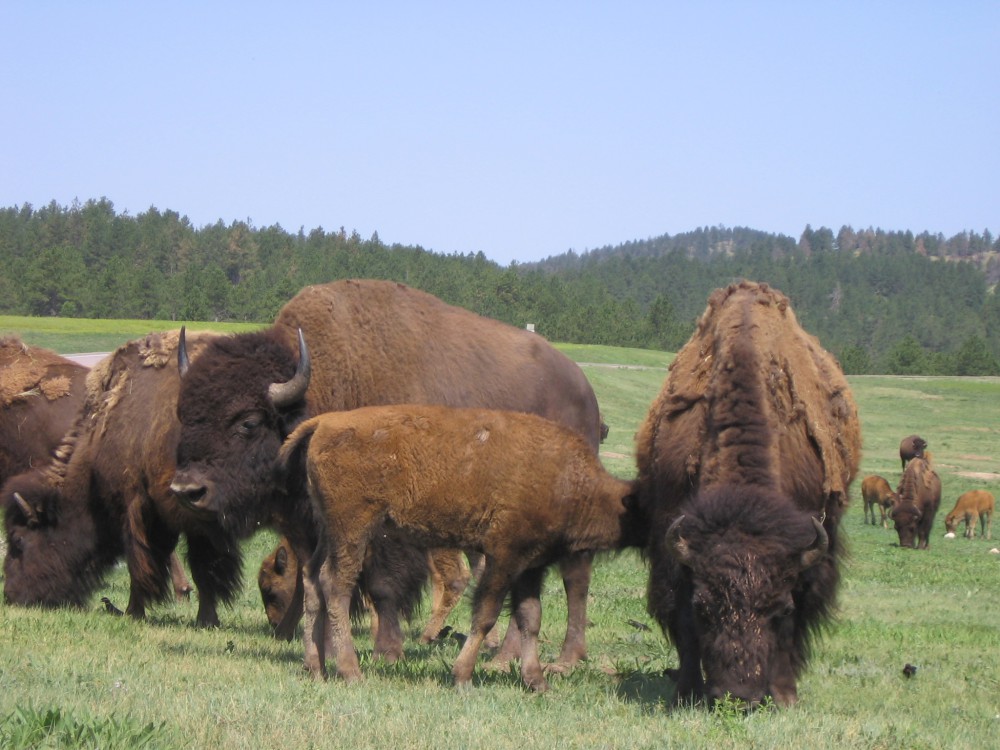
Bison

Why? They’re leaner, healthier, tastier and just a little different than a burger made from beef. Buffalo burgers are lower in fat and lower in calories, and higher in protein, iron, and vitamin B-12.

Although at once near extinction, (there were less than 300 in North America in the early 20th century), the American bison has made a come back, now numbering about half a million, according to the Defenders of Wildlife. There are now several  ranches and farms in North America’s west that raise the animal specifically for consumption.

Check out this recipe, if you want to try making buffalo burgers at home. (You should be able to find the ground meat next to the natural beef at your local supermarket.) Just don’t forget to wear your cowboy hat!

Buffalo Burger Recipe, Bison Burger Recipe | Simply Recipes.