Picking Strawberries in August

Green containers in hand, we probed carefully, searching for the reddest, the ripest and juiciest strawberries. In spite of the many berries which stained our lips and our tongues, it wasn’t long before the buckets were over flowing and it was time to pay.

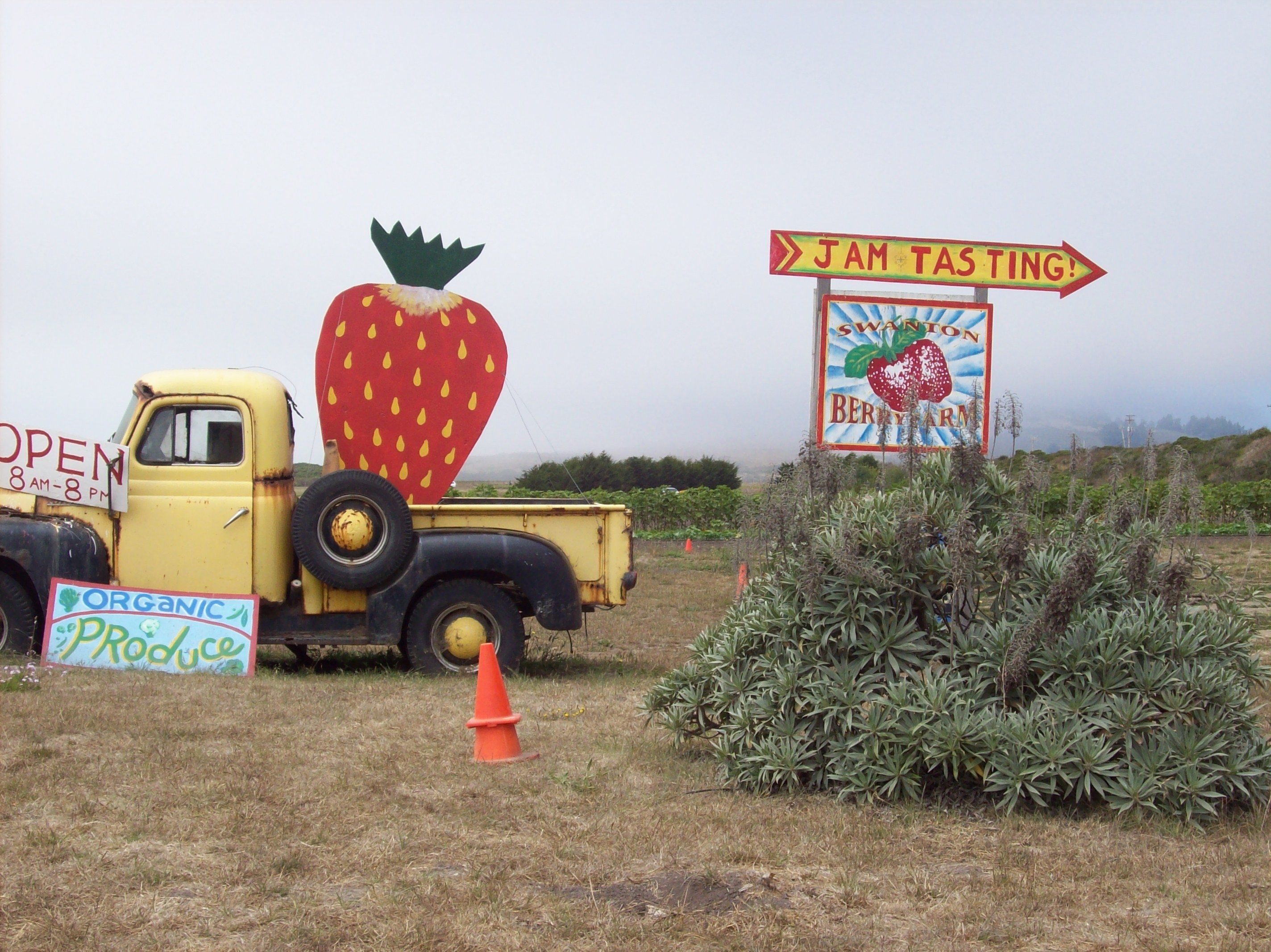
We were at Swanton Berry Farmstand, an organic growing and union working farm located on Highway 1 near Pescadero, California.

truck sign at entrance to farm

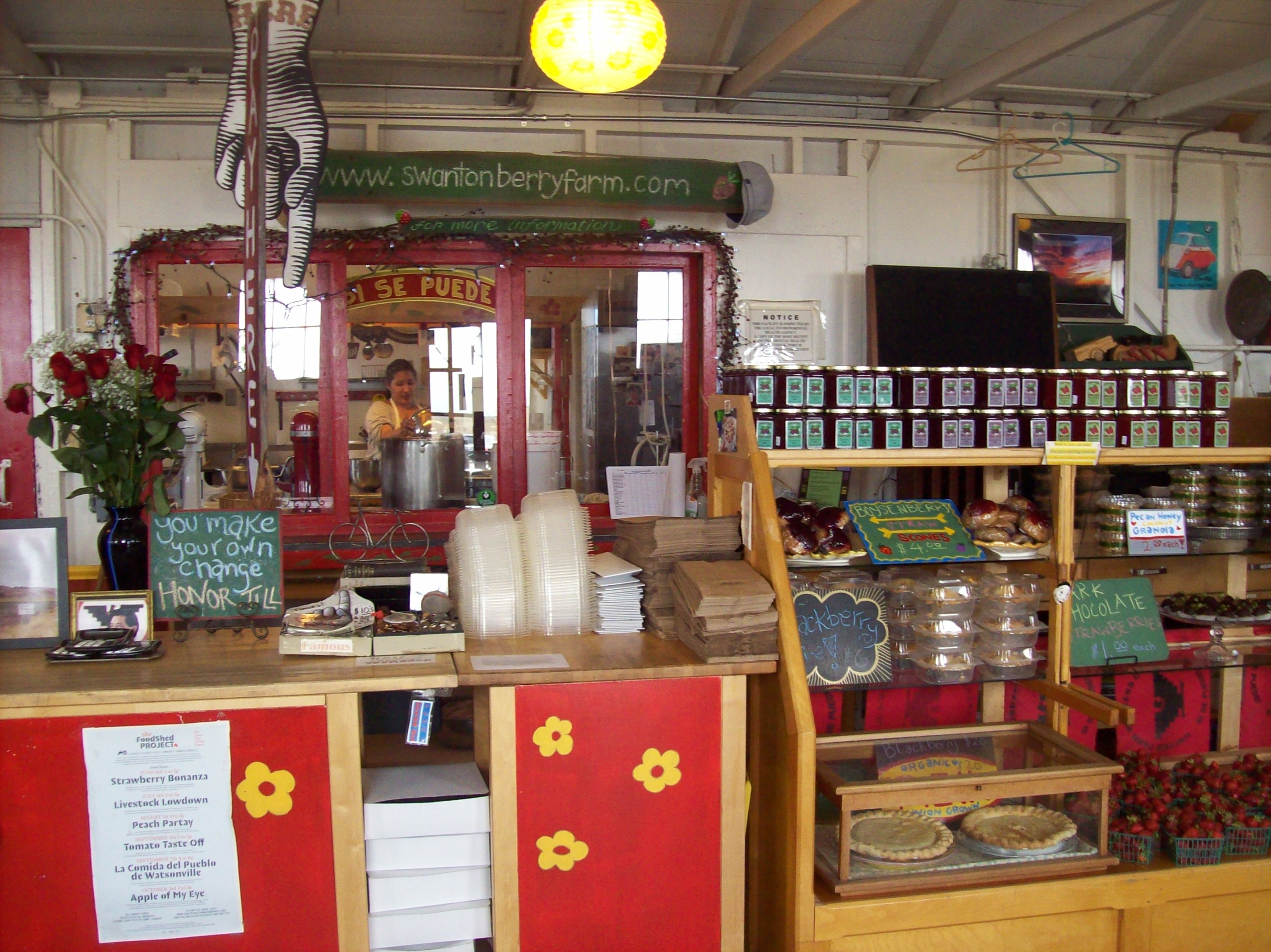
Inside the farm store, we weighed our berries, calculated our cost, and paid on the honor system before sampling the many jams (blackberry, strawberry, loganberry, etc.) and purchasing berry truffles, a pie, and even berry lemonade.

counter and cash register

We ate our own lunch on picnic tables inside the store, perused the many old photos and articles on farming and union labor decorating the walls, and played a few of the old wooden games (you know the one with the small silver ball and the maze and all the holes?).

In August we picked strawberries, but if you come another time of year, you can pick ollalaberries (June), blackberries (July), and kiwis (December).

Trip taken August 2012.

Weekly Photo Challenge: Color

My love of color is evidenced by the colors of the home in which I live. My house is red, my car is green, my bedroom is lilac, my bath is aqua.

As I travel, my eye is drawn to color. I found red in a hibiscus in Central Park, in the comb of a rooster in South Africa, in the shirt of a man on the 4th of July in Boston, in the strawberries and radishes at a farmers’ market in California. I found orange in the flames of a campfire in New England, in the wings of a butterfly on Cape Cod, in a tower of the Golden Gate Bridge, in a handpainted sign on the Brooklyn Bridge.

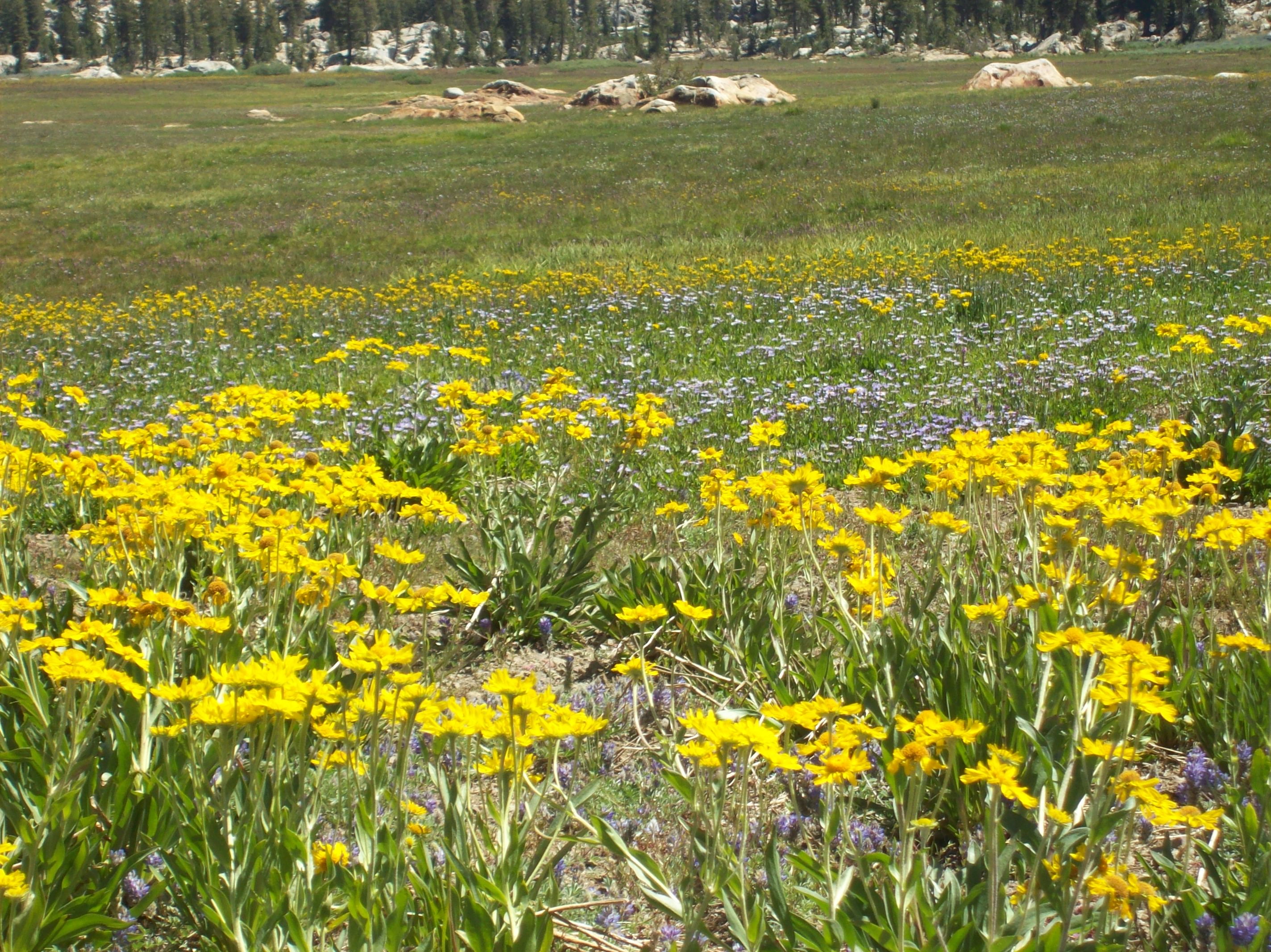
I found yellow in a meadow in the Sierras, on a New York taxi cab, in a candle in Frankfurt, and in bubbling macaroni and cheese. I found green in the leaves and on the wings of a bird, and on a girl’s sunglasses on the beach.

I found purple in the lilacs in front of Louisa May Alcott’s house and inside a hot air balloon. I found blue in the skies everywhere I went.

A NorCal Beach Along Highway 1

“Nine, ten, eleven. . .” We counted the dark ticks clinging to the pale grasses along the path. We stepped carefully as we walked to the beach near Costanoa, an eco resort along Highway 1 in Northern California.

Beach Path

Over and down the hill, we dropped our towels and nestled behind a large rock, seeking refuge from the cool wind.

100_4075

A seal (or sea lion?) ventured close, his head bobbing in the surf, his curiosity bringing him closer and closer as the kids did cartwheels along the shore.

Seal at Costanoa

Cartwheels

After a couple of hours in the sun and wind, we headed back to the car, avoiding the tall grasses and hopefully, any unwelcome hitchhikers on our way.

100_4124

Trip taken August 2012.

Camping Without the Hassle

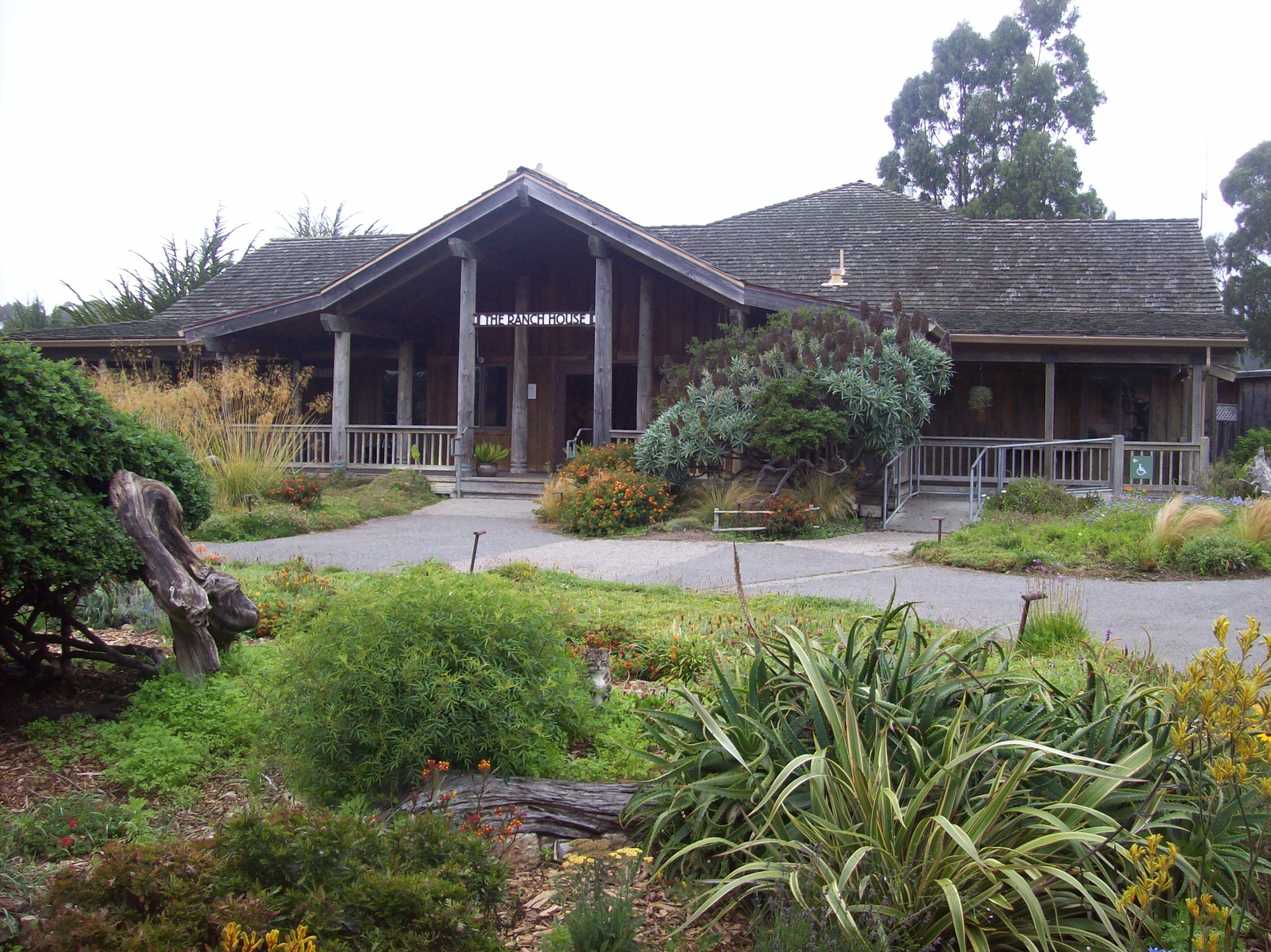
What do you do when you want the camping experience without all the gear and hassle? If you’re in Northern California, you can stay at Costanoa, a campground and resort located near Pescadero, about an hour south of San Francisco. After a week of backpacking last summer, my daughter and I decided we’d had enough real camping and decided to do just that.

Ignoring the spa resort accommodations at this ecofriendly lodge, we chose to “camp” with her cousins in family tent bungalows where two adjacent tent cabins share a fire pit and a picnic table.

100_4053

The kids unrolled their sleeping bags on the bunks in their sparse cabin while the adults slept in sheets in a queen size bed with pillows, a lamp, and bedside table in the cabin right next door. With waterproof canvas walls and a wooden floor, both bungalows were heated and included electricity, sliding windows, and a locking door.

After a simple supper cooked on our own camp stove, we chatted with our next door neighbors, another family from Boston, and played games and roasted marshmallows in one of the resort’s many communal outdoor fireplaces. We brushed our teeth in a “comfort station,” just a short walk from our cabin, where the toilets flushed, the concrete floors were heated and the hot sauna inviting.

100_4050

The morning’s dense coastal fog demanded a trip to the lodge’s restaurant for hot chocolate and coffee in front of a warm fire.

100_4017

Behind the lodge, the kids climbed a tree and other visitors played chess on a life size chess board. The kids pet the local cat while the adults checked out the store full of gourmet camping supplies and local art.

100_4021

We walked along the beach in the sunny afternoon, rode horses with a Costanoa guide, and picked strawberries at a nearby farm.

If you’d prefer a slightly more luxurious experience, you can stay in the lodge or in one of the cabins where you’ll be able to enjoy the resort’s outdoor hot tub.

Roller Coaster by the Sea

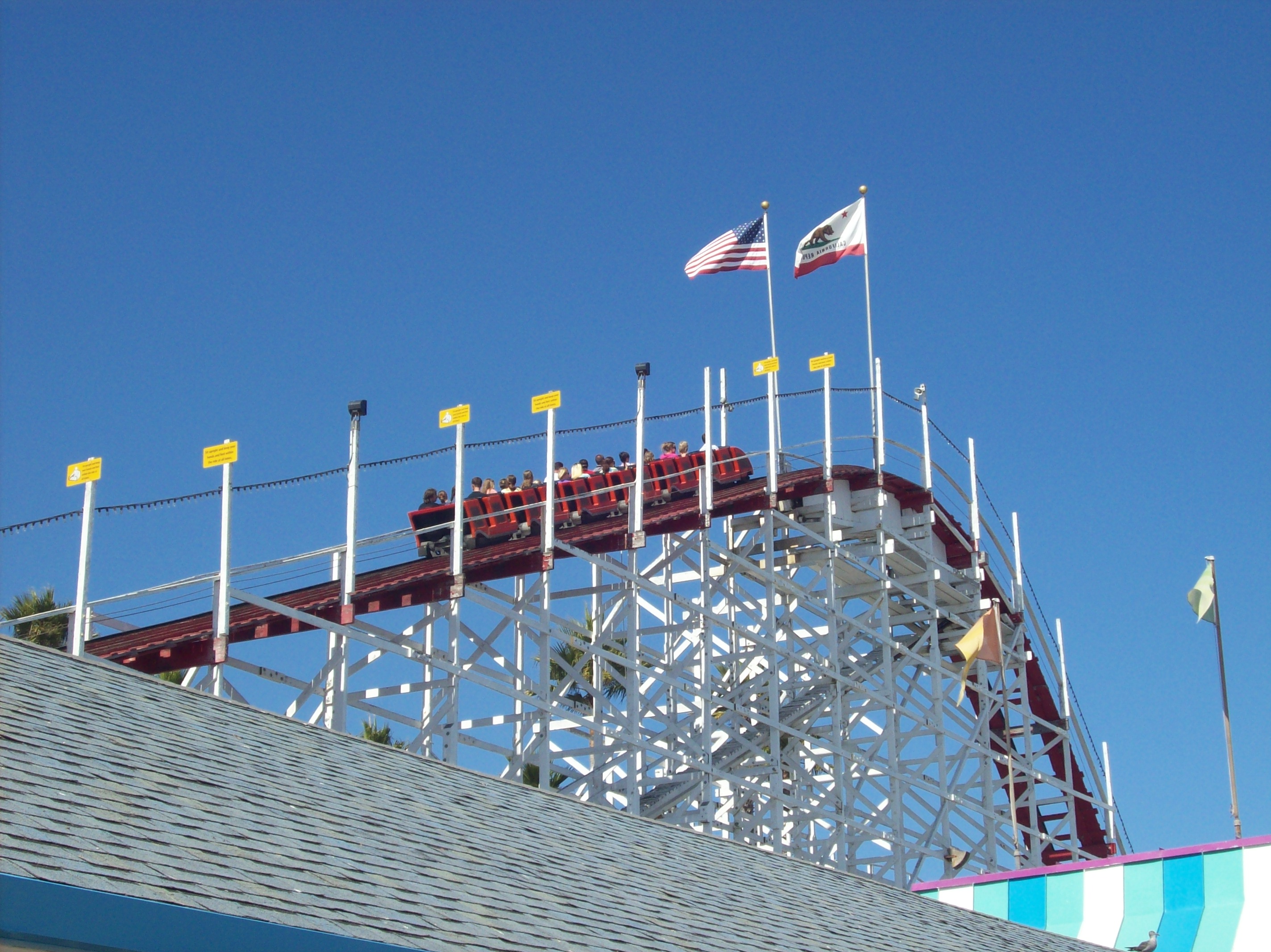
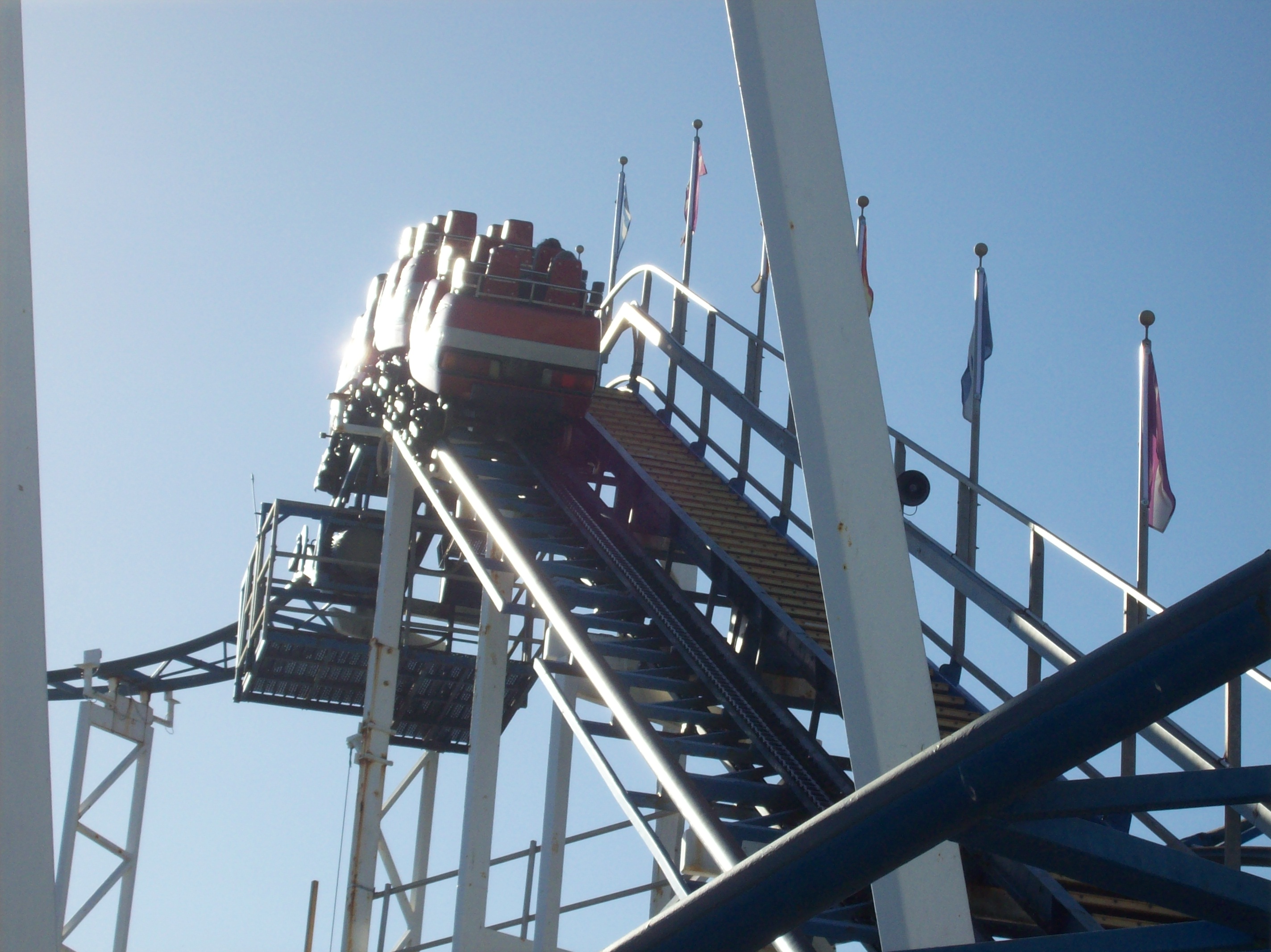
Arms up, we lurched and creaked, climbing to the top of the hill, bracing ourselves for the fall. We were on one of the oldest roller coasters still in operation, not just in the U.S., but in the world. We were on the Giant Dipper Roller Coaster on the Santa Cruz Beach Boardwalk in Santa Cruz, California.

100_3973

Giant Dipper

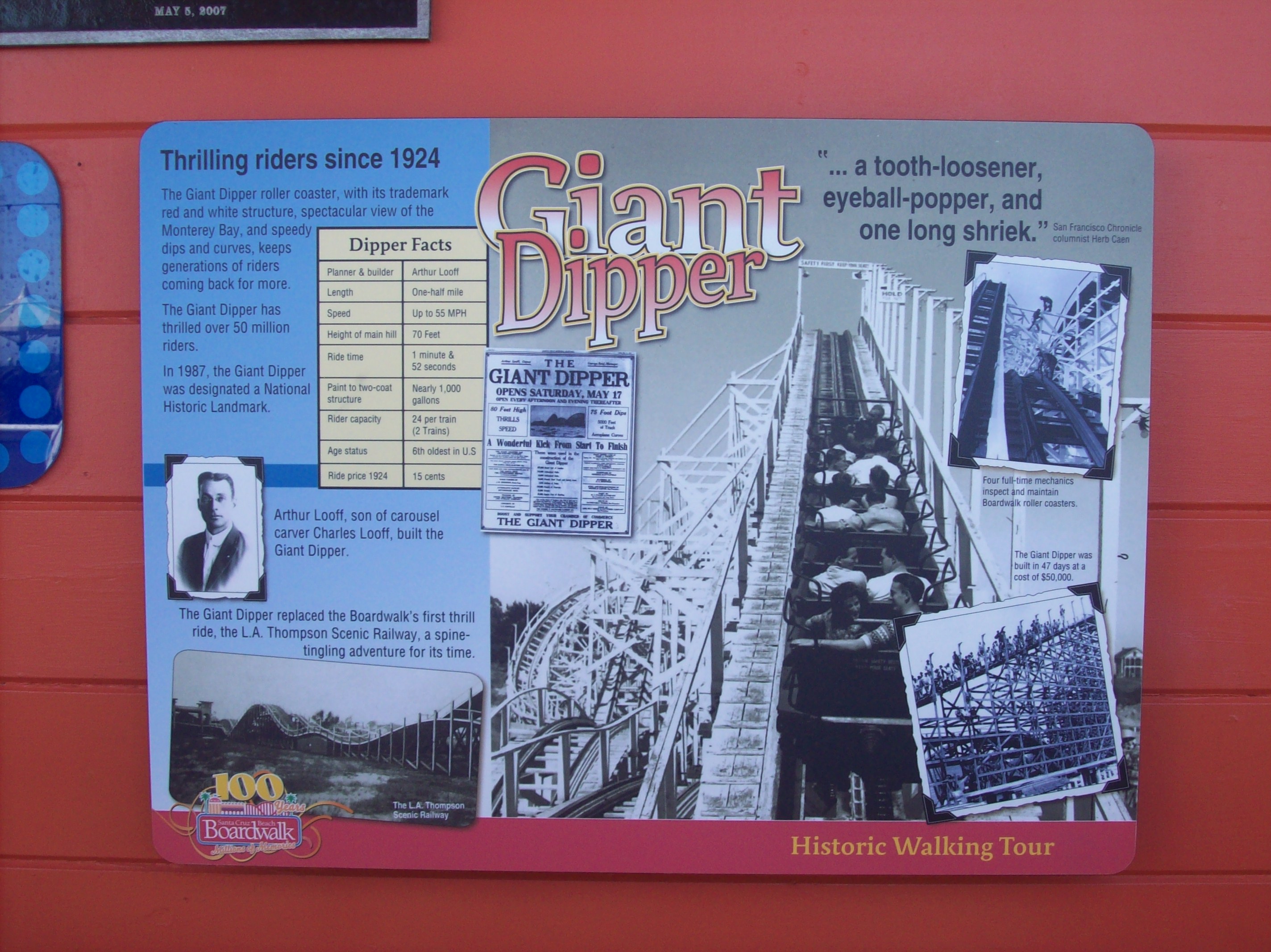
Since May 1924 when the public paid 15 cents to ride the red and white roller coaster, the Giant Dipper has excited over 60 million roller coaster enthusiasts who now must spend $6 for its thrills.

100_3977

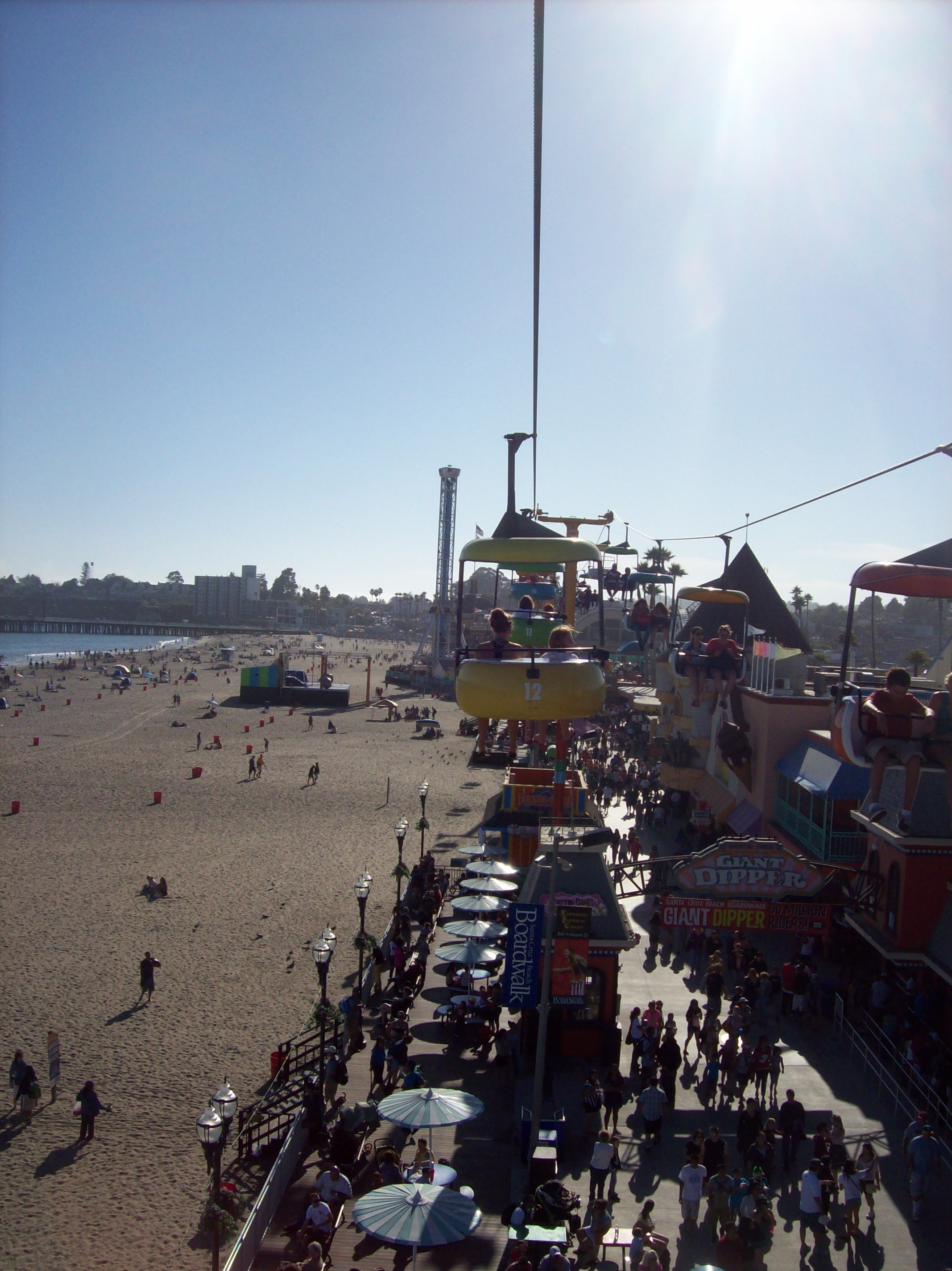
Riding the Giant Dipper is only one of several things to do on the Boardwalk. With kids aged 8 to 14, my friend and I spent an afternoon exploring a few of the options. We were splashed on Logger’s Revenge, lost our stomach on the Giant Dipper as well as on the Hurricane, and enjoyed the view from the Sky Glider.

View

100_4015

100_3967We tried our luck at one of the games, sampled ice cream but avoided the deep fried Twinkies and Oreos.

Fried Twinkies

Before our last ride, we left the Boardwalk and tested the Pacific’s temperature with our toes.

Sky Glider

Trip taken August 2012.


Getting Gas

The gas station was bright, the lights were on, but when I slid my credit card through the gas pump’s slot, an error message read, “Pump stopped.” Again and again, the words flashed at me, “Pump stopped.” It was after 9 p.m., but the gas station was just off the highway. It must be open. With only a quarter of a tank, and a rental car to return and a plane to catch, we needed gas.

_MG_0767

A car hurried into the station, and I watched the incredulous faces as the driver received the same nonsensical message. The lights were on, why weren’t the pumps working?

_MG_0764

When a mop carrying, curly haired woman moved up and down beyond the window, I drove out of the station’s parking lot, stopping at the nearby intersection, waiting for the light to change.

“The trunk is open!” my son yelled. With the car in park and the hazards on, I ran around the car, closing the trunk and the gas cap cover all before the green arrow signaled it was our turn to move. I turned the key. Nothing. The car wouldn’t start; I tried again. Nothing. Glancing in the rear view mirror, I was relieved to find no car behind me in the left turn only lane. I paused, waited a few seconds and tried again. This time the car started much to all of our relief. We turned left and onto the freeway.

Continuing south towards the city, I had an idea. Not far over the hill, lights blazed and cars turned. The gas price was low and, more important, the station was definitely open.

Being careful to pop only the gas cap and not the trunk this time, I swiped my credit card again and again. Another message flashed at me. “Card declined.” I tried another credit card. “Card declined.” Somewhat oblivious to the lights and noise, I dodged the incoming and outgoing cars and ran to the pay window. A man sat inside the locked, brightly lit store, his mouth camouflaged and muffled by a speaker. “You need to pay with cash,” he said. I ran back to the car and tried again to pump the gas. Nothing.

Back at the window, the man clarified, “You need to pay first.” But this is a rental car and I need to fill the tank and I have no idea how much gas it will take, I said. “I’ll give you change,” he responded.

Running back to the car, making sure not to make eye contact with anyone, knowing I likely looked like a crazy woman, I grabbed my wallet, found $40 in cash, ran back to the window and gave him the money. This time, the pump worked. I filled the tank and ran back to the window for my $4 in change.
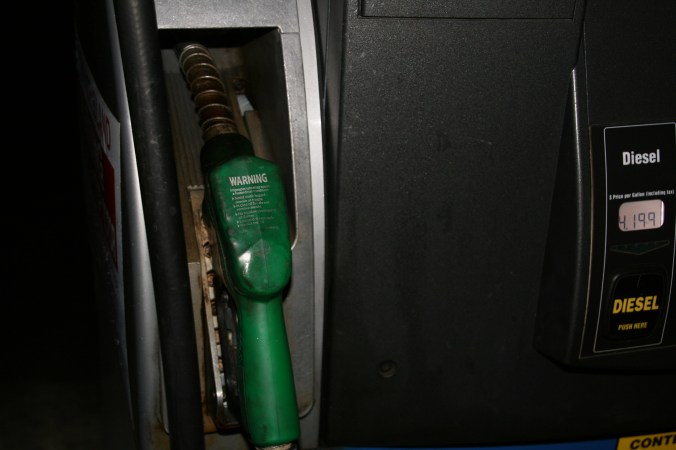
IMG_0777

Several miles later, we neared the airport. The gas gauge still read full, but the minutes before our flight had decreased significantly. Knowing there was a chance the rental car employee would charge us double or triple for that extra gallon of gas, I decided to risk it. Who knew if there were any more gas stations open? And even if there were, I was out of cash. I knew from experience that gas stations near the San Francisco airport are few and far between.

After taking a wrong turn and driving too far to the rental car return, I noticed the gas needle had moved. Would we be charged? We emptied the car, scrambling to get organized, and I gave the agent the keys. Less than a minute later, he handed me the receipt with a smile. The total was zero. No extra charge. We made it through security and to the gate just as the plane was boarding. Next time I’ll add an extra half hour before flight time.

Trip taken April 2009.
From Y Meadow Lake to Chewing Gum Lake and Back to the Trailhead

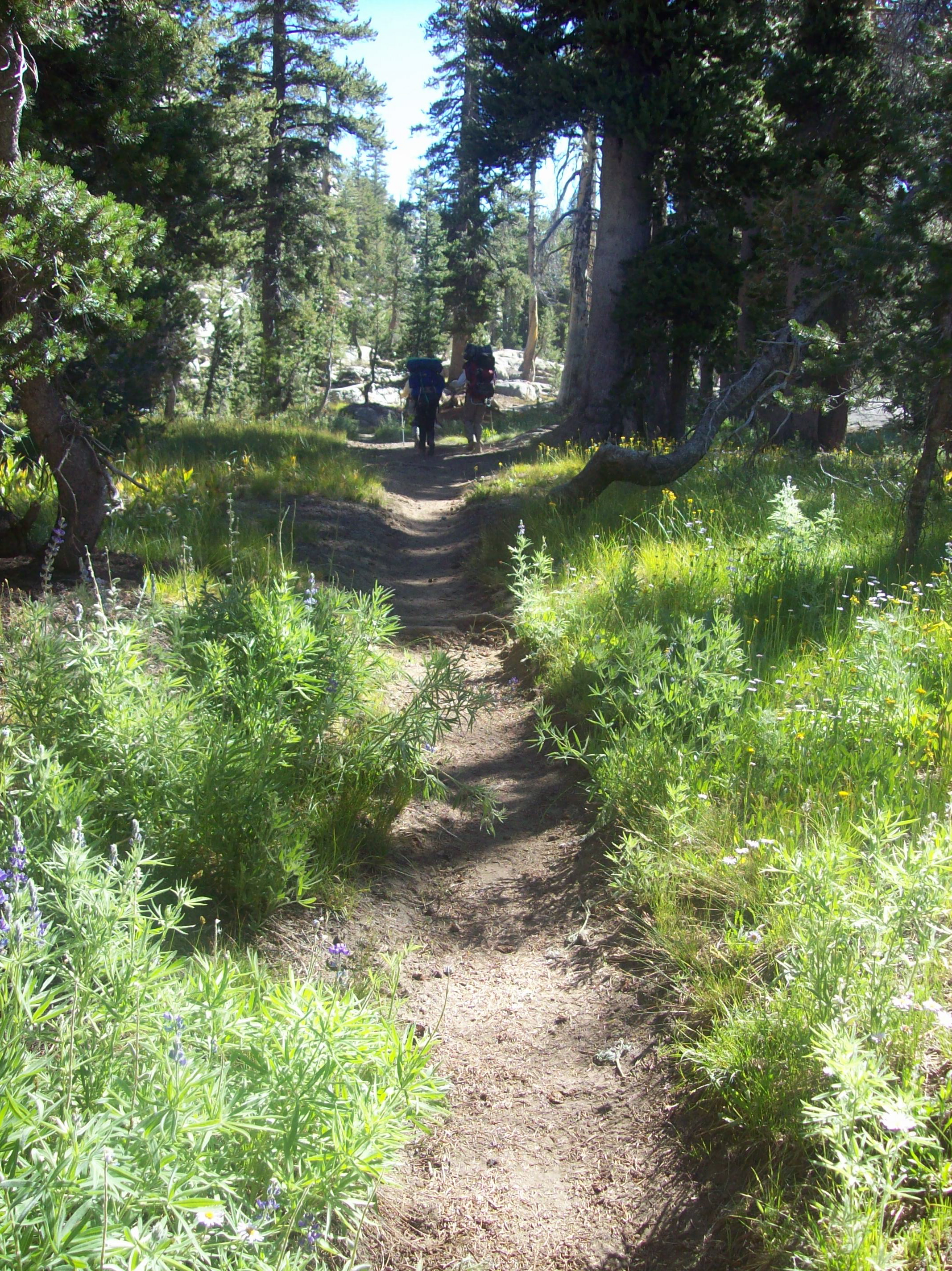
Our longest day was one of our easiest, as the 7 miles of trail wandered and wound through meadows of wildflowers:  blue lupine, red Indian paintbrush and yellow monkey flowers.
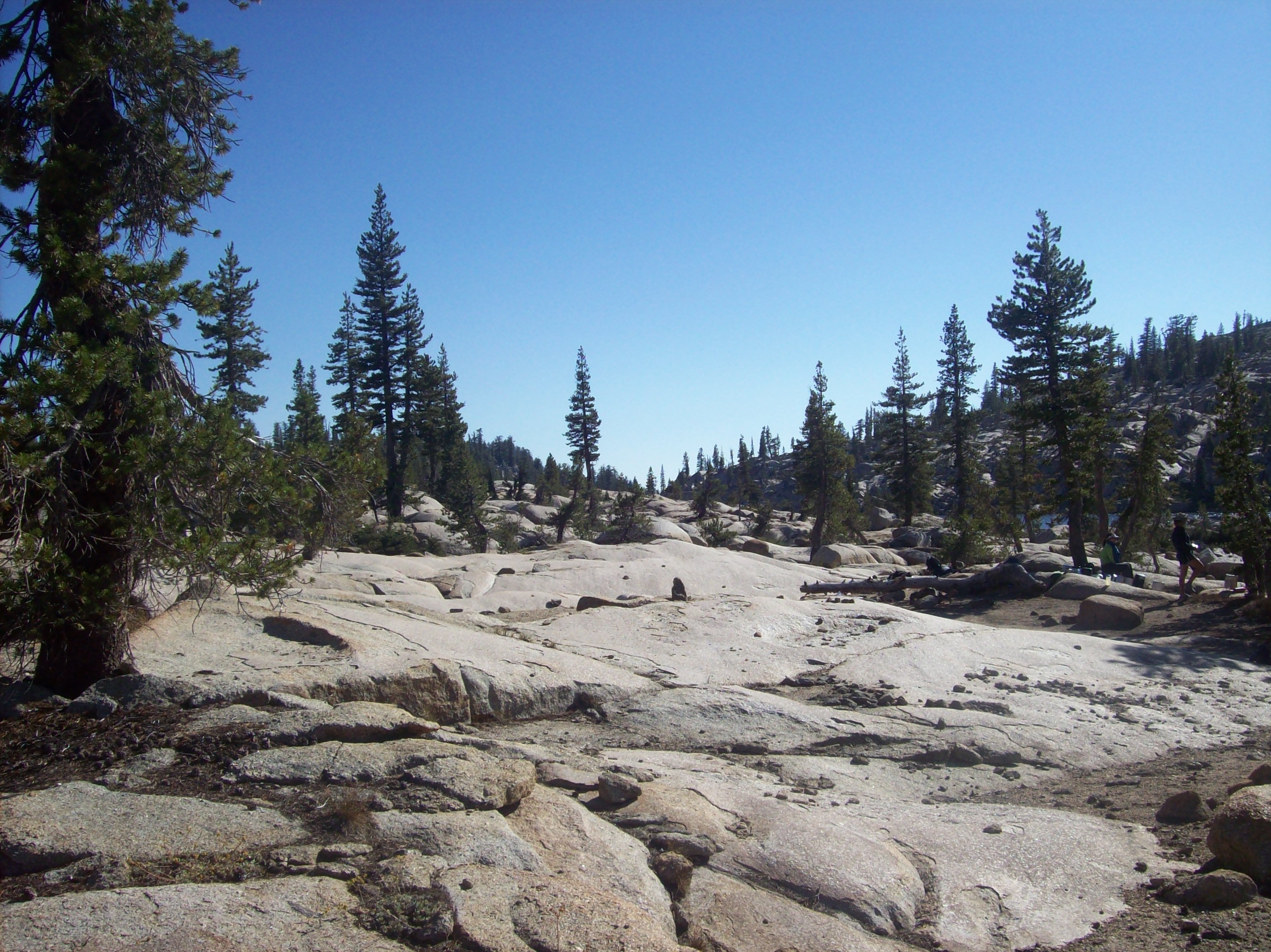
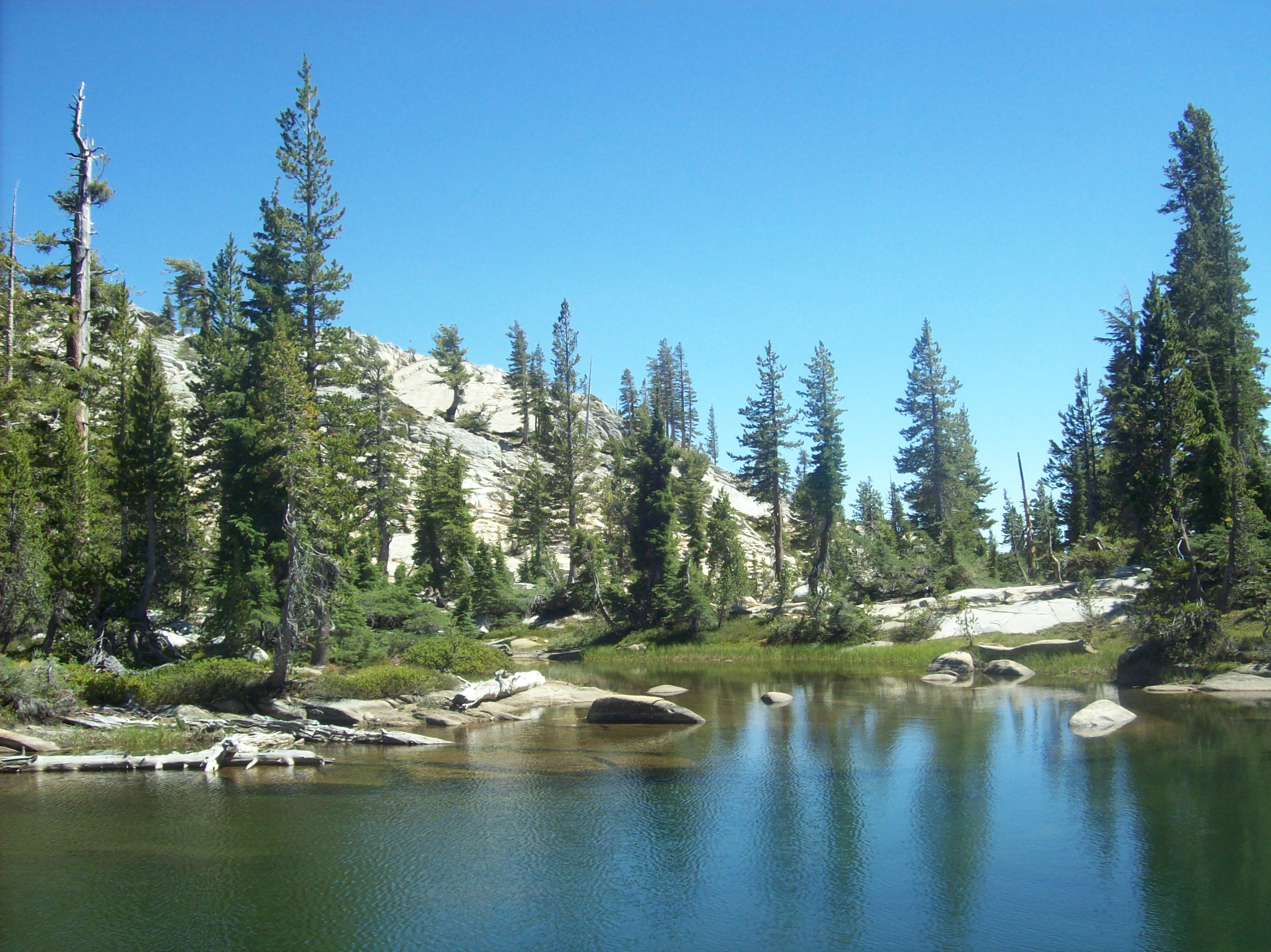
We spent the night at Y Meadow Lake, surrounded by granite without much vegetation.

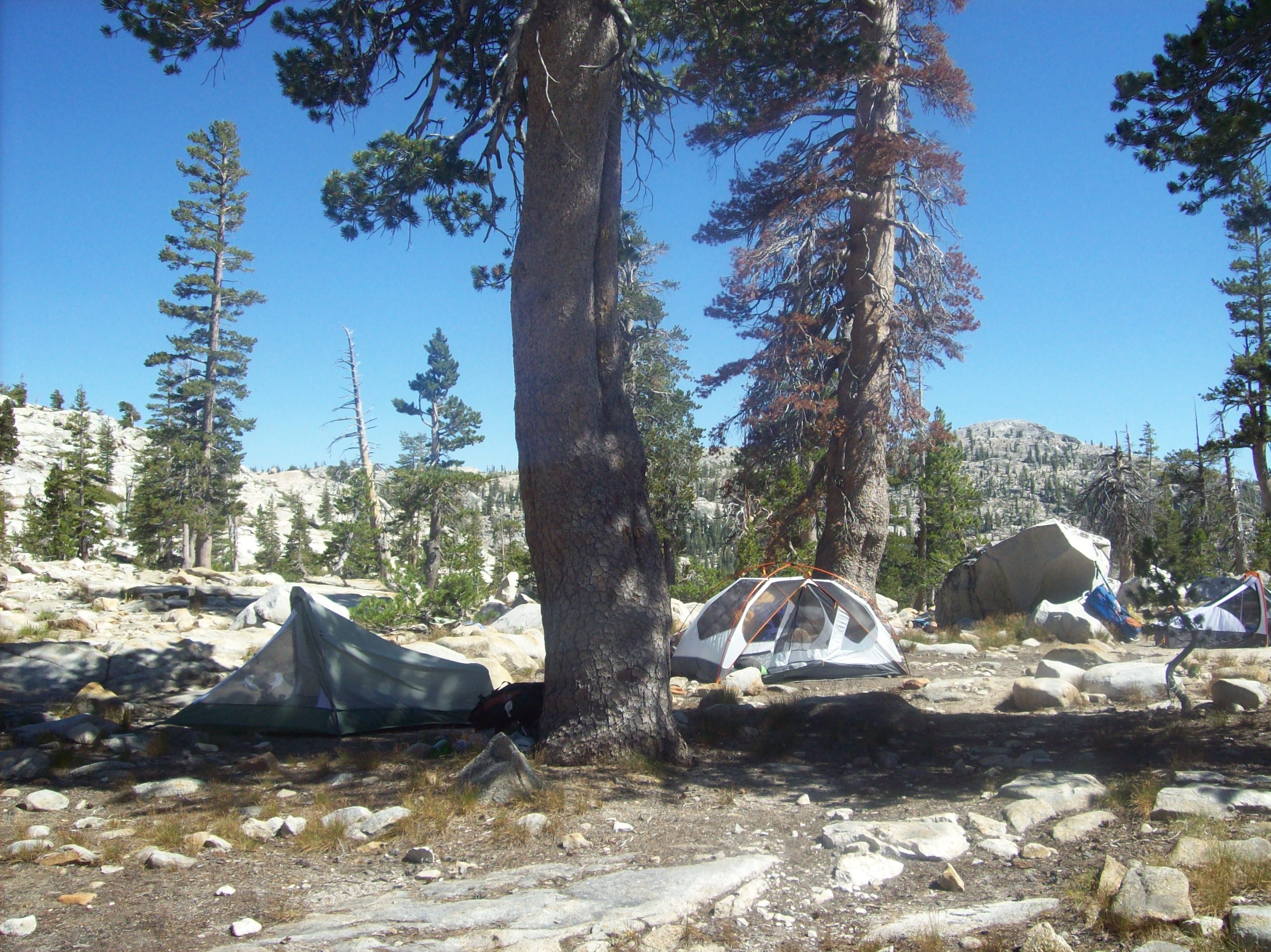
We scattered our tents about between the rocks and enjoyed the quiet of this unpopulated lake, the only sign of civilization, someone’s food hung high on a tree branch over the lake away from any potential hungry bears. We didn’t swim in Y Meadow Lake, but sat by its edge, doing crossword puzzles, reading, and relaxing.

We spent our last night on the trail at Chewing Gum Lake and wondered how it got its name? Was it the muddy bottom that squished as our feet touched and sank several inches? Or was it the grey color of the mud banks? Motivated to get my feet off the mucky shore, I swam into the clear water and was soon gasping for breath. Surprised, I remembered the 8,700 foot elevation, pretty high for a flatlander like me.

At Chewing Gum Lake we were not alone; the lake was scattered with people of all ages jumping off its rocks, swimming and sunbathing or just hanging out on air mattresses on the water. Just 4.5 miles from a trail head, Chewing Gum Lake was easing us back into civilization.

Once again, the group campsite was taken, so we each found our own nook among the rocks of this hilly area, our kitchen located between a couple of trees. That night, as we stayed up late playing a game of Uno, needing head lamps to see our cards, we could hear other campers and smell their campfires.

After peaking at 8,923 feet, we began our descent and hiked down to our beginning elevation of 7,200 feet. Our last day hike back to Crabtree Trailhead was quick, as our leader said it would be, referencing the Back to the Barn effect. Just like horses or cows, once we knew we were almost “home,” we picked up the pace and finished our hike in just 3 hours.

Back at Crabtree, we exchanged addresses, took photographs, said good-bye and marveled at our trip where 11 strangers hiked and camped easily together, wildflowers were in abundance, mosquitos were rarely seen, and it never rained.

Camping at Wire Lakes

We awoke at Gem Lake to what would be our coldest morning: the thermometer read 25 degrees. Although I wore a hat and gloves for breakfast, by the time we were ready to begin hiking, the sun was higher in the sky, and I’d shed my outer layers.

On this trek from Gem Lake to Upper Wire Lake, only a 4-mile hike up and down, we encountered a family with a dog, Boy Scouts, and even a church group of youths learning to rock climb. We hiked quickly, our packs lighter each day, and arrived at Wire Lake, our next destination, for a late lunch. After eating, we surveyed the area, looking for a place to camp.

At first, Upper Wire Lake did not look promising. Much of the shoreline was rimmed by granite, the rest by woods or grassy meadows, the only group campsite already claimed.

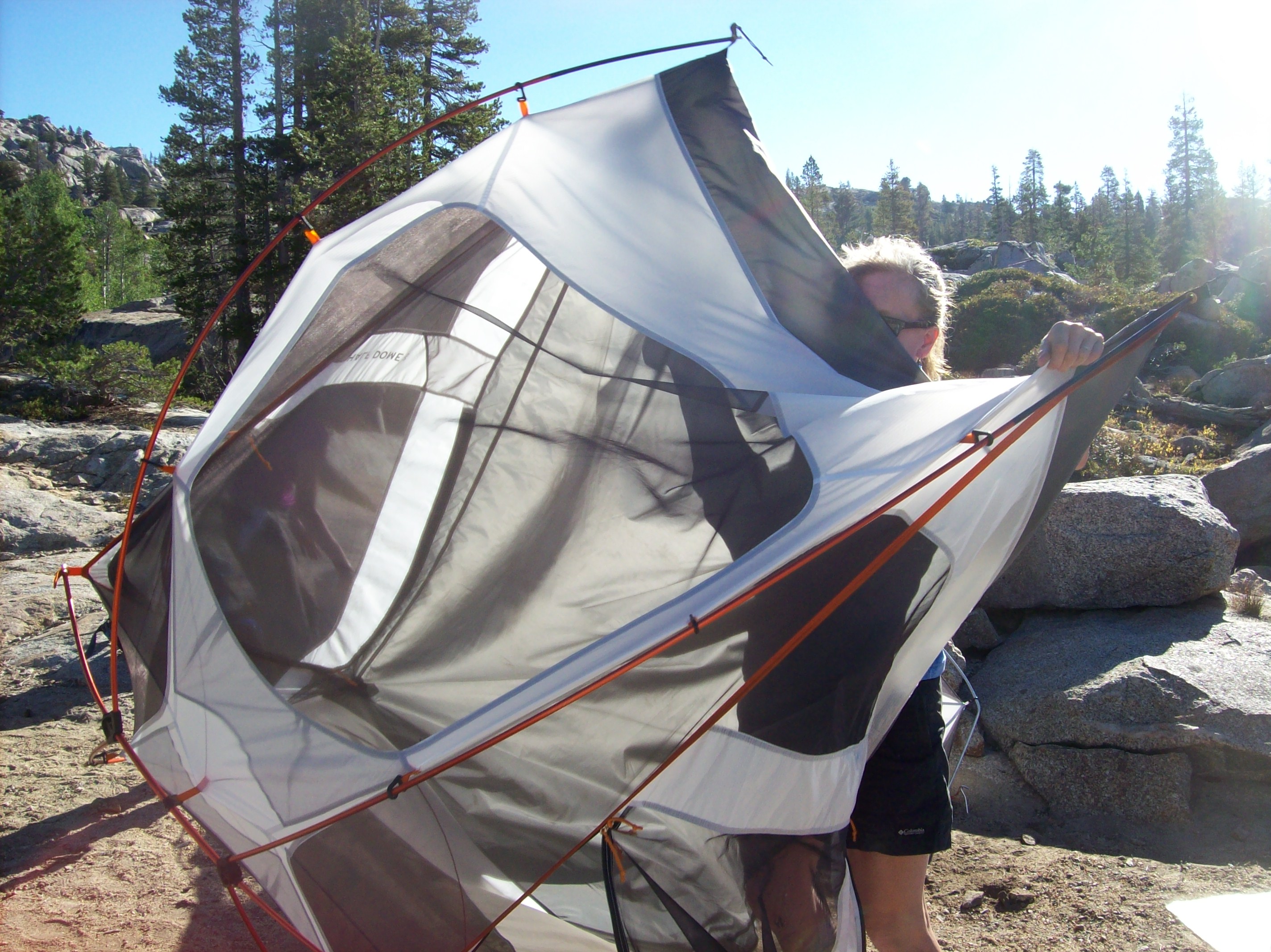
Following the Leave No Trace principles, we searched for areas void of new life to pitch our tents and separated. Beneath a grove of pines, I found a dirt and pine needle covered, somewhat flat area abutting a boulder strewn hill. A few of us pitched our tents there while others found small crevices of dirt between rocks on the edge of the granite hill. Walking to our “kitchen” and communal area was more of a challenge at this site, as we bushwacked through pinecones, over rocks, and around fallen trees for each meal.

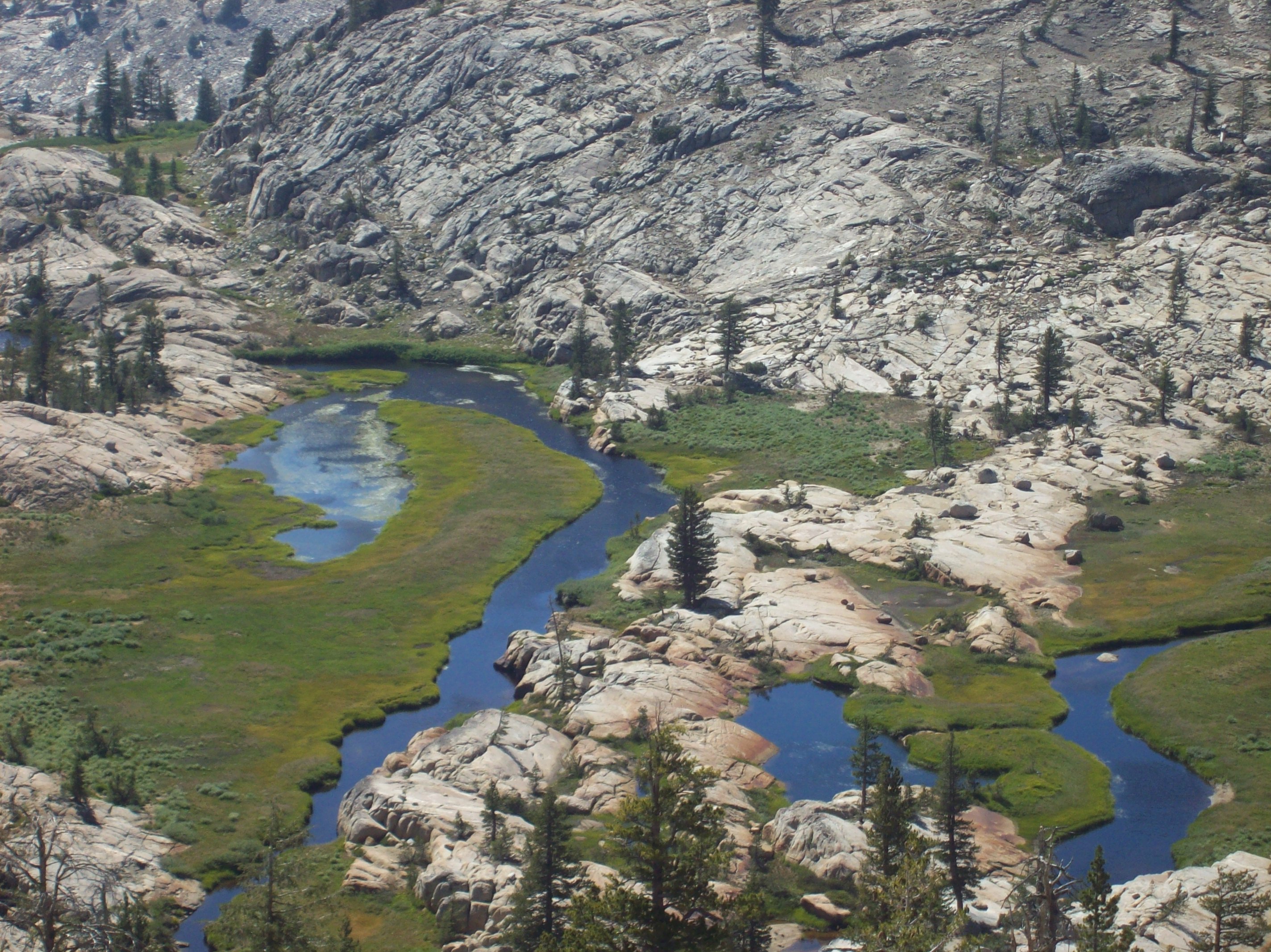
We hiked up the hill for the sunset, viewing the rest of the Wire Lakes and wondering at the castle looking rock formation in the distance.

We spent two nights at Upper Wire Lake, exploring the shoreline and its coves, swimming out to a boulder then warming ourselves in the sun as the breeze picked up, and hiking to nearby Long Lake. On this morning only, we were able to sleep a little longer (until 7 a.m.!), not hurrying to pack up our tents or our packs.

We woke again early on our fifth day on the trail, said good-bye to Upper Wire Lake, and headed back on the trail.

From Lily Pad Lake to Gem Lake

I started to fall and couldn’t right myself. With 40 or so pounds on my back, my center of gravity was off and I fell face first into the dirt. Fortunately, the dirt was soft and except for a ruddy face and smudged sunglasses, I was fine, just tired and a little embarrassed. We were at the end of a 4-mile hike from Lily Pad Lake to Gem Lake on the third day of our backpacking trip.

With its plentiful campsites, several small beaches and its clear, blue water, Gem Lake is a popular destination; and while we found the lake idyllic, others did too. Their tents hidden behind boulders and lodgepole pines, we caught an occasional flash of red or green and heard swimmers yell as they dove and swam, a dog barking excitedly.

Electric blue fireflies flitted around us as we relaxed on the warm rocks, talking and reading.

We slept without a rain fly that night and gazed at the stars through the screen of our tent.

From Crabtree Camp to Lily Pad Lake

With our 45-pound packs on our backs, we began our journey about 8:30 a.m. and set out on the Crabtree trail in the Stanislaus National Forest before entering the Emigrant Wilderness.

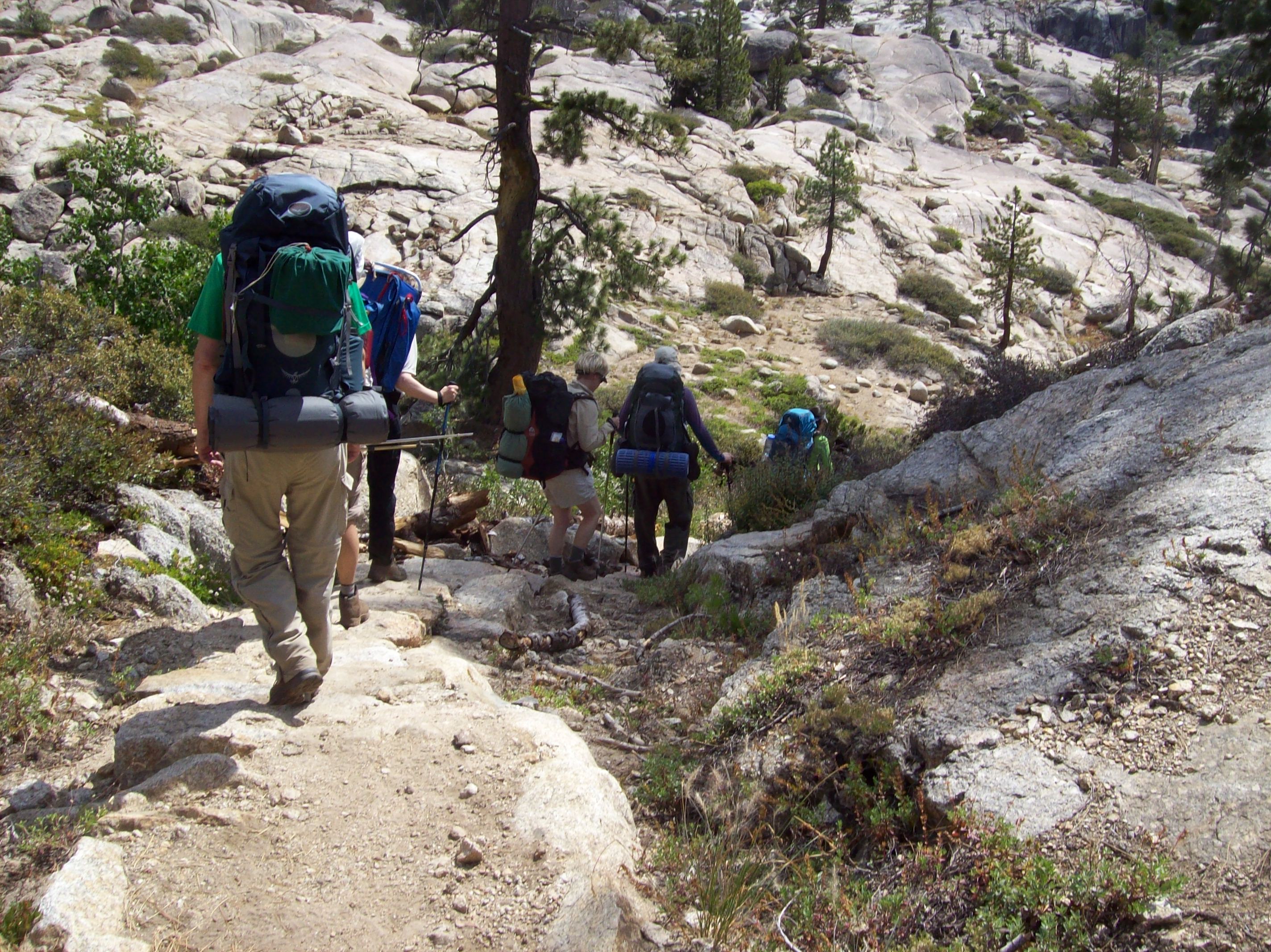
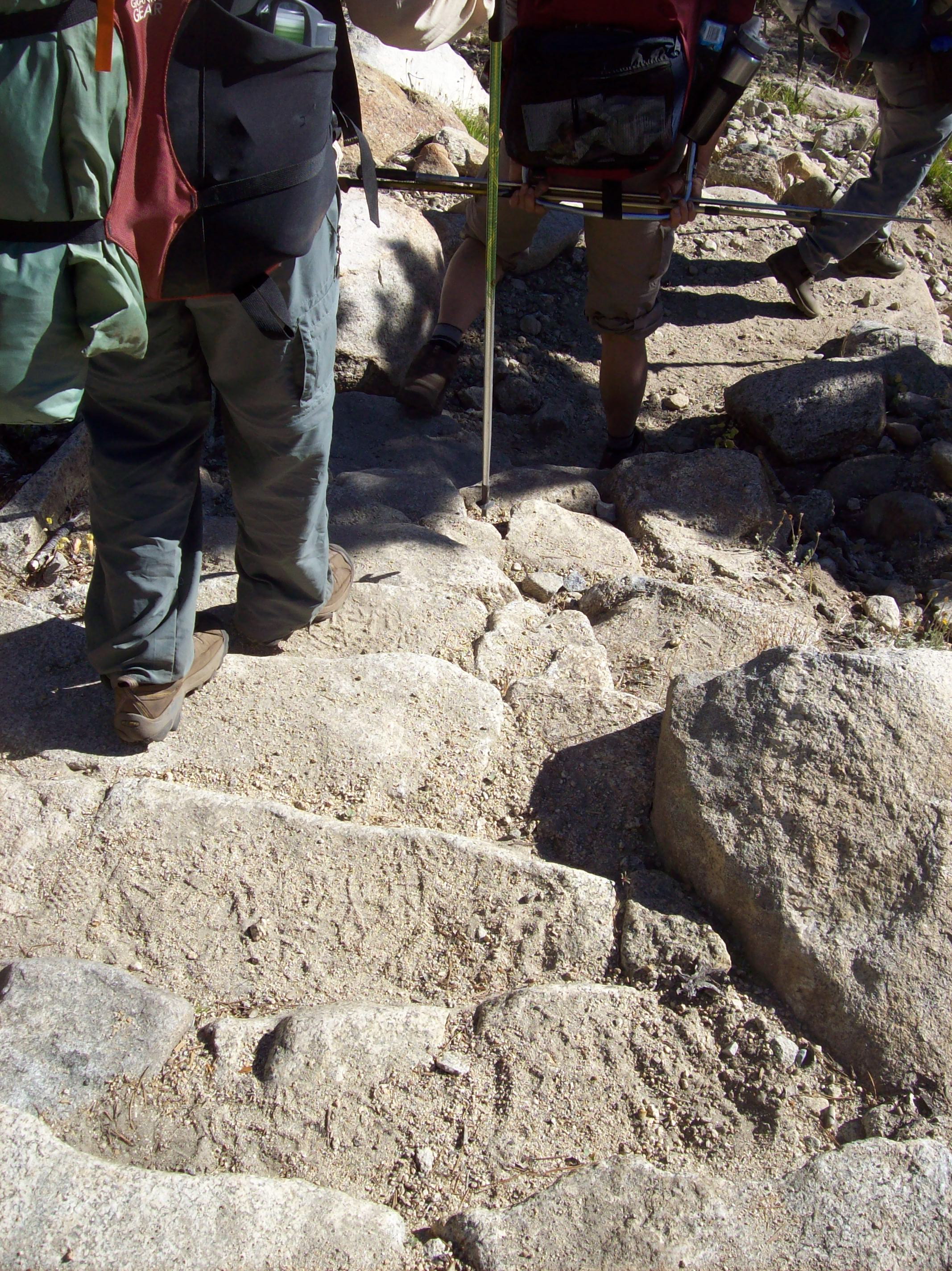
We climbed up and down steps made of granite, stopped briefly for a view of Camp Lake then up again and down a dusty switchback trail.

It was hot, our packs were heavy, and after a water and lunch break, our conversation stopped and we headed up again, each of us concentrating on the next step as our packs dug into our shoulders.

After 5 miles, we arrived at Lily Pad Lake, named for the abundance of lily pads on its surface.

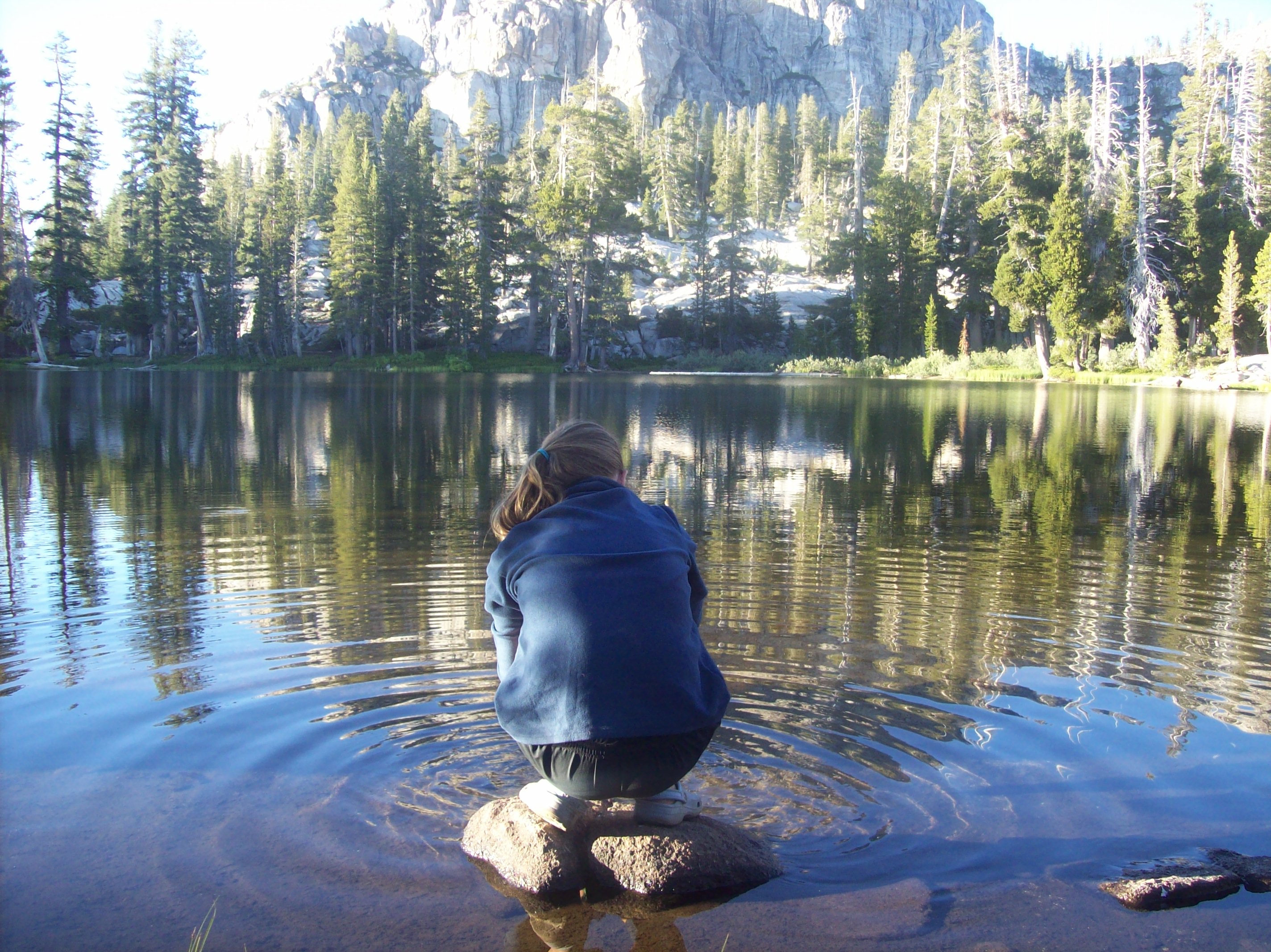
After setting up our tent, we grabbed our water bottles and headed for a large granite rock by the lake. We slid into the water, the lily pads preventing us from swimming but allowing us a small space to cool off.

Refreshed, we joined our group for a Leave No Trace presentation by a volunteer of the Emigrant Wilderness and Stanislaus National Forest. We learned that the seven Leave No Trace principles are: 1) Plan Ahead and Prepare; 2) Travel and Camp on Durable Surfaces; 3) Dispose of Waste Properly; 4) Leave What You Find; 5) Minimize Campfire Impacts; 6) Respect Wildlife; 7) Be Considerate of Other Visitors.

On a large flat rock against a pink sky, one of our fellow backpackers spontaneously led us in yoga exercises. We fell asleep that night tired but relaxed.