South African Rock Art


South Africa is known for its rock art. All around the Drakensberg Mountains there are examples of rock art painted by the San people. The San people, or bushmen, were hunter-gatherers who lived in South Africa during the Stone Age and settled in the Drakensberg Mountains over 8000 years ago. According to a BBC article, the San used black, white and orange pigments to paint over 40,000 animal and human scenes in the Drakensbergs over 3000 years ago.

In Cape Town, we visited the Iziko South African Museum and saw our first rock art: rock paintings included in the museum’s temporary “Made in Translation” exhibit. As I read and learned about the artists, the types of images painted and materials used, I looked forward to seeing some rock art in its natural environment.

As we traveled from the Wild Coast to the Drakensbergs, I saw many notations of rock art on the map. When we passed by without stopping, I wasn’t worried. After all, we would be staying in the Drakensbergs for two nights and should have plenty of opportunities ahead. But traveling with a group has its downsides. Compromise is always a necessity, and rock art just wasn’t on anyone else’s list of things to see.

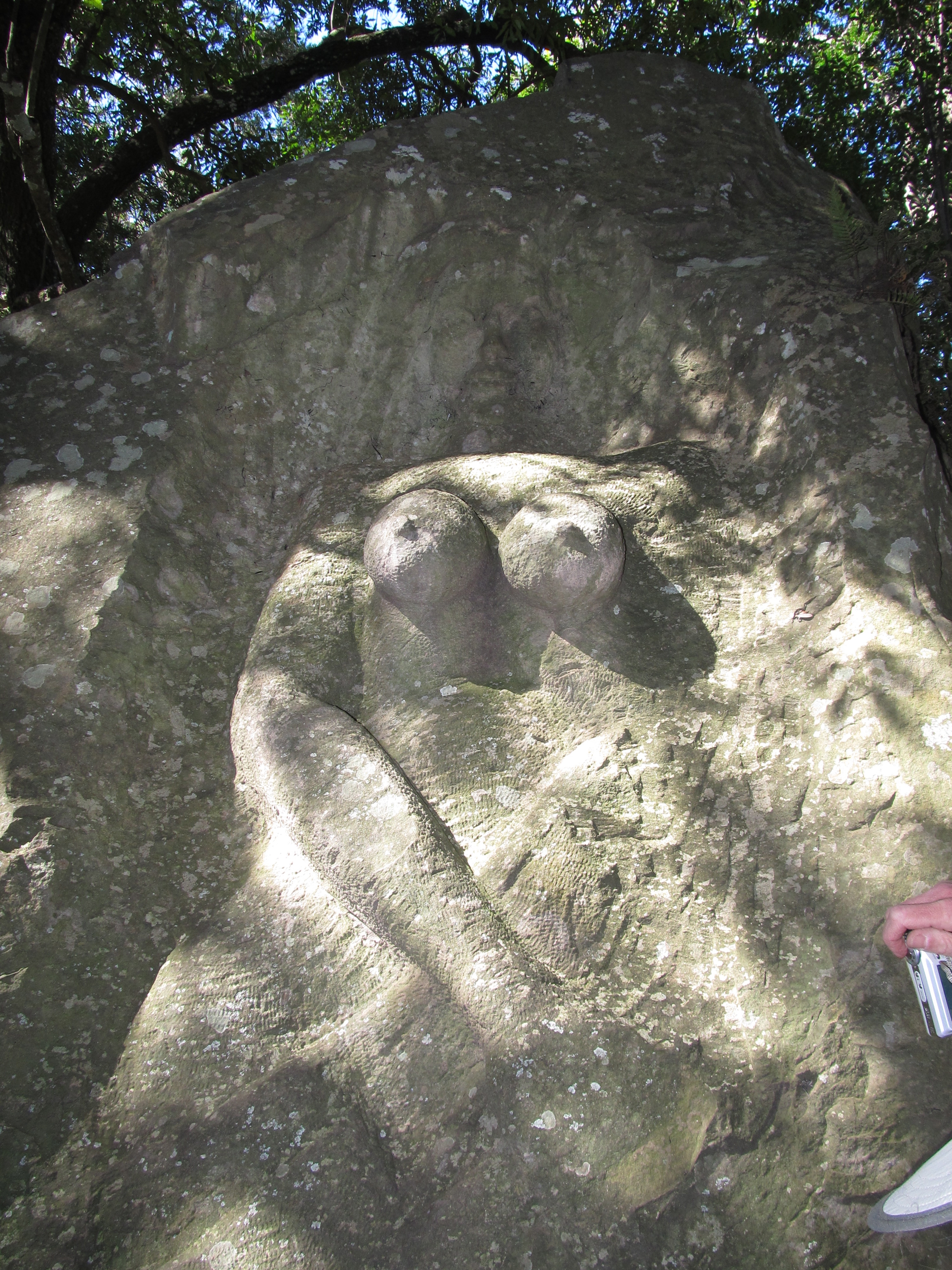
Our last morning in Royal Natal National Park, I talked my family into walking a mile to see an example of rock art near our lodging at Sungubala. We left our friends at the cabin and walked down the mountain path, crossing a stream, climbing around some rocks as we counted our steps and followed the instructions on our trail description. And there it was. Not quite the art I was anticipating, or even looking forward to seeing, but art nonetheless.
To see some San rock art, check out nasmus.co.za for a list of locations and property owners or go to KwaZulu-Natal’s new Kamberg Rock Art Centre which has more than 40,000 San Bushman images in the Ukhahlamba-Drakensberg Park. For more information on the San people, check out the article on rebirth.com. For photographs of their art, check out the gallery on southafrica.info.

Photo of Sungubala rock art by Tommy Taft.

Hiking to Tugela Falls

When will we get another chance like this? To see the second highest waterfall in the world? A waterfall second only to Angel Falls in Venezuela. Godfried wanted to guide us on a hike to see Tugela Falls, and we said yes.

According to our guide books, Tugela Falls in Royal Natal National Park has a total drop in five free leaping falls of 3,110 feet. After heavy rainfall, the books say you can see the falls from roads leading into the park, and the Gorge Hike, which we were about to begin, brings hikers to the base of the falls.

In our friends’ vehicle, we followed the car containing Godfried and a Dutch family down a dirt road and onto the highway toward Royal Natal and the waterfall. The sky was blue and clear and the sun warmed our legs, bare with our bravery against the chilly morning. Amber grasses waved as we drove toward the snow skimmed peaks; it was winter in the northern Drakensbergs of South Africa.

On the way, we stopped at a rural store so Godfried could buy minutes on his cell phone, and my friend and I entered the small shack, looking for a soft drink to appease her queasy stomach. The store was small, a single room whose goods were confined in a cage. Floor to ceiling bars separated the worker from the customer. Only the coke machine and bags of dog food were available without a key. We paid for the drink and were on our way.

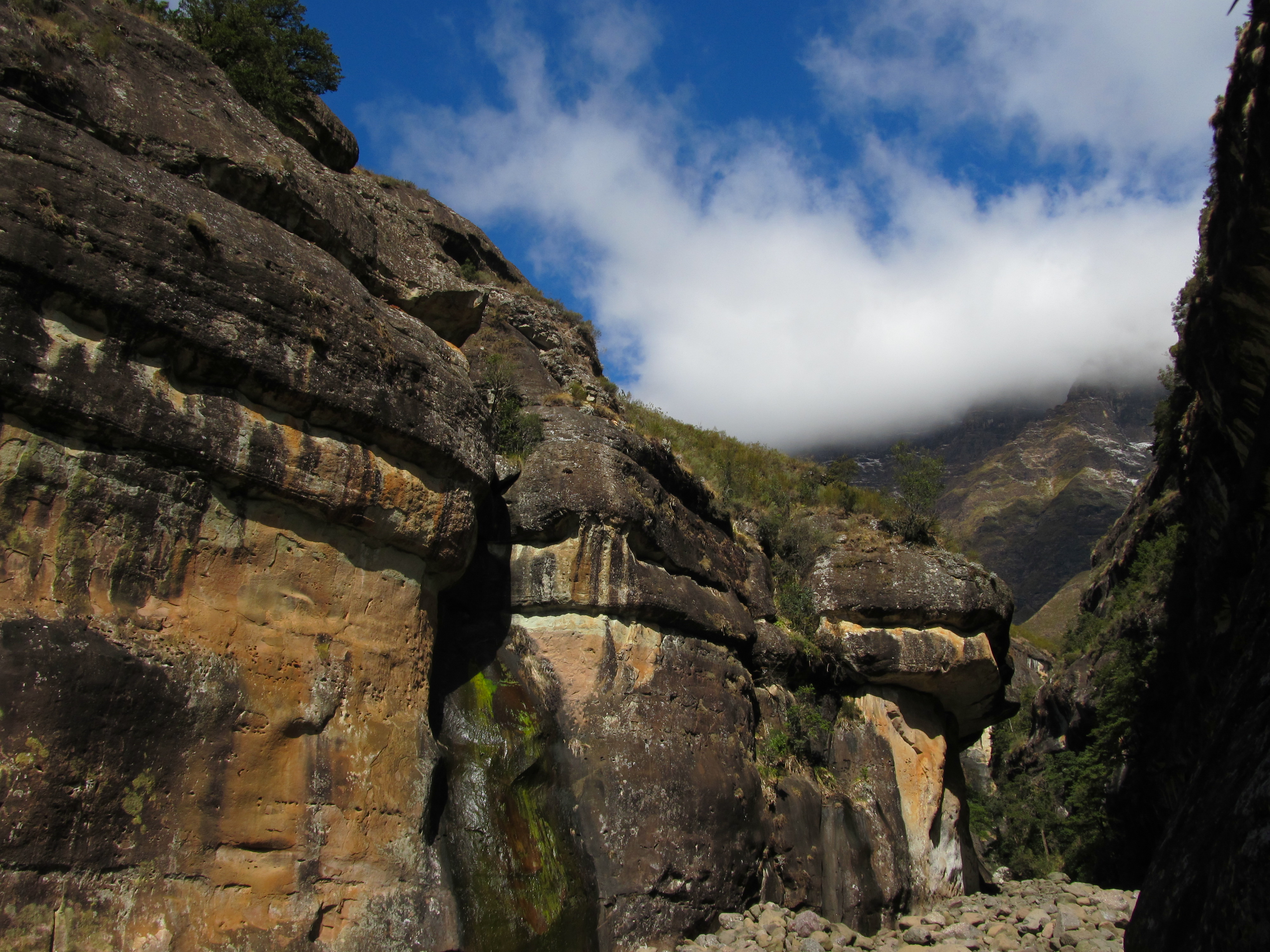
We parked at the trail head, used the facilities, and headed off on a winding dirt trail, stopping only to check out a small snake, to look at a bird, to eat a snack. The dirt trail turned into a stone one, where boulders filled a gorge and white blazes marked the way. We climbed and climbed through the red and yellow and grey gorge, its walls stained by water trickling over its edge. We saw and heard people speaking Dutch and English and Spanish on the trails, a few jumping from the rocks to the deep swimming hole below.

“How much further?” we asked Godfried, when we’d finished our lunch and a good 4 hours of hiking. He pointed up and over. “Just a few minutes,” he said, eventually taking us up the ladder and over the rocks to a spot not far ahead. He stopped and pointed, and when I leaned forward and peered into the bright sun with my binoculars, I thought I could see it, just barely. Across the gorge, on the flat headed peaks of the Amphitheater, where fog spilled and the sun reflected a shiny blackness, there was the waterfall. Frozen. “It is not a proper view,” Godfried said. But we wondered. How many tourists did he take on this hike?

We laughed that night, after a 3-hour hike and a 30-minute ride back to our cabin. Although tired and sore, we didn’t regret the hike with its beautiful views of the gorge and the Amphitheater. The promise of the falls lured us on a hike through colors and rocks. And now we can say we’ve seen Tugela Falls, the second highest waterfall in the world.