Talking Turkeys

Where did your Thanksgiving turkey come from? Was it wild and gamey or raised to be eaten? Did you buy it fresh or was it frozen and covered in plastic with a pop up thermometer stuck in it?

A couple of weeks before Thanksgiving, I placed an order with a turkey farm in Lancaster, Massachusetts. Although their turkeys are available from nearby markets, I decided to pick up the turkey at the farm.

IMG_0716

The afternoon before Thanksgiving, I visited Bob’s Turkey Farm with my 9-year old nephew. After paying for and picking up our plucked and wrapped up turkey, I asked the cashier how many turkeys were at the farm. “Zero,” the cashier told me with a smile. Then added, “We had 10,000 and saved about a hundred for Christmas.” When my nephew asked if the turkeys were white, he said yes and told us where we could find them.

We drove down the road to the barn and parked. As we walked toward the barn, my nephew called out, “Hi turkeys!” several times. Listen to their response.

After talking to the turkeys for several minutes, we said good-bye, and drove home to cook, thankful for local farms and for talking turkeys.

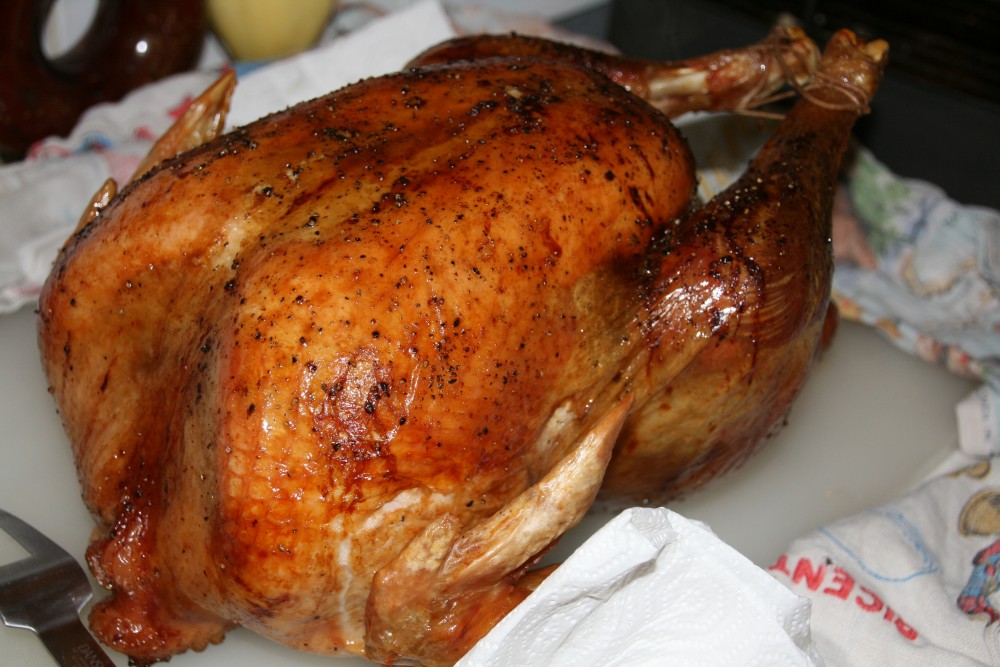
Roasted Turkey

Trip taken November 2013.

Walking a Labyrinth

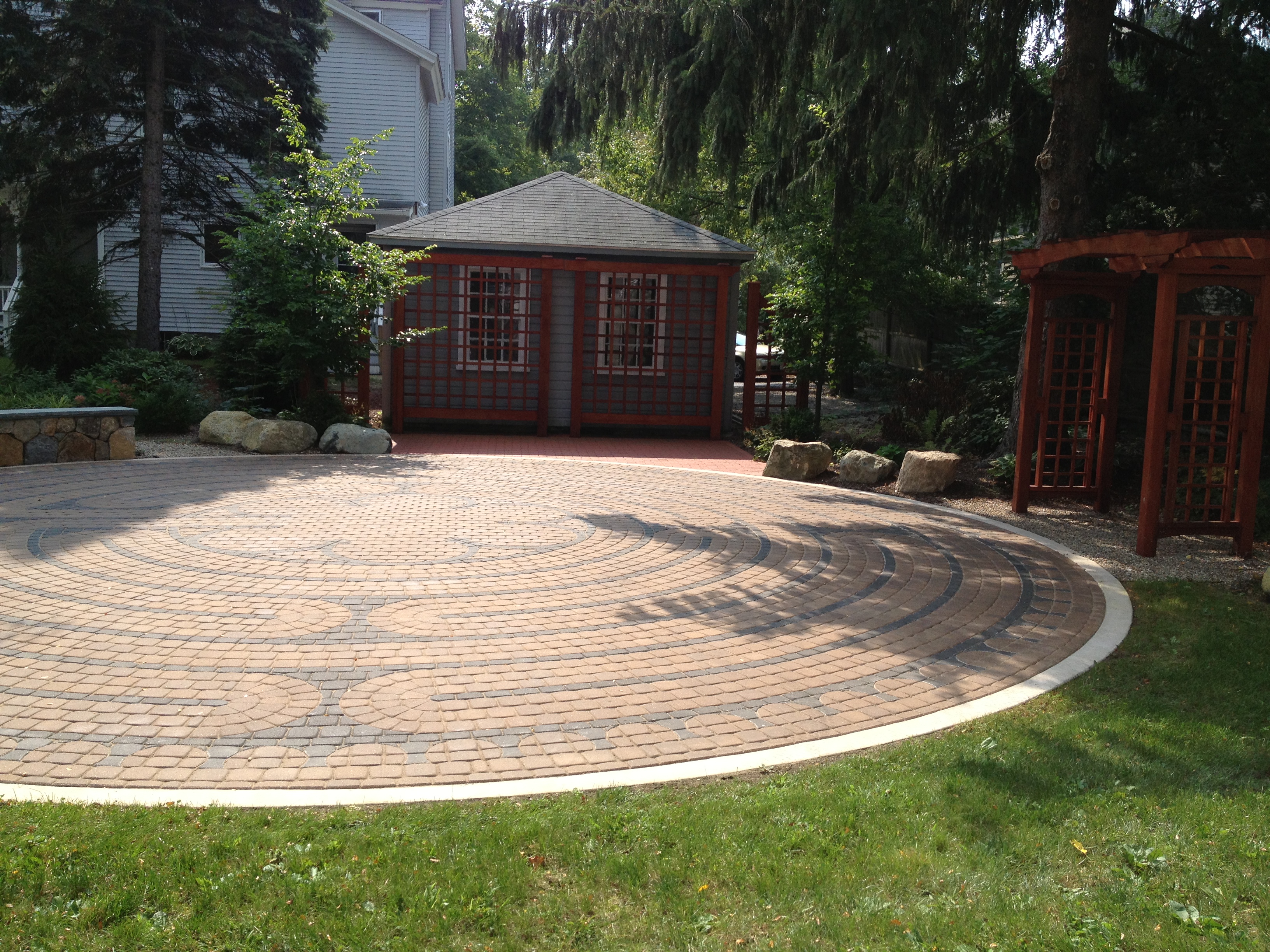
Have you ever walked a labyrinth? Not a maze of several puzzling paths, but a pattern with a single winding path that leads from the opening to the center? I walked an outdoor labyrinth in Concord, Massachusetts, this fall.

IMG_1469

There are two basic labyrinth patterns: the Classical pattern which has seven paths surrounding the center and the Medieval pattern which has eleven. The labyrinth I walked was made of a classical pattern.

Besides being a path with a pattern, what exactly is a labyrinth? According to the Labyrinth Network, the labyrinth is a tool for personal, psychological and spiritual transformation.

Labyrinths are old. The oldest dates back to the 13th century. They can be found around the world and across many cultures and religions.

Why do people walk a labyrinth? Labyrinths are thought to increase right brain activity, they can stimulate problem solving and act as a tool for conflict resolution according to the Labyrinth Network. They offer the walker a chance to meditate and to pray, to release and to receive.

IMG_1471So, what did I experience? On that sunny early fall day, I walked barefoot, feeling the warm bricks beneath my feet. I walked slowly and tried to breathe deeply (I have a habit of breathing shallowly). I cleared my mind as best as I could and just walked. Afterward, I felt relaxed and refreshed. Did I experience increased right brain activity? Maybe. Next time, I’ll plan on being creative soon after my walk.

Since my labyrinth experience, I’ve discovered several in the area I live, made of pavers, gravel, or field stones. My neighbor has one in her backyard. San Francisco’s Grace Cathedral has both an indoor labyrinth and an outdoor labyrinth. I’ve even seen portable labyrinths made of canvas.

If you’re interested in finding a labyrinth near you, whether you live in Alabama, South Dakota, Texas, or Colorado, the Labyrinth Society has a labyrinth locator to help you find one. There are over 75 labyrinths in Massachusetts alone!

IMG_1463

Trip taken September 2013.

Punkin Chunkin 2013

Where did the pumpkin go? I wondered, when I could no longer see the pumpkin just launched by a human powered machine.

The Launch

I removed my camera from in front of my face and searched the sky, suddenly aware that everyone around me was scurrying. Sent soaring over 100 feet in the sky, the pumpkin was now flying back down to earth, its trajectory not in front but behind the machine where many spectators, including myself, were watching.

All ages, from little kids to grown men and women, launch pumpkins on a cornfield at the World Championship Punkin Chunkin in Bridgeville, Delaware, each year on the first weekend in November.

IMG_2826

People from all over the U.S. and even Australia spend months building what they think will be the perfect machine to launch a pumpkin: a catapult, trebuchet, sling shot, centrifugal, or air cannon with names like Whirled Peace, Chunk-n-ology, Pumpkin Slayer, and Cinderella’s Revenge.

IMG_2697 IMG_2701 IMG_2741

IMG_2755 IMG_2758Thousands of spectators come to watch the pumpkin chucking and the people who chuck them.

The Crowd

Pumpkin LadyDogWith no idea where to go, I started to move then heard a loud splat! The pumpkin had landed. Right next to me.

The Pumpkin

From then on I was known as the person who almost got killed by a pumpkin.

Be sure to check out my photos from last year’s event in these posts: Chuckin Pumpkins at Punkin Chunkin, Checking Out the Big Guns, Hanging Out at Punkin Chunkin.

The WCPCA (World Championship Punkin Chunkin Association) “raises money for scholarships, as well as organizations that benefit youth and the local community.” The event will be televised on the Science Channel on Thanksgiving at 8 p.m.

Trip taken November 2013.

Weekly Photo Challenge: Horizon

Horizon. The space or line where the sky meets the earth. 

On the road near Royal Natal National Park, South Africa.

On the road near Royal Natal National Park, South Africa.

According to Franklin Roosevelt, “We have always held to the hope, the belief, the conviction that there is a better life, a better world, beyond the horizon.”

Cahoon Hollow Beach, Wellfleet, Massachusetts.

Cahoon Hollow Beach, Wellfleet, Massachusetts.

Emigrant Wilderness, near Yosemite National Park, California.

Emigrant Wilderness, near Yosemite National Park, California.

Perhaps that’s why I love to travel. To see beyond my own boundaries, to meet new people and encounter new places, to experience life from a different angle.

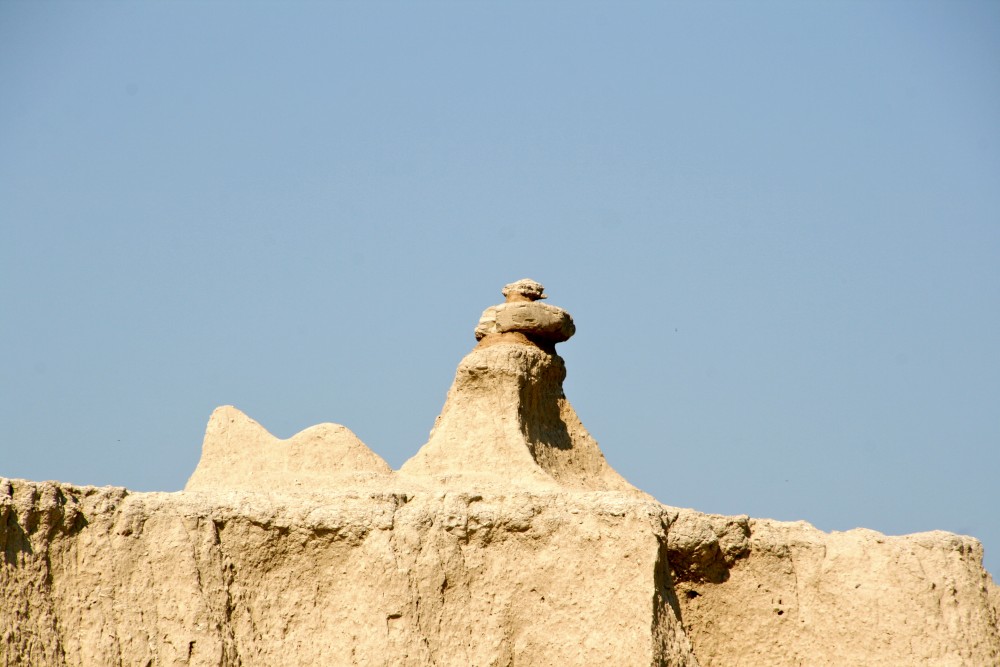
Badlands National Park, South Dakota.

Badlands National Park, South Dakota.

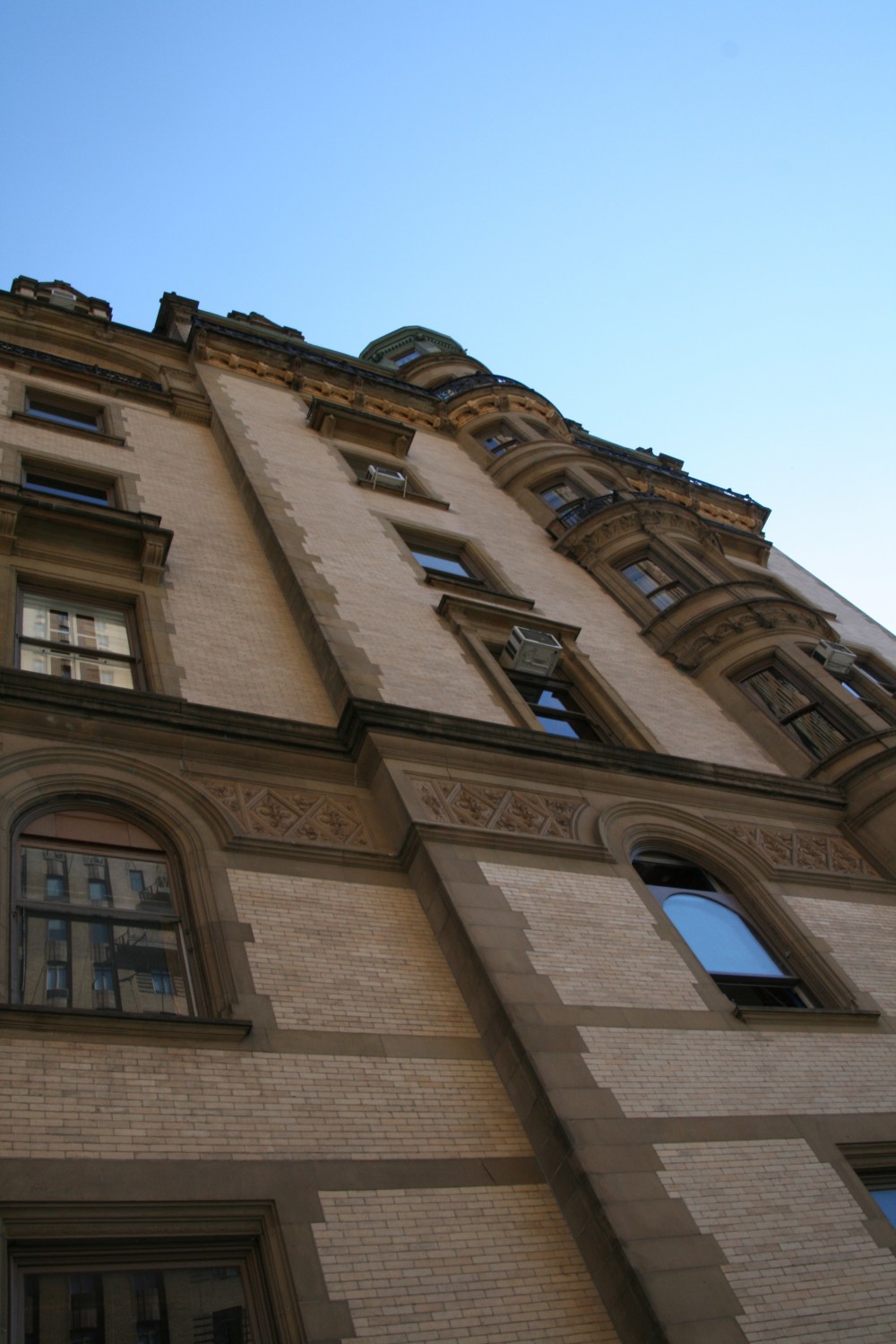
Upper West Side, New York City.

Upper West Side, New York City.

Exploring Colleges: UCSB

People often ask me, “How did you study when you lived by the beach?”

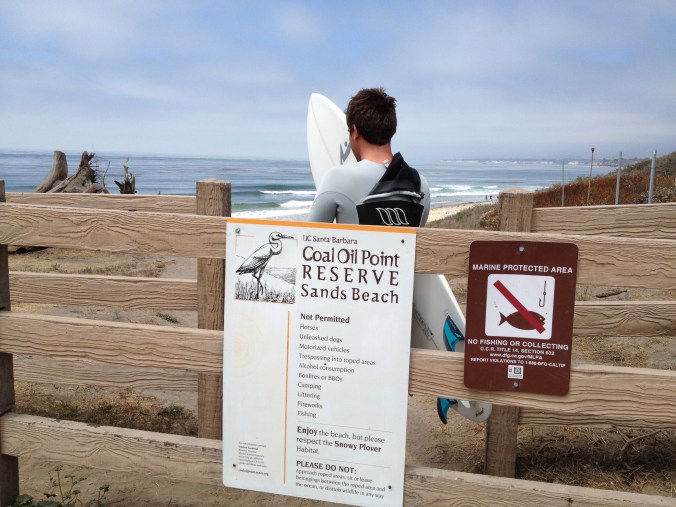
When I went to UCSB (the University of California, Santa Barbara), I did bring my books to the beach on occasion, and I may have opened a book once or twice. But I didn’t really study at the beach. If I wanted to study, I went to the library or stayed home. When you live by the beach, the beach becomes a constant, and it’s easier to just say no. That is, if you’re not a surfer.

IMG_1147 The UCSB campus is dramatic. Located on cliffs overlooking the Pacific Ocean, the campus smells of salt air and the sounds of the ocean, and the sight of surfers is only a short walk or glance away.

Surfers

Most of the 22,000 students (about 18,600 undergrads) live on campus or in the sleepy neighboring Isla Vista (IV), an unincorporated ½ square mile area 8 miles north of the city of Santa Barbara.

IMG_1143 Walkers give way to bicyclists on bike paths that pervade the campus; 53 percent of the students ride their bikes to class. There are seven bike path rotaries, an on campus bike shop, bike lockers and bike parking lots and even bike air pumps scattered around campus.

IMG_1131 Having a bike makes it easy to get to the beach. And to class.

Davidson Library

UCSB offers more than 200 majors, degrees, and credentials in five different colleges. The most popular majors include: biological sciences, economics, psychology, communication, political science, chemistry/biochemistry, environmental studies, English, sociology, physics, computer science, history, and film and media studies.

In spite of the school’s proximity to the beach, US News and World Report recently rated UCSB as number 11 among public colleges and universities in the nation. The campus is home to 11 national institutes and centers, and its faculty includes five Nobel Prize winners for landmark research in physics, chemistry, and economics.

Student at the beach

Obviously, there are some people who study and study hard. The question is, will you be one of them?

Trip taken August 2013.

Searching for Fish Tacos

What I remember most of my college weekend in Ensenada are the fish tacos. From a small taco stand on the street, my American quarter bought me a corn tortilla filled with fried fresh white fish, shredded green cabbage, chopped tomatoes, cilantro, lime, and a white creamy mayonnaise-like sauce. I bought several tacos over the next two days, amazed at the freshness, the flavors, the price and have been searching for a similar savory experience ever since.

Perhaps I’ve been eating in the wrong places, pseudo Mexican restaurants catering to their American clientele, mainly on the East Coast. Fish tacos in flour tortillas with cheddar cheese, iceberg lettuce and tasteless red salsa is more common than not. My kids groan at my disappointment. I am too picky and should know better than to order fish tacos in New England.

It was time for a trip to Santa Barbara, a town near enough to the Mexican border to have the real thing, and while I paid more than a quarter, each taco on my trip far exceeded my culinary expectations.

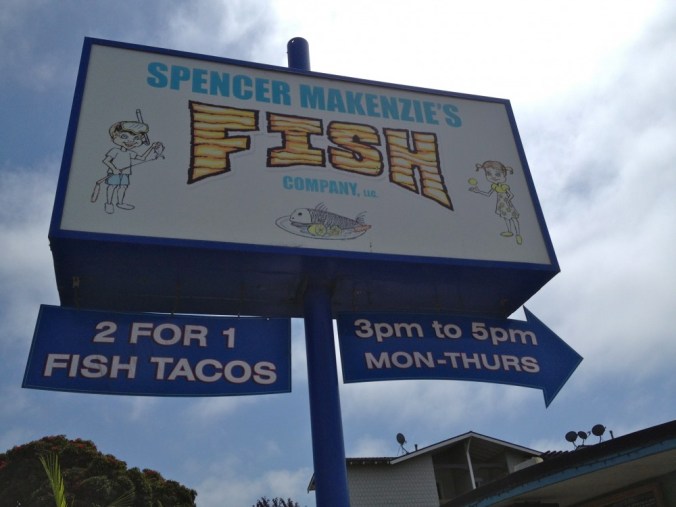
First stop: Spencer Makenzie’s Fish Company: a small beach takeout and eat-in restaurant in Ventura, California, 30 miles south of Santa Barbara. My friends and I ordered the “giant fish taco” with grilled fish and requested corn tortillas instead of flour. Chopped cabbage, cilantro, delicious and only $4.99. It wasn’t giant, but I was happy; my friends were disappointed. There are better tacos around the corner they told me. We’d go there another day.
IMG_1049

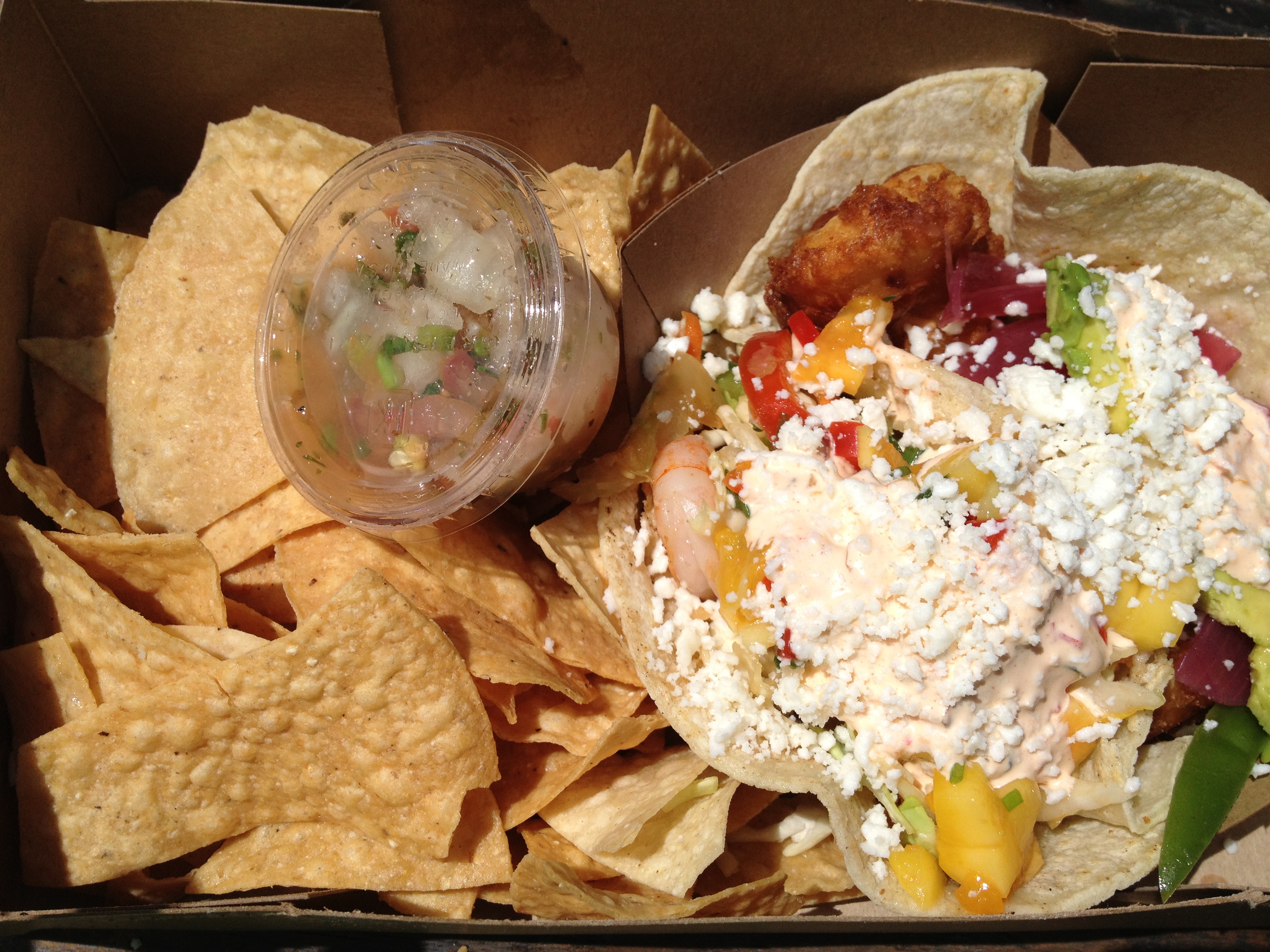
Second stop: On the Alley: a small takeout place on the harbor in Santa Barbara. The menu was promising. I ordered two: the Baja Fish Taco (beer-battered fish, avocado, pickled onion, queso fresco, and salsa blanca) and the Shrimp Taco (seared shrimp, ponzu-marinated slaw, queso fresco, salsa blanca, and mango salsa) served in corn tortillas. They were both so good, the perfect blend of flavors and textures, and only $3 each.
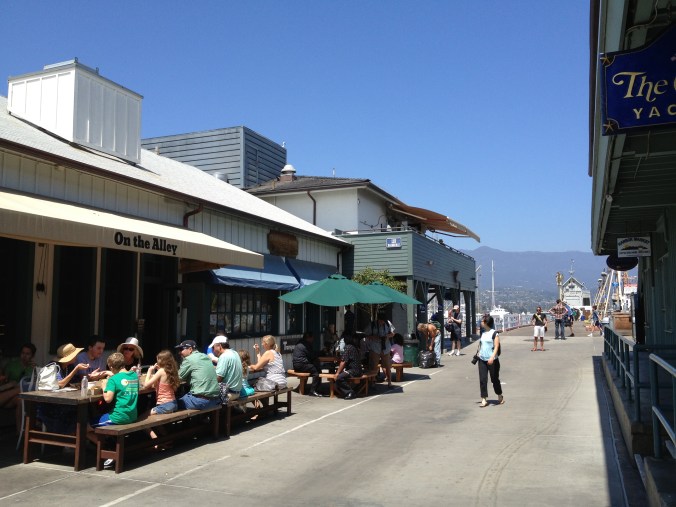
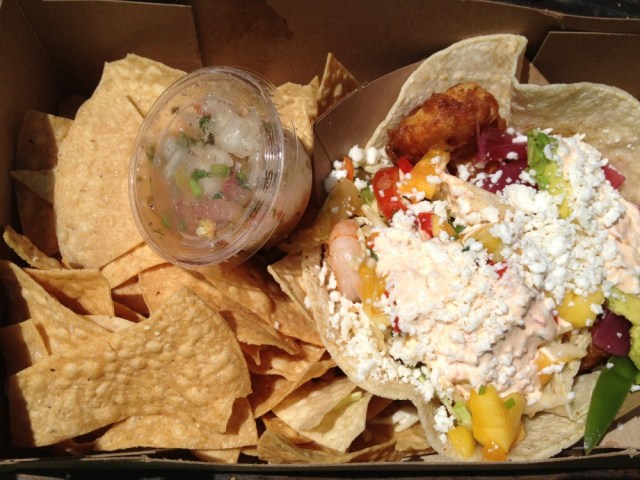
On the Alley


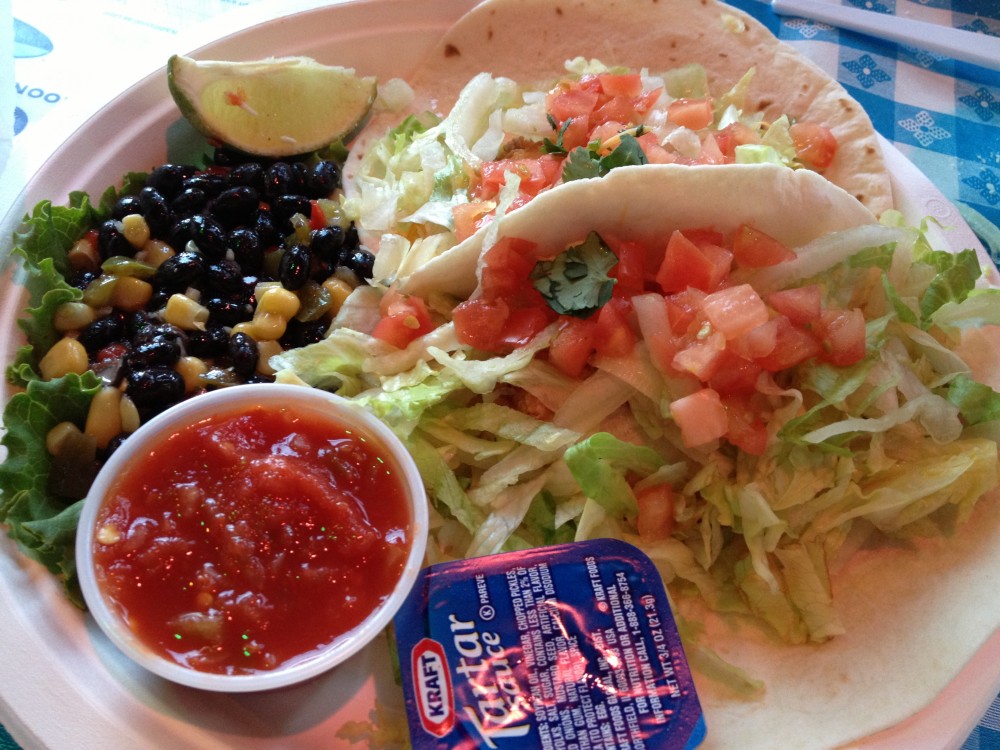
Third stop:  Natural Café: a restaurant specializing in healthy, local, and green living with several locations in southern California. Although we ordered at the counter, here our food was brought to the table. I chose the Cabo Fish Tacos: two tacos for $8.59. These tacos were different than the others in flavors and textures. Instead of grilled or fried, the fish was sautéed in a tomato-based salsa. The addition of coarsely shredded carrots reminded me of a salad. Would I go back? Yes, but not for the tacos.

Natural Cafe Fish Tacos

Fourth stop:  Beach House: takeout on the Ventura Pier; a fish taco mecca.

IMG_1230

Six fish taco options plus a shrimp taco and a calamari taco. After much deliberation, I chose two, the Baja Fish Taco ($3) and the Early California Taco ($4). I sat at a counter inside while watching the surf through the window, enjoying the many flavors of my tacos: the tangy and sour of the lime, the distinct flavor of cilantro, the spicy chipotle sauce, the finely shredded cabbage and the flaky grilled fish. Yum.

Tacos at the Beach House

Fifth stop: Blue Plate Oysterette: a full service restaurant on Ocean Avenue near the Santa Monica Pier. The question, should we eat at Blue Plate Tacos or Blue Plate Oysterette? My friend and I were advised to eat at Blue Plate Oysterette where we were told the fish tacos were the best. We sat outside at this sidewalk café, warmed by propane heaters and Mexican blankets, and enjoyed being waited on. We ordered the fish tacos: spicy aioli, grilled mahi mahi, purple cabbage, chopped cilantro, and lime; these fish tacos were some of the most delicious, the biggest piece of fish, and the most expensive ($15), if not the most authentic tacos we’d had all week.
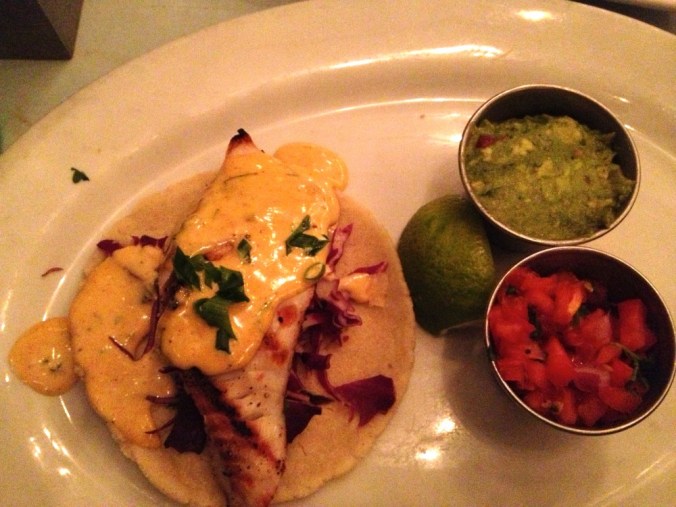
Blue Plate Oysterette Fish Tacos

I will return; there are so many tacos I didn’t try. And now, after a few months back in New England, I haven’t given up hope of finding a good fish taco closer to home. I ate a surprisingly delicious salmon taco at an autumn fair in September and a tasteless one at a Mexican restaurant last weekend. I’m still looking, but if I want a sure thing this far away from the border, I stop at the fish market, start up the grill, and make my own fish tacos, just as I like them.

Trip taken August 2013.

Weekly Photo Challenge: Saturated

Sat-u-rated: Filled completely with something that permeates or pervades; a color not mixed with white; a pure unmixed color.

One early morning on the Wild Coast of South Africa, the colors of a sunrise saturated my world. And for a moment, my world was golden.

Sunrise at Bulungula

Trip taken 2011. This post is in response to the WordPress Weekly Photo Challenge.

Exploring Colleges: American University

I learned a new word when I visited American University last April. Wonk.

According to Merriam-Webster, a wonk is: “a person who knows a lot about the details of a particular field (such as politics) and often talks a lot about that field.” According to American University, its students are wonks: smart + passionate + focused + engaged.

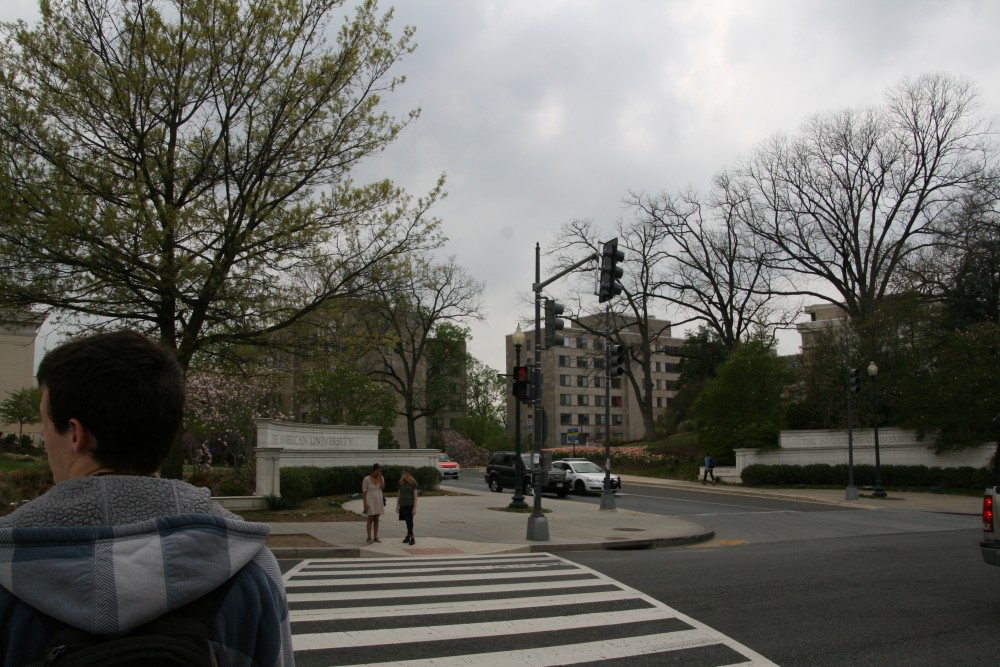
crosswalk to American campus and signWhile American University is technically located in DC, it is a 15-minute Metro ride from downtown. A free shuttle drives its passengers from the Tenleytown/AU Metro stop past the Department of Homeland Security to the 84-acre campus.

After a film about life on campus (one of the better ones we’ve seen) and a brief introduction by an admissions officer, my son and I followed our tour guide around campus, visiting a dorm and the quad. We learned a few statistics: not only is American University the largest school of international affairs in the country, its students are the country’s most politically active; 70 percent study abroad, and 84 percent complete an internship before graduating.

About half of the 13,000 students at American are grad students; in 2012, there were only 6,776 undergrad. The university’s 61 bachelors, 54 masters, 11 doctoral degrees, and JD are taught at its seven schools and colleges. The average classroom size is 22, and the maximum class size is 66, according to our tour guide.

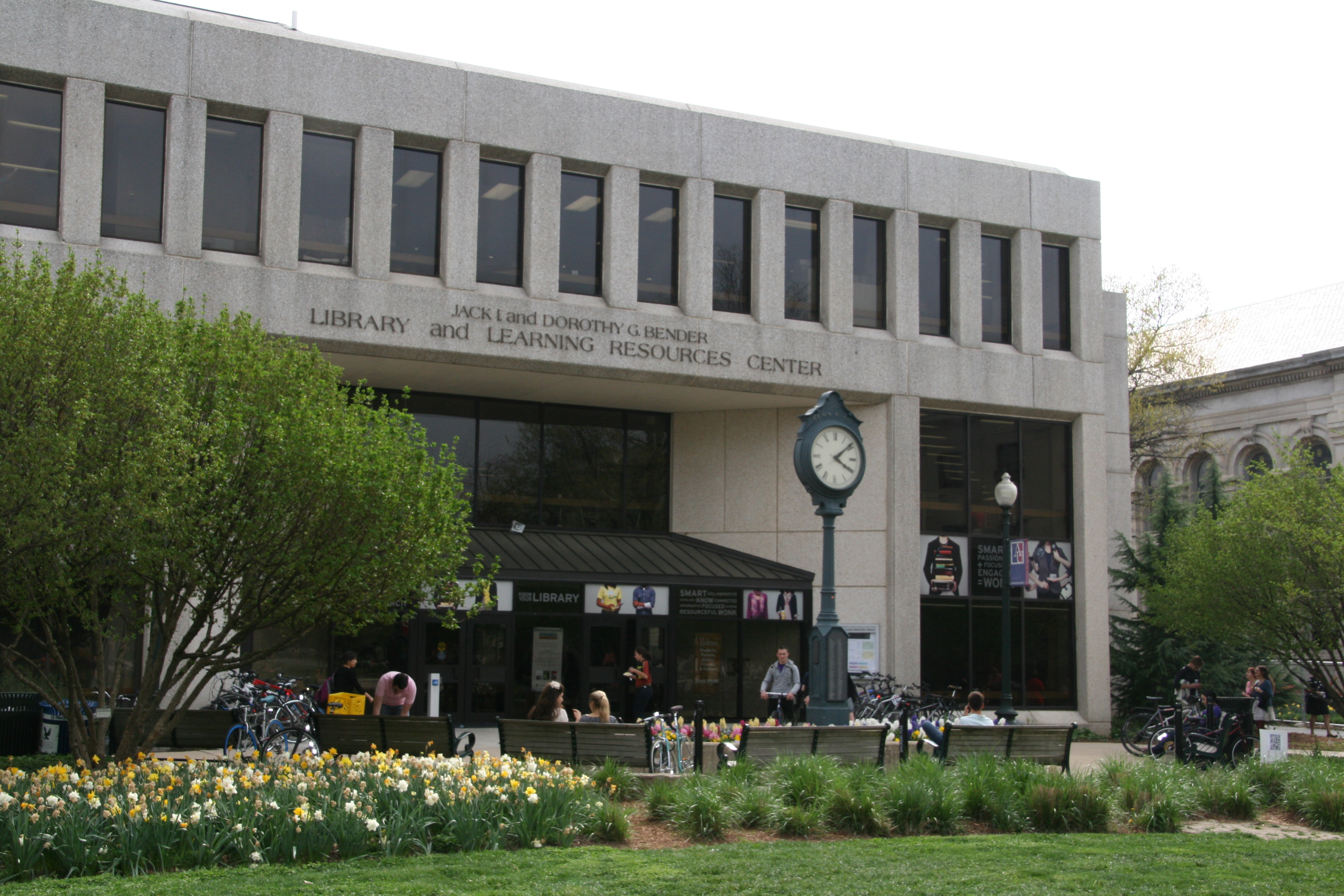
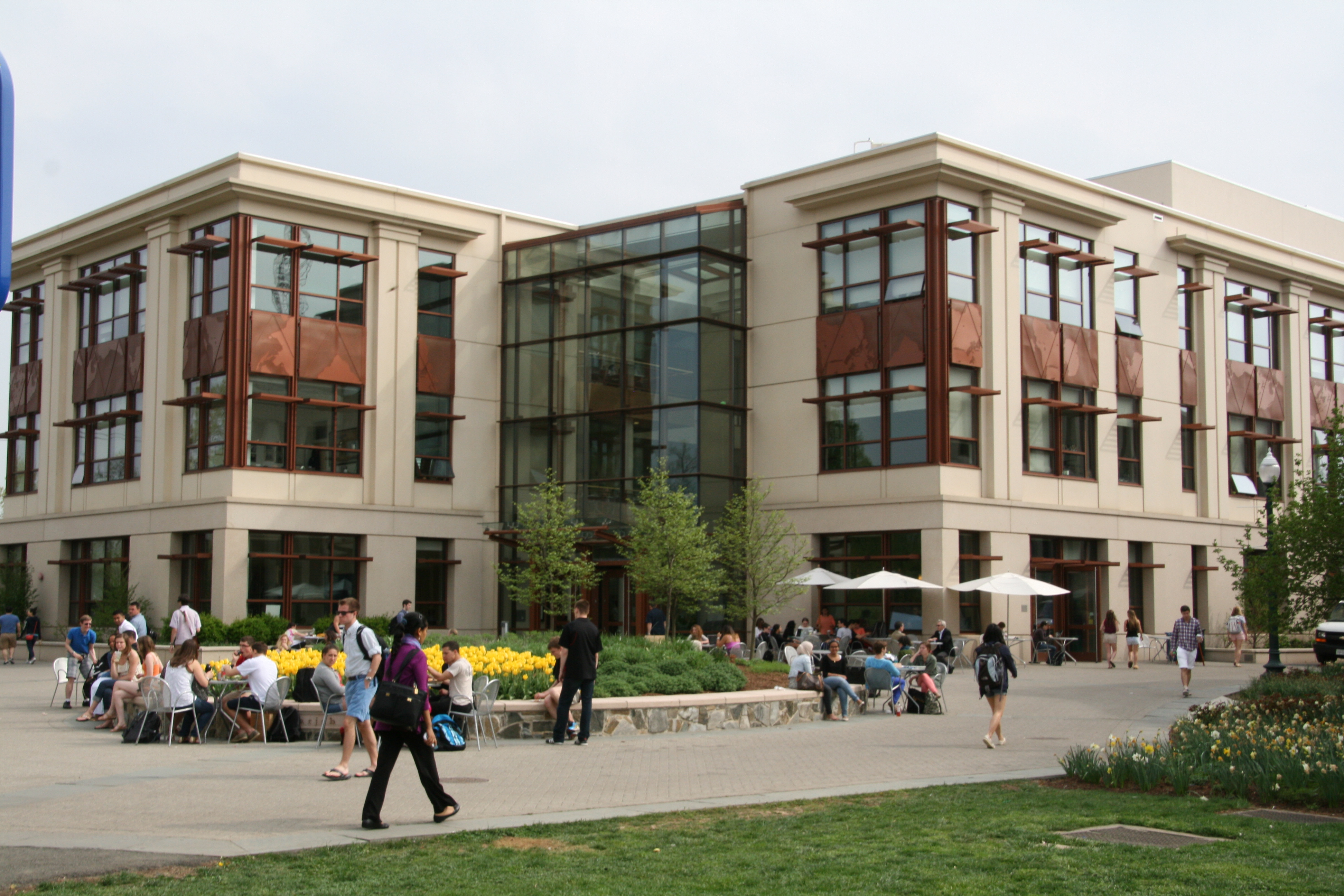
Unlike urban George Washington University, American University has a campus feel. The main university buildings, including the library and the Kay Spiritual Life Center (which houses 25 different groups of faith), surround the Main Quad.

IMG_1084

As we walked, students milled about, entering various buildings.

IMG_1083

There was not the energy and excitement of a city campus, instead there was more of an academic feel. Perhaps that’s one of the reasons American calls its students wonks.

IMG_1085

To be a wonk is to know (wonk spelled backward).

Trip taken: April 2013.

Exploring Colleges: The George Washington University

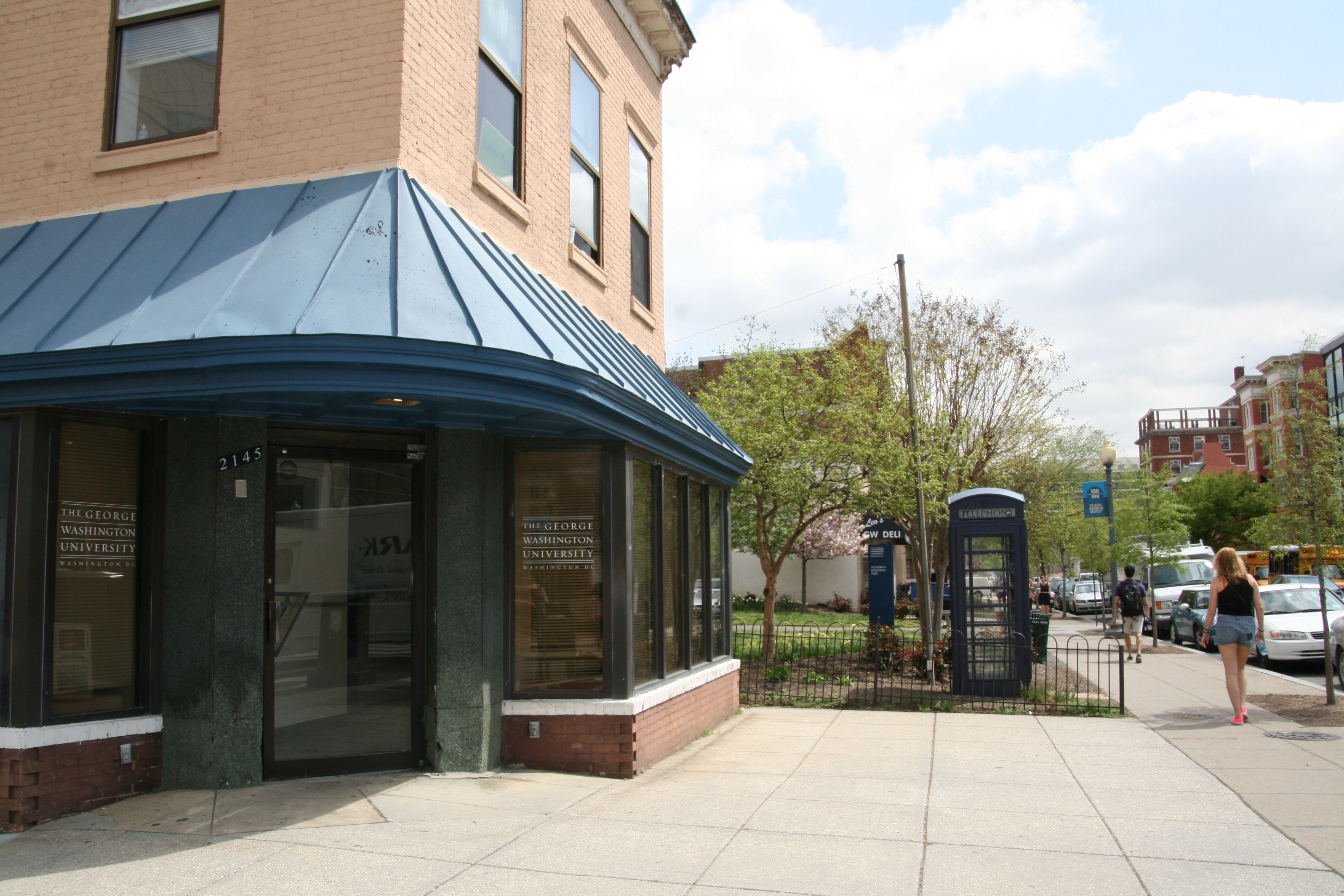
In the middle of Washington, D.C., just four blocks from the White House, is The George Washington University; its Foggy Bottom campus barely defined, as university buildings blend in with other buildings in the city.

We got off the Metro at the Foggy Bottom stop at 23rd and I Streets and made our way through busy intersections to the Admissions Welcome Center, a few blocks away. At the appointed time, we joined a few hundred other high schoolers and their parents for an information session and a tour.

IMG_1066

The George Washington University is one of the bigger schools we’ve visited, with 25,000 students at three campuses (Foggy Bottom and Mount Vernon in Washington and the GW Virginia Science and Technology Campus in Ashburn, VA). Of those 25,000, however, only 10,464 are undergraduate students, 55 percent of them female. The average class size is 28, and the student-faculty ratio is 13:1.

We learned that the university’s motto is knowledge in action: through service, internships, and research. We learned that there are over six academic schools and 70 majors. Fifty-five percent of the students study abroad and 92 percent intern. The freshmen have a required day of service, and students all over campus logged in over 250,000 hours of service in 2012.

GW ranked number 40 in 2012 in a list of the most expensive schools (its tuition and fees in 2013-2014 are $47,343 and that’s not including room and board). It also must rank one of the highest for dining. There is only one dining common at George Washington, and most students don’t eat there. At least that’s what our tour guide said. Instead, students eat with the public at the several restaurants and take-out places interspersed among the university buildings on J Street or wherever their GWorld card is accepted. When we asked for a recommendation for lunch, typical of where the students eat, our tour guide recommended Tonic, a restaurant where a cheeseburger costs $12 and macaroni and cheese is $13.

IMG_1067

Whatever the cost, there is an energy at George Washington that we haven’t encountered at other universities; a vitality and excitement among the students who talk about their experiences: running to climb a tree after the inauguration, interning on Capitol Hill, and attending one of the 150 guest speeches at the Eliot School of International Affairs.

An Unusual Point of View

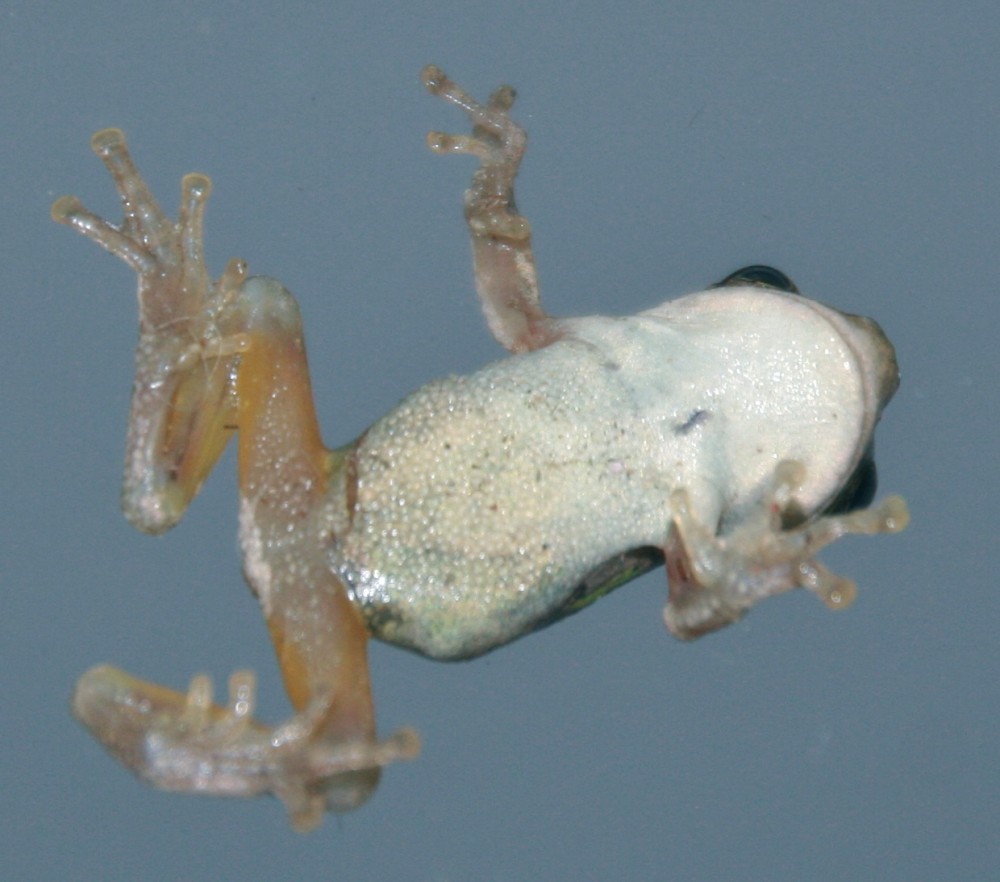
I didn’t have to travel far to capture this frog on film. He (or she!) climbed up my front storm door and hung out for awhile one hot summer night. Perhaps it was cooler against the glass.

underside of frog with a white belly and yellow legs

With his white belly and toes that are not completely webbed, it looks like he might be a wood frog (Rana sylvatica), a frog which lives in the northeastern U.S. in forests or woodland areas. To see some other unusual points of view, click here.

Trip taken July 2013.