Visiting Colleges in Beantown

You’ve heard that Boston is a college town. You know that there are several colleges in Boston. Did you know there are 31 colleges in Boston proper? And over 50 colleges in the Boston area? With all those colleges, it’s not surprising that there are over 240,000 students living in the Boston area.

We visited only four of those colleges in February: Boston University, Northeastern University, Tufts University, and Boston College. We listened to admission counselors give hints on how to write the impending essay and watched our tour guides walk backward. Here’s what we learned.

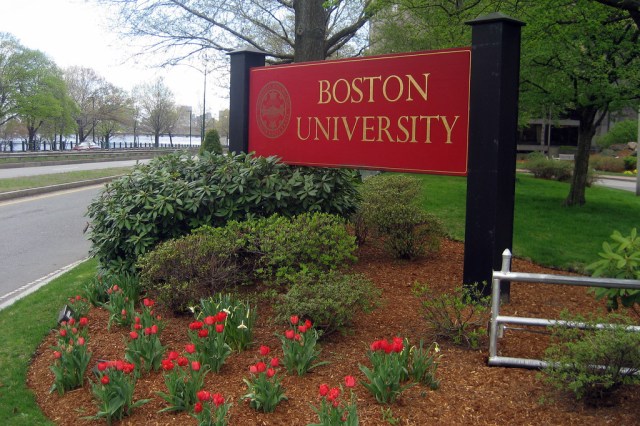
Boston University, located near Kenmore Square, Fenway Park, and the Citgo sign, is very much an urban campus with its old and new buildings scattered along Commonwealth Avenue, just a block from the Charles River. The campus is long and linear, its 33,000 students melding with other pedestrians as they run from class to class. The school offers more than 250 programs of study, and many of BU’s 18,000 undergraduate students graduate with a dual degree. The university ranks ninth in the nation for its large contingency of international students from more than 140 countries.
Only a few blocks away, Northeastern University is in the museum district, just down the street from the Museum of Fine Arts and the Isabella Stewart Gardener Museum. Another urban college, Northeastern’s strategically placed buildings hide the city around it, creating more of a campus feel. Northeastern focuses on “global experiential learning,” where its 16,000 undergraduate students participate in two to three co-ops or internships in the U.S. or abroad to gain real world experience before they graduate.

Brick buildings comprise the hilltop Tufts University (founded in 1852) in Medford where you can see the Boston skyline without actually being in it. Cambridge is just a few minutes walk down the road; hop on the subway, and in less than half an hour, you’re walking along the Freedom Trail. We learned that Tuft’s 5200 undergraduate students are engaged in the search for knowledge, that they are leaders and take action in the world around them.

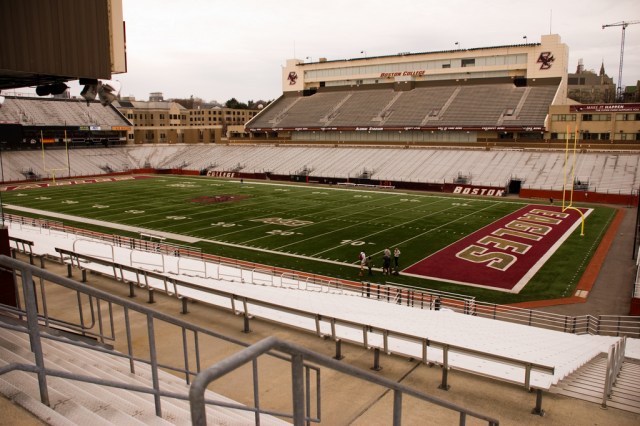
The million dollar steps at Boston College help keep this college’s student body in shape as they climb the hill to attend classes in the old stone buildings. BC is located in Newton, another short subway ride from Boston. At BC, students hold doors open for each other, community is important, and most of the 9100 undergraduate students go to the sports events. According to the students we spoke to, service is so important to BC students that participating in a service project can be very competitive.
Next stop, more colleges on the East Coast.

Trip taken February 2013.

All photos used under Creative Commons.
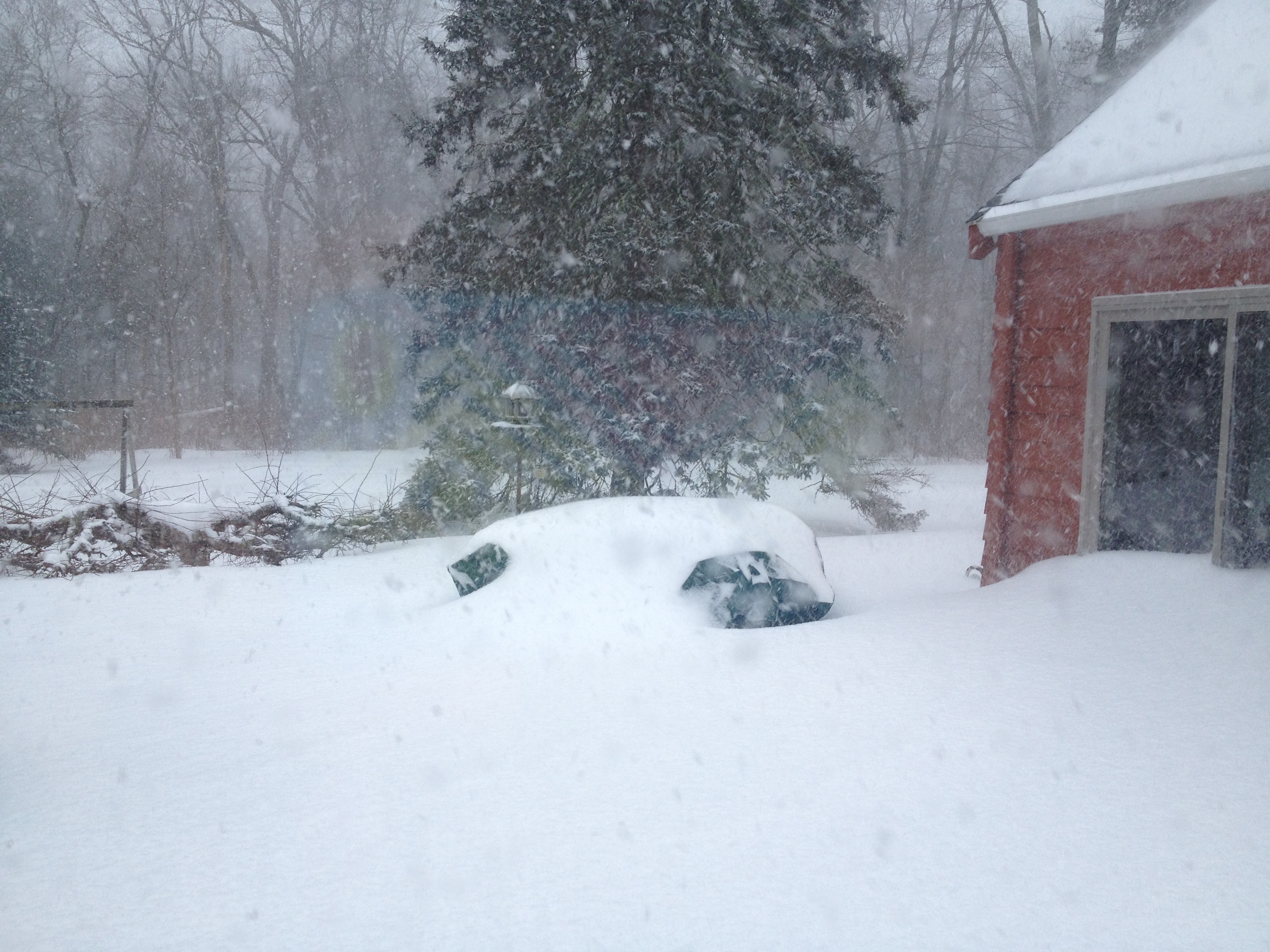
How to Survive a New England Winter

No matter how long I have lived in New England, I will always be a California girl. Born and raised in the San Francisco area, my body much prefers temperate climates. So, after living in New England for the last several years where the winters are cold and long, instead of hibernating, I embrace the cold.

IMG_0057

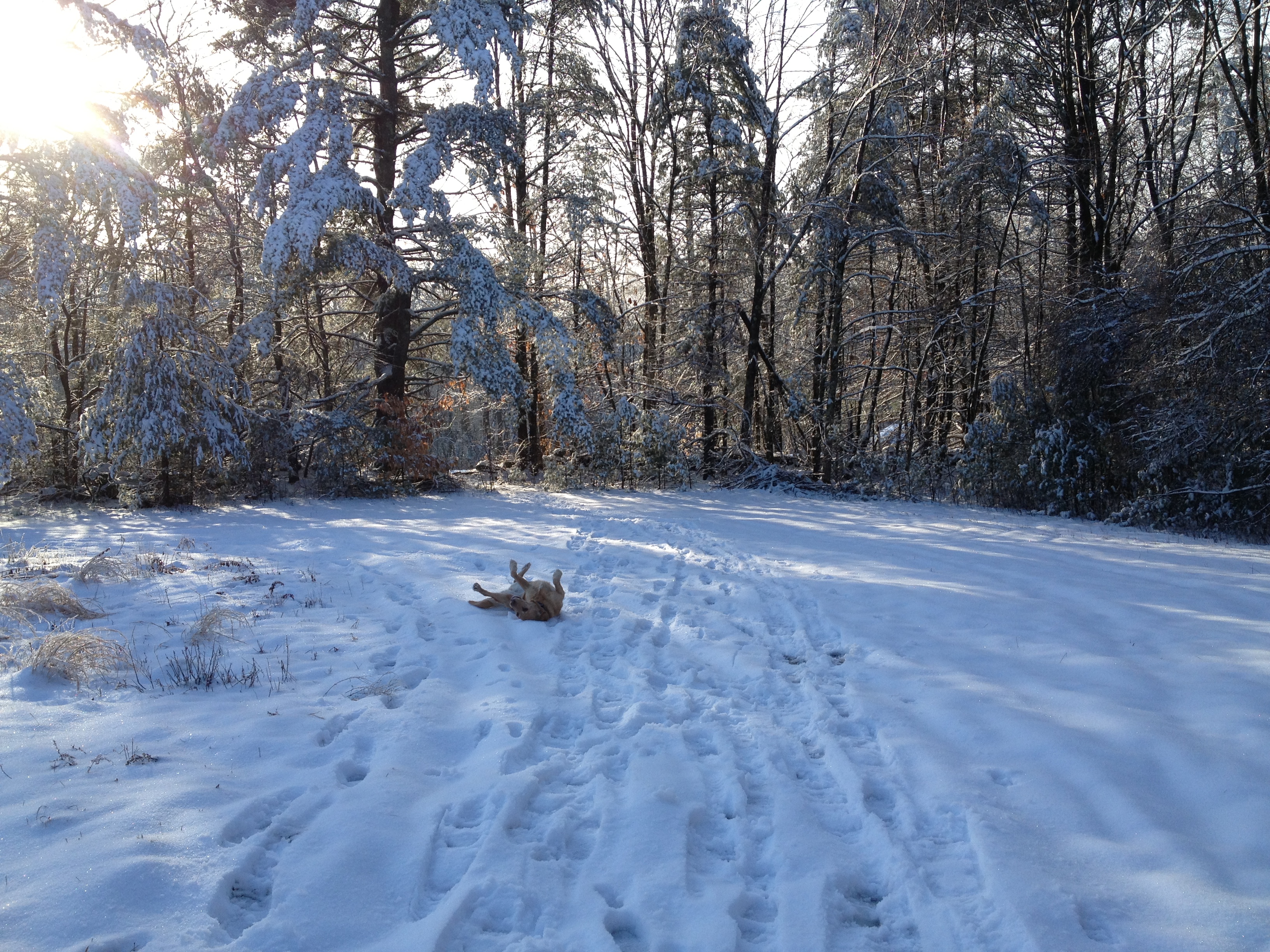
I ski, cross country ski, snow shoe, and ice skate. The result is a much happier me. When it snows, I am excited. I put on my appropriate gear and out the door I go.

IMG_0064

IMG_0079

The unbearable cold becomes exhilarating; it flushes my cheeks and encourages me to move.

IMG_0036

And when I’m tired, I retreat inside where I warm my fingers in front of the fire.

IMG_0087

In March, when the temperatures soar to above 45, the snow and the ice melt, and the air feels balmy, it is only then that I become impatient for spring.

Adventure in an Armchair

My heart raced and my fingers tingled as I cross country skied across Antartica, white water kayaked in New Zealand, and rock climbed up Yosemite’s El Capitan with and without all four limbs last week at the Somerville Theater in Massachusetts.

Chunky Monkey Productions brings the best of the Banff Mountain Film Festival to the Boston area every February, which also happens to be school vacation week. For that reason alone, I have not gone every year. But this February, when we decided to stay local, I knew what I wanted to do: travel in an armchair (or movie theater seat) and vicariously experience a few adventures around the world.

The best films from the Banff Mountain Film Festival, held annually in Banff, Canada, are chosen for the World Tour where they are viewed in 32 countries and across the U.S. Local organizers choose which films to screen in their home town. In Somerville, 19 films were shown over three nights. On Thursday night, February 21, I watched nine of those films, including “Industrial Revolutions,” the “Gimp Monkeys” and “Crossing the Ice,” for a total of 131 wilderness inspiring and adrenaline rushing minutes.

Chunky Monkey Productions describes the variety of the films on its website: “Rocks and Rockers, Boards and Boulders, Bikes, Boyz, and the Last Great Unknown. Afghans, Brits, Australians, Norwegians, Canadians, Switzerlanders, Frenchlanders, and American Flatlanders leavin’ the urbs for that nourishing taste of up high. Skiers, Paragliders, Paraclimbers, Highliners, Steep Water, Fast Water, Huckers, Flyers, Mountains, Highways, Canyons, Big Crazy Adventure, the Moon, and Lily. . .”

Though the film festival has already left New England, it will be screened in other states in March and April. Check out the festival’s website to watch video clips and to see when and where it’s playing and be sure to sign up for an email reminder so you can experience the films next year.

Walking Along the Brigham Pike

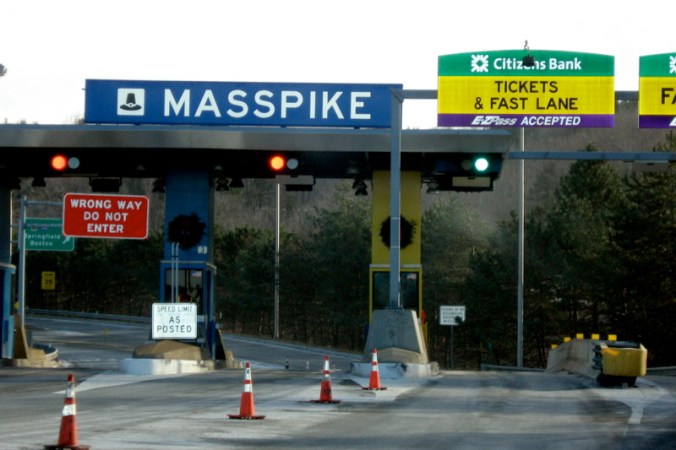
If you’re in Boston, when is the Pike not the Mass Pike, the section of Interstate 90 which travels across Massachusetts?

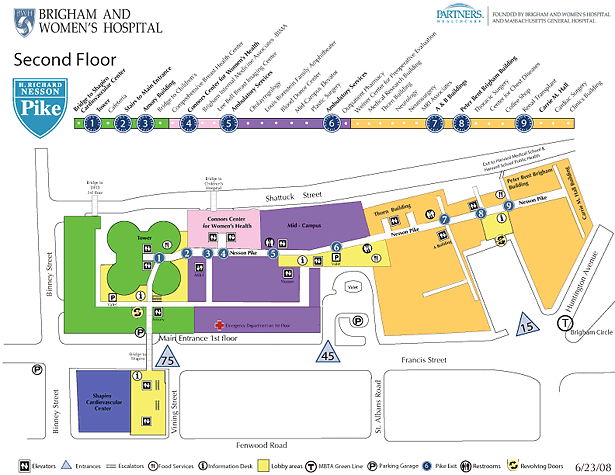
When my husband and I entered Brigham and Women’s Hospital in Boston for preoperative surgery meetings, we were directed to the “Pike,” a long corridor on the second floor of the hospital. “Take exit 6 off the Pike,” the woman at the information desk said. Curious, we followed her directions to the second floor and onto the Pike where signs direct the traveler to various departments (neurology, phlebotomy) and to bridges connecting the hospital to other area hospitals via above ground passageways. You can shop on the Pike, access the cafeteria, and pick up your prescriptions at the pharmacy.

As my husband prepared, endured, and recovered from hip replacement surgery, we traveled from rural suburbia into the city of Boston’s medical maze, where several big name hospitals care for patients while teaching future doctors in what is called the Longwood Medical Area.  Beth Israel Deaconess, Boston Children’s Hospital, Dana Farber Cancer Institute, Joslin Diabetes Center, New England Baptist, and Brigham and Women’s Hospital are all within a few blocks, not too far from Fenway Park, Simmons College, and the Museum of Fine Arts.

Two weeks later, I was back at the Brigham, this time, avoiding the Pike. After leaving my husband at 7:30 a.m. in the preoperative staging area, I checked in at the Robert and Ronnie Bretholtz Center for Patients and Families (Bretholtz Center) where I was given a buzzer (just like the ones restaurants give you while you wait for a table). I found a cozy chair in an unoccupied alcove and waited while the doctors worked, reading a book by Dennis Lehane. Complete with a library, computers and printers, knitting, games, and TVs, I found the Bretholtz Center a comfortable and comforting place to wait. I was told when surgery was complete and soon received a phone call from the doctor to hear the details. All went well.

I was back at the hospital the next day, just for a visit I thought, but 2 hours later, we were driving home, my husband, his new hip, and me.

How Clean Are Those Motel Sheets?

After 5 nights of camping in Acadia National Park, we spontaneously decided to spend one more night in Bar Harbor, the touristy, trendy town abutting the park. “Spider Web,” an Agatha Christy mystery, was playing at the local theater, and a room was available at a simple motel on the main strip. We left our luggage in the room, ate a quick dinner and headed to the theater where local talent entertained and exceeded our expectations.

It was late when we returned to the motel. With three beds, two doubles and a twin, the room was perfect for our family of four. As we took turns brushing our teeth and getting ready for bed, it was my son who discovered something first. “There’s an ear plug in my bed!” he exclaimed. No doubt about it. That was an ear plug. And it wasn’t brand new.

I turned back the covers on my bed. Human hair laced my pillow and crumbs added texture to the cotton sheets. My daughter found additional hairs on her bed as well.
Ewwww! How could we sleep in these sheets? We contemplated getting our sleeping bags from the car but reminded ourselves we were paying $100 for the privilege of staying here.

By now it was 11:30 p.m., but my husband left to wake the owners. Living in a small house connected to the motel, the owners hadn’t yet gone to bed and when told about the condition of the sheets were suitably mortified and blamed it on the cleaning service. Although they offered to make the bed themselves, my husband said no thank you. He just asked for the sheets since it was late, and we were all in our pajamas.

Two years later, we decided to stay in one of those places with single room log cabins while driving up to Vermont. Breakfast was included at this good size lodging, complete with a pool, playground and fire pit. With our own front porch and a sitting area, we discovered games and books in our cabin in addition to the usual bed and bath. But as we got into bed, I turned back my sheet in horror. A black hair lay diagonally across the pillow case, and another one on the light blue sheet below.

After a trip to the office for clean sheets, we decided the dryer must be to blame. Although we enjoyed staying at these privately owned motels, it will be chain motels or hotels for us in the future, complete with industrial size dryers and, we hope, no extraneous human hair.

Trips taken 2007 and 2009.

Hurricane Sandy West of Boston

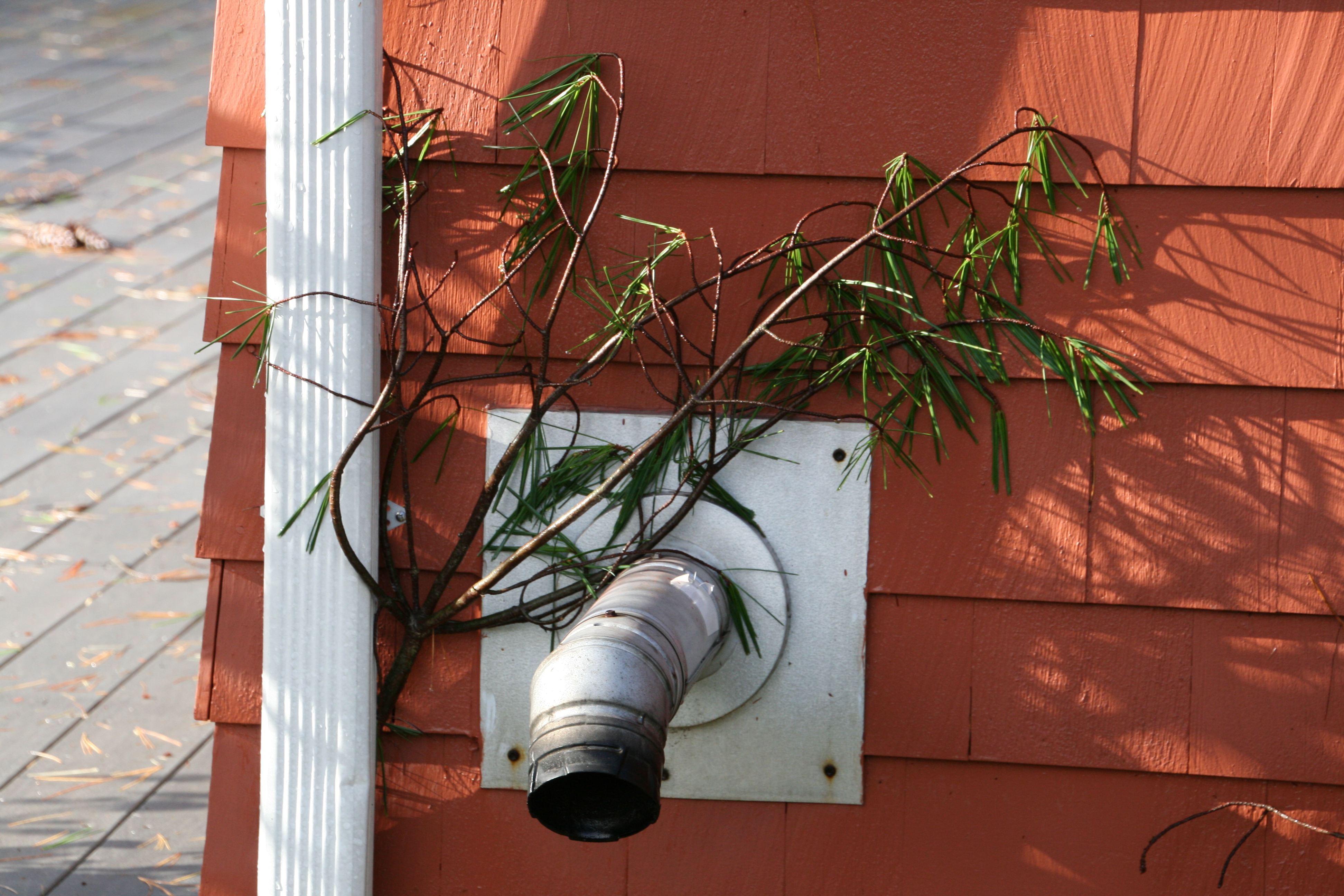
We hunkered down in our small town of Stow, 30 miles west of Boston, bracing for whatever Hurricane Sandy would bring. School was canceled. The kids were home. The cabinets were full of food and the basement with bottled water. (We have a well and if the electricity goes out, so does the water.) We replaced batteries in flashlights, did the laundry, and waited. It wasn’t until late afternoon that the winds picked up. We sat in our sunroom watching the big pine trees around our house bending over in the high winds, the sliding glass door bulging as the wind hit it just right. Pine branches flew past the windows on the first and second floors and rain pelted the glass.

When the lights finally did go out, we lit candles and started playing a game, but the power was only out for about 45 minutes.

Would school be canceled another day? My kids checked the school website continuously as erroneous postings on Facebook raised and lowered their hopes of another day at home. Finally, the school appeared on the list of closings but only for a delayed start. I wondered how anyone could make a decision before daylight. Five minutes before the bus was scheduled to arrive, school was canceled for the day. Wires and trees were down, and roads were closed.

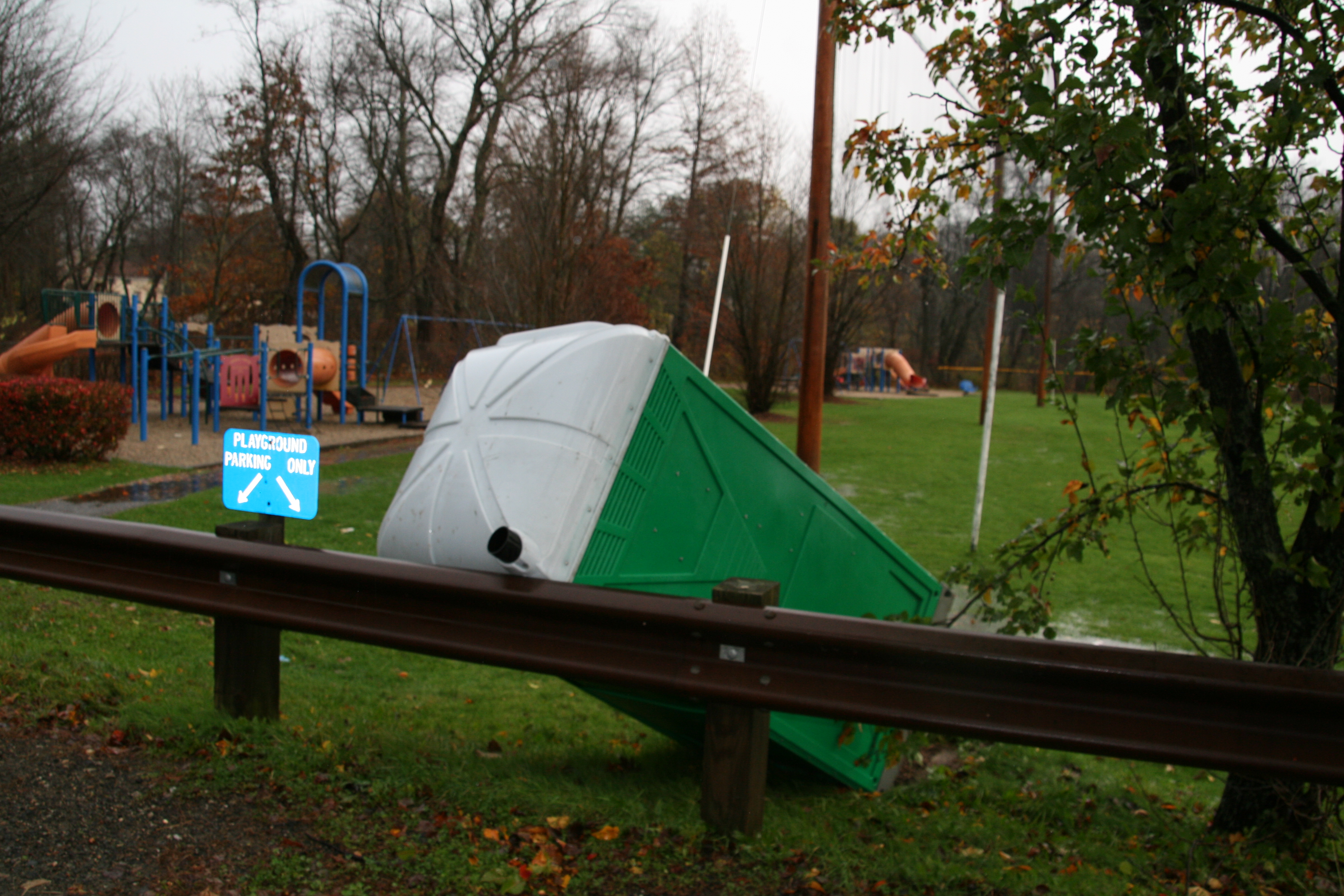
I left the kids at home and ventured out and down roads littered with leaves and debris.

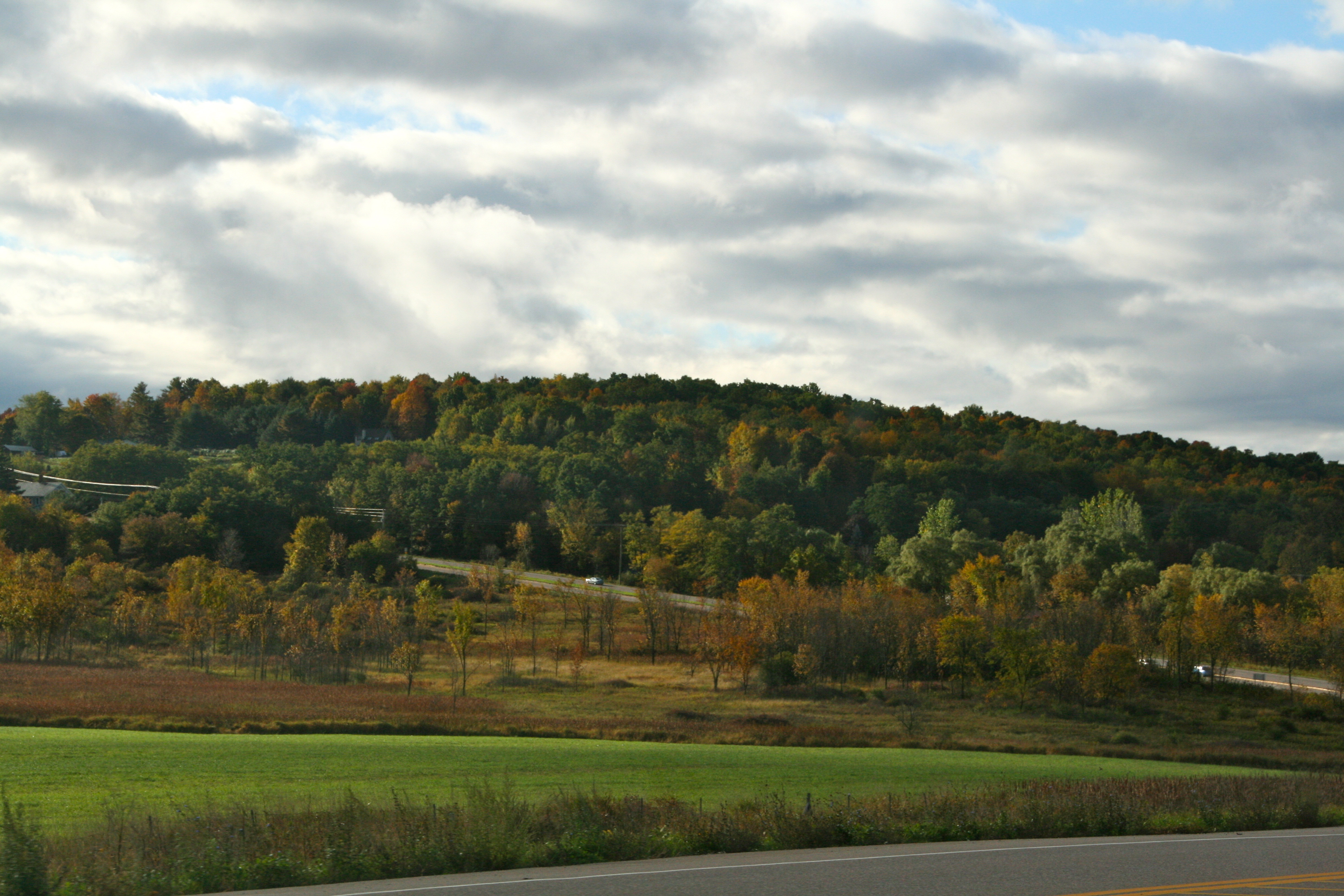
Yellow and red leaves still clung to a few of the trees in spite of the powerful winds the night before.

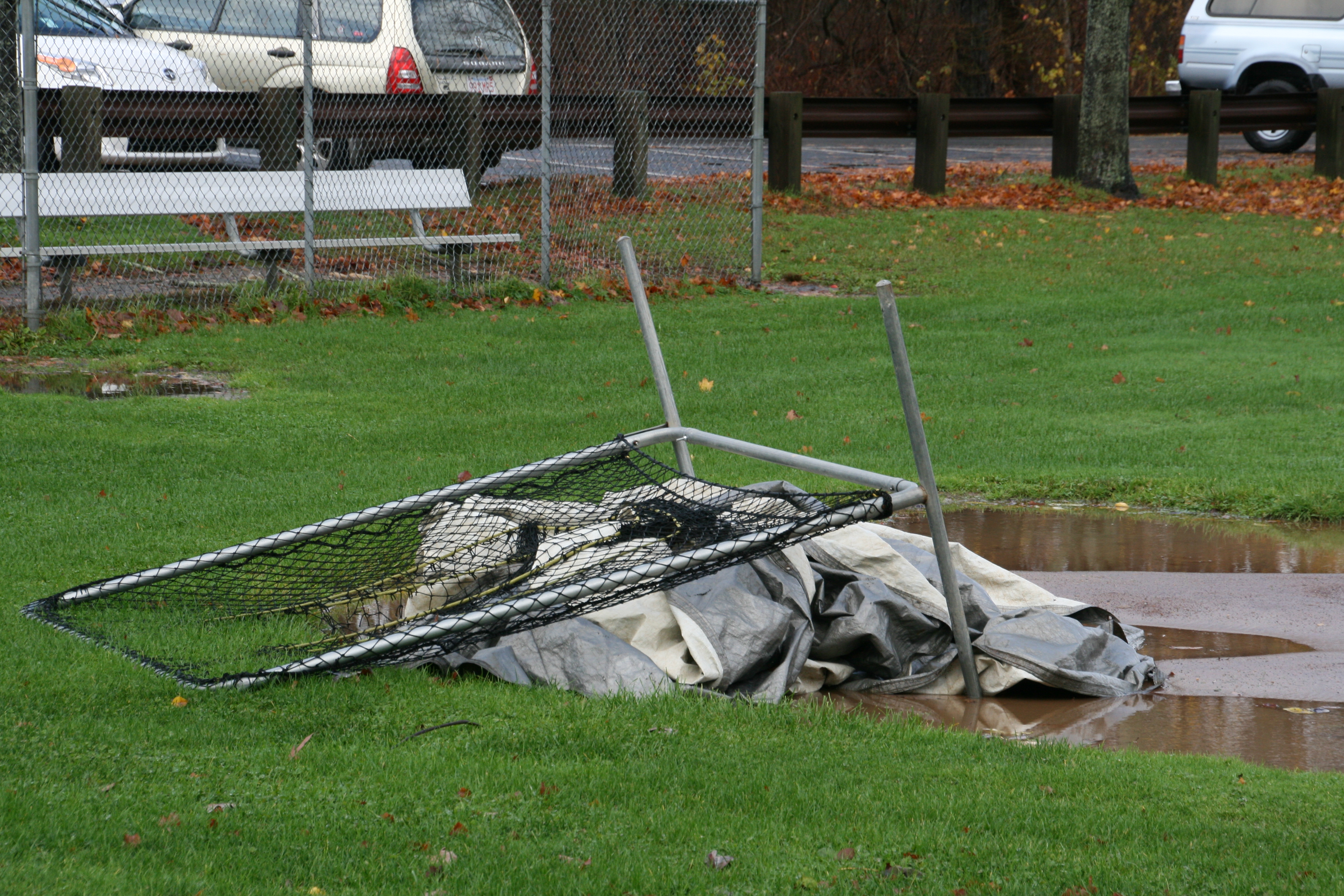
I saw a few downed trees and fallen structures and took my turn at an intersection where the traffic lights didn’t work.

At home, I picked up branches and righted and replanted a small fallen tree. Halloween was canceled in our town for the second year in a row (last year we had snow!) and rescheduled for Sunday. But we’re not complaining. The storm changed path, and this time we were lucky.

And on to Middlebury

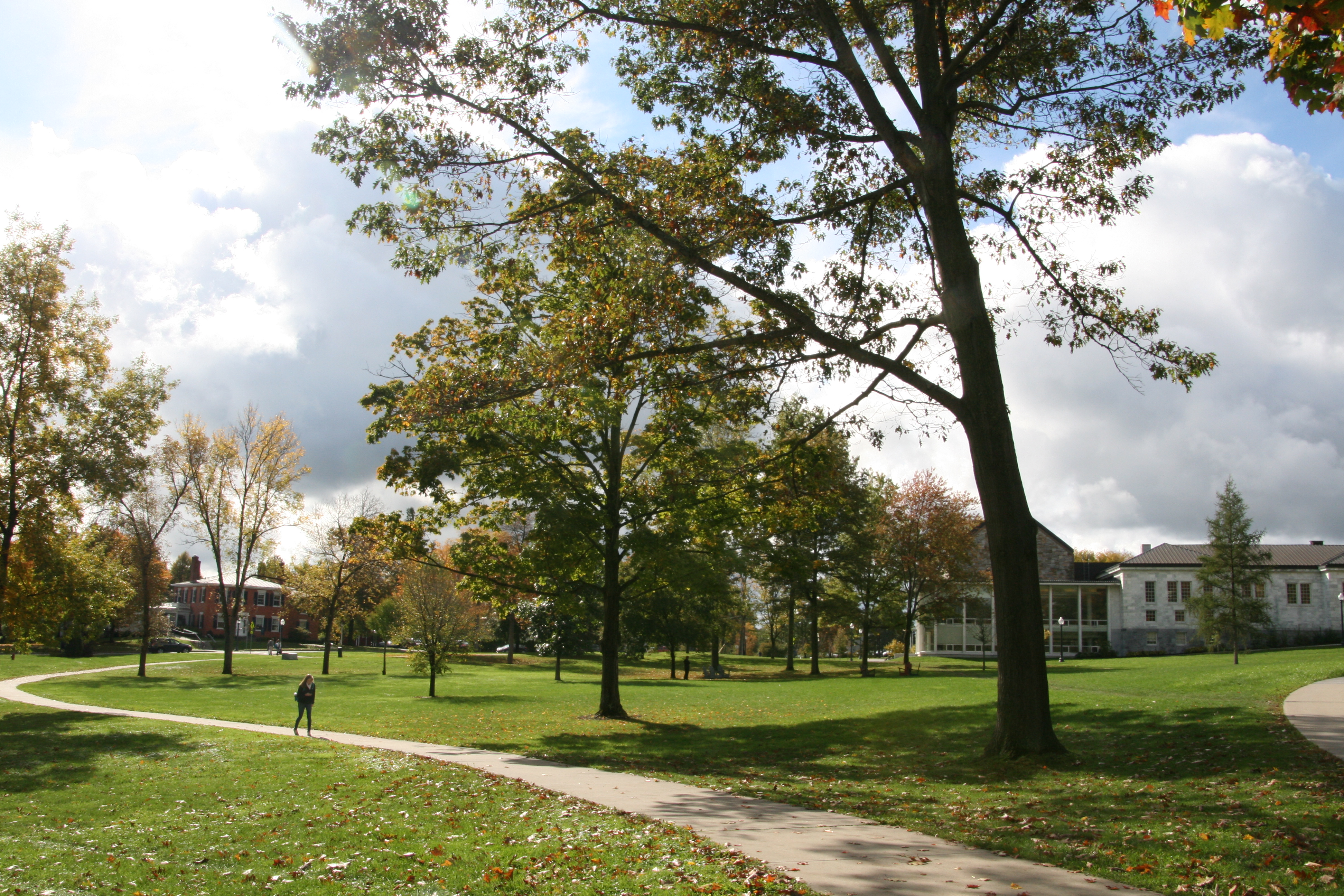
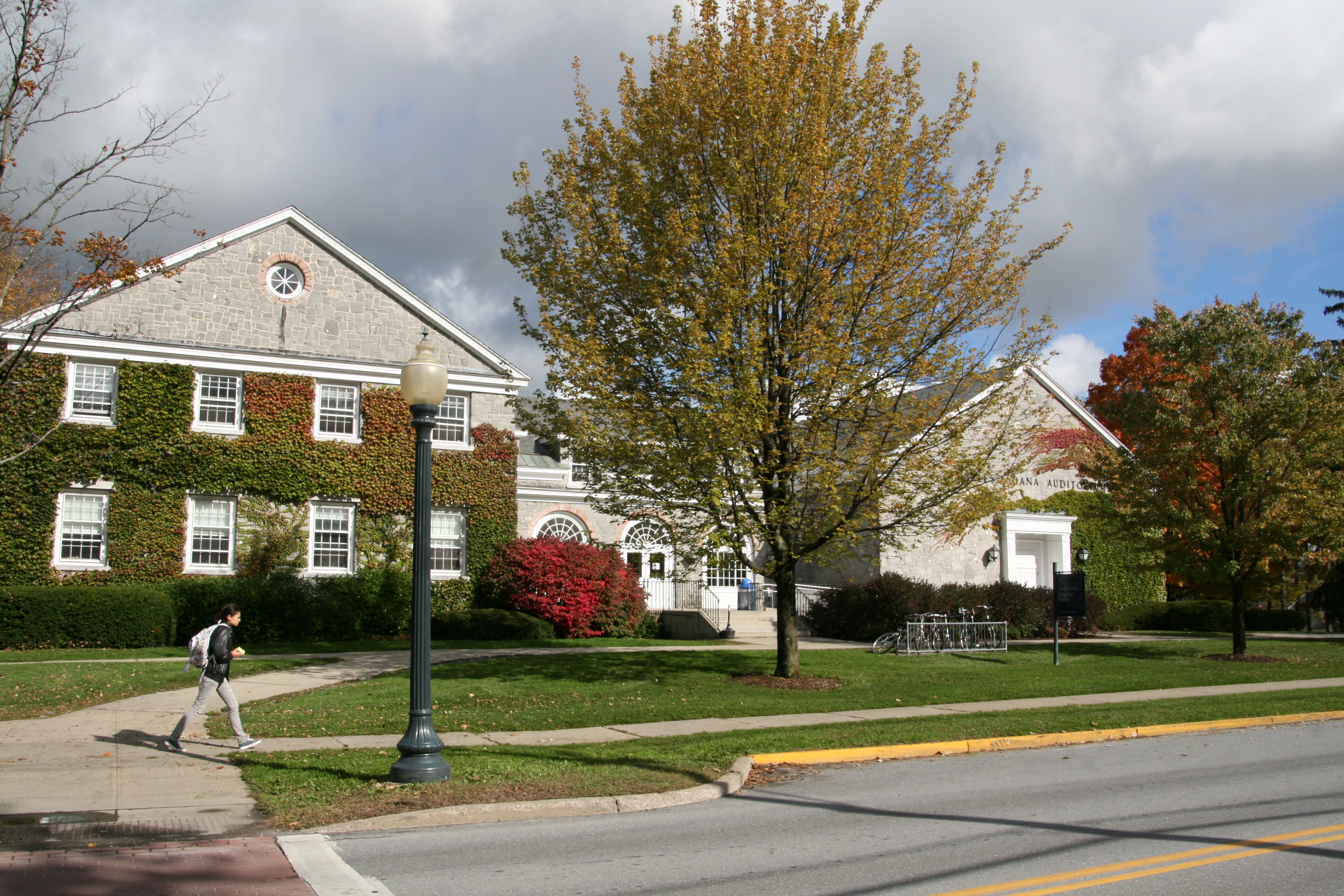
Over rolling hills and through trees of yellow and orange, we drove the 35 miles south from Burlington to Middlebury, Vermont, between the Green Mountains and the Adirondacks, arriving at Middlebury College in time for a 9:30 a.m. information session.

It was Columbus Day weekend, and we were on the third stop of a college tour.

After a slideshow and informative talk, we followed our tour guide as he walked backwards down paths around the 350-acre campus.

With about 30 others, we wandered among several of the college’s buildings, including the library, student center, and a dorm room (complete with resident student).

When asked what surprised him most when arriving at Middlebury College as a freshman, our tour guide said it was the intelligence of the students.

Middlebury College was founded in 1800 and is one of the oldest private liberal arts colleges in the country. According to its website, its undergraduate enrollment is about 2,450 with students from 50 states and 70 countries.

Trip taken October 2012.

Road Trip to Burlington, Vermont

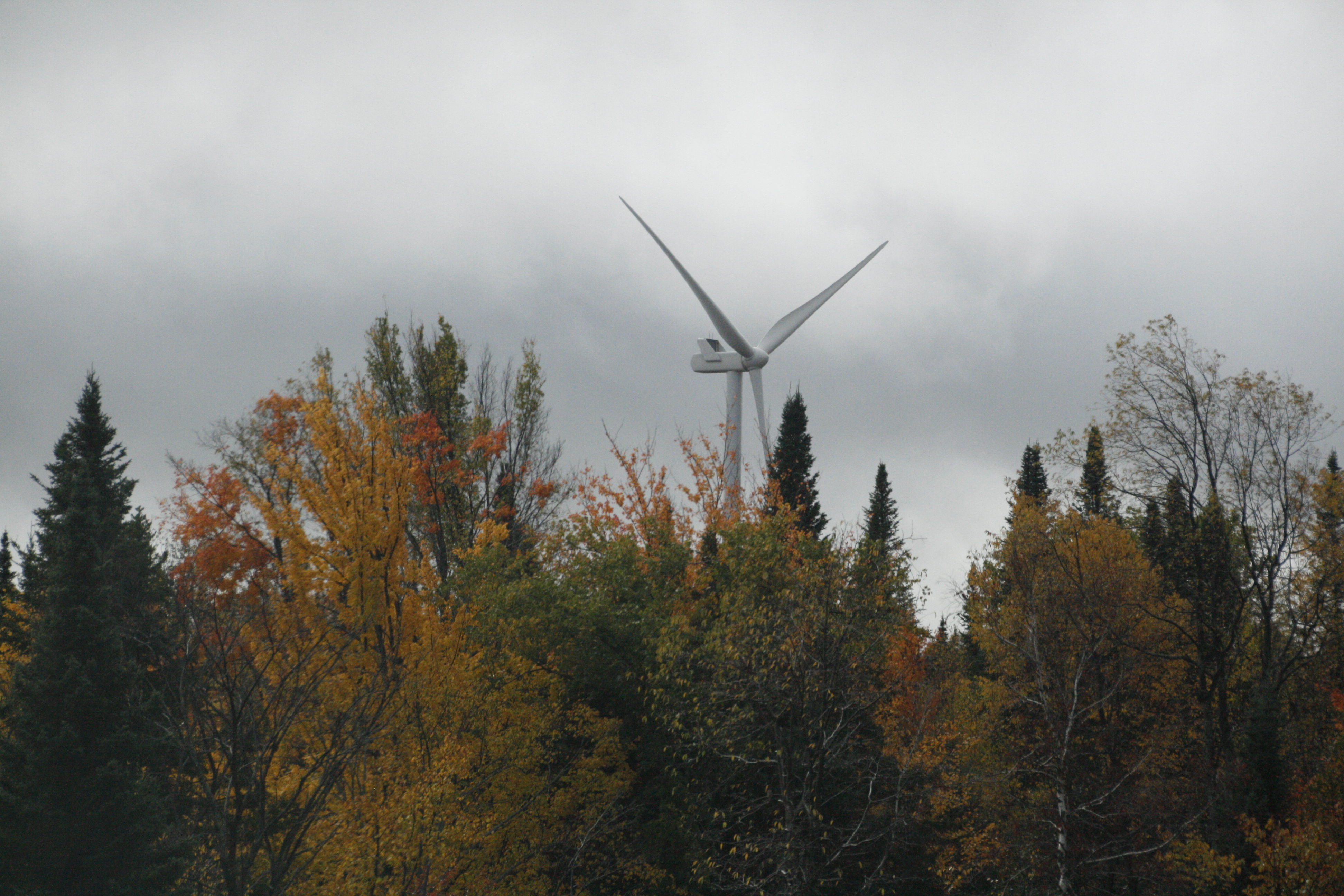
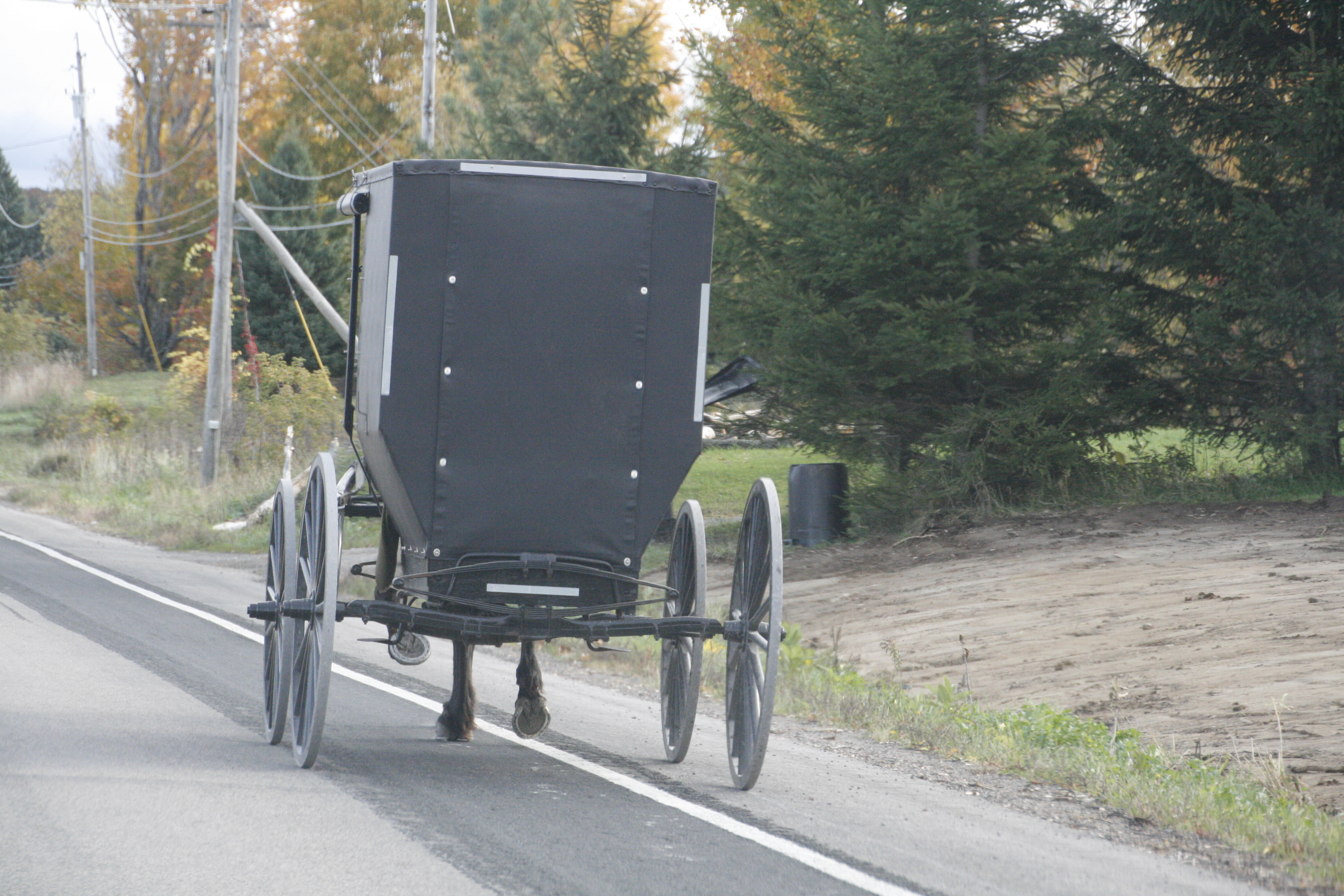
The 150-mile drive from Canton, New York, to Burlington, Vermont, went quickly as we listened to a book on tape (“Dog on It,” By Spencer Quinn) and looked out the window at windmills and Amish buggies going by.

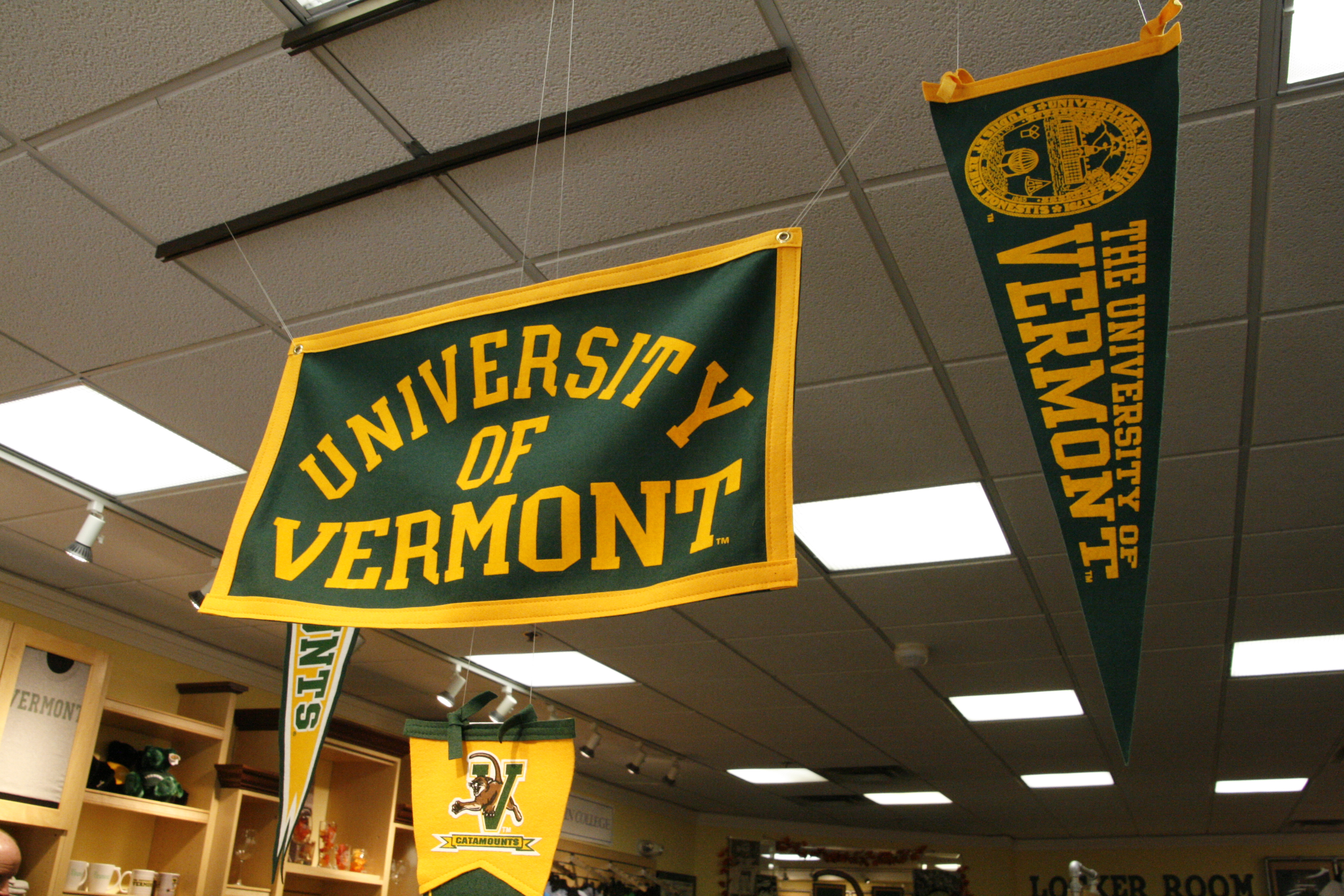
We toured the University of Vermont with 20 or so others, exploring the campus with our tour guide, a biology major.

She led us around the sprawling university which bustled with activity in spite of the day of the week (Sunday).

We learned about the seven undergraduate colleges where 10,500 students pick from 101 majors and the average undergraduate class size is 31. We learned about UVM’s “green mindset”: UVM was one of the first college campuses to ban bottled drinking water and has several LEED (Leadership in Energy and Environmental Design) certified buildings on campus.

We learned that there is always something to do when you’re not studying:  there are over 150 student clubs and organizations and over 70 opportunities to play sports, from varsity to club to intramural. And we learned (second hand) that the food is good and accommodates students with a variety of dietary restrictions, including vegan, vegetarian, gluten free, and food allergies. There is even a Ben & Jerry’s on campus.

We spent the afternoon and evening strolling around Burlington, in and out of stores on Church Street and swinging in swings by the shore of Lake Champlain.

We ate a snack at El Cortijo Taqueria and Cantina (I had a yummy taco with sweet potatoes, guajillo salsa, kale, and pepitas) and dinner at Sweetwaters where my daughter ate gluten free, and everyone agreed that the burgers and mashed potatoes were the best they’d ever eaten.

Trip taken October 2012.

Seaweed and Lobsters

Have you ever been to a New England clambake? Not just a lobster boil or a barbeque, but a real clambake where lobsters and clams are steamed by seaweed sitting on very hot rocks. In case you haven’t been lucky enough to have the experience, here’s how it works:

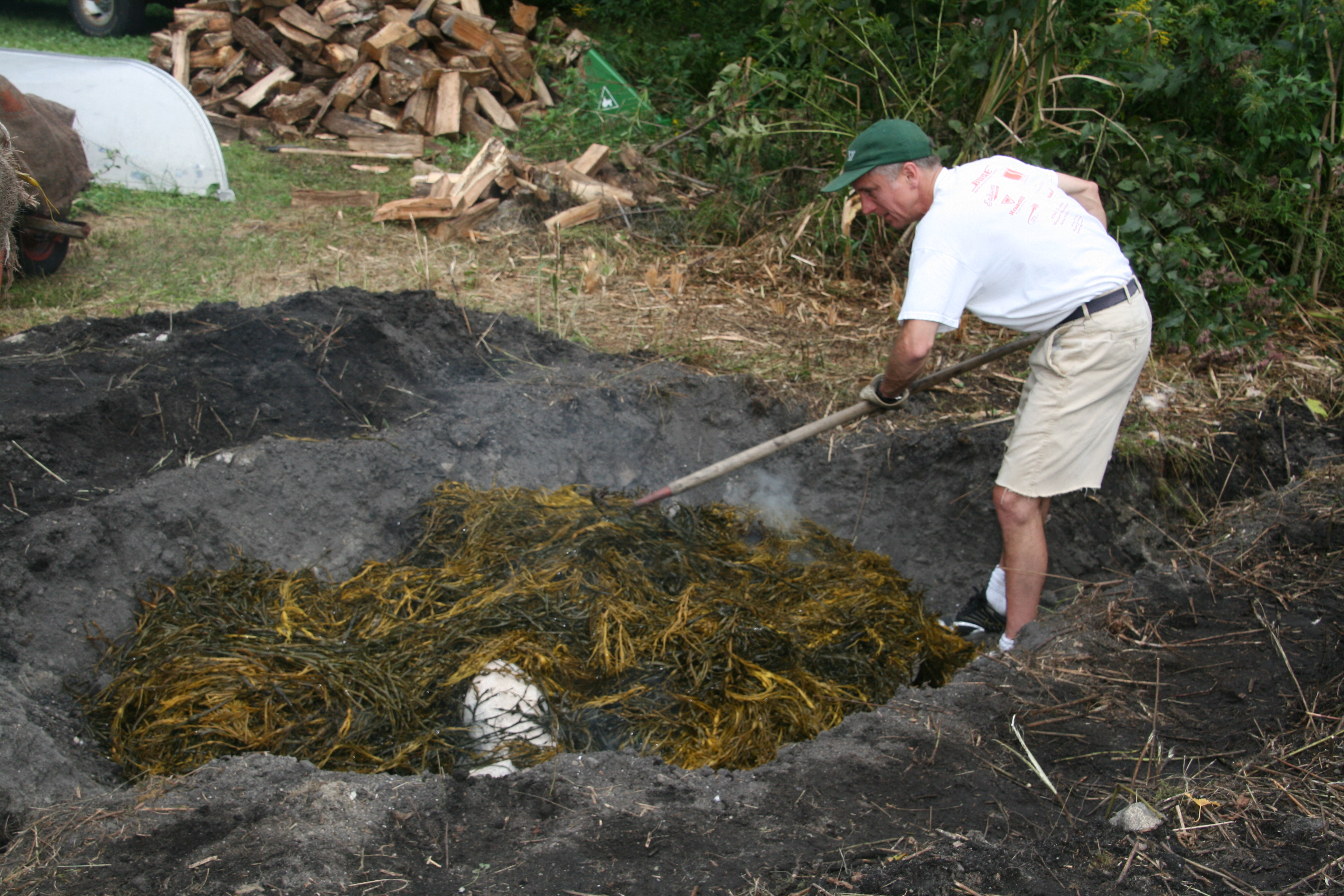
First you dig a big pit.

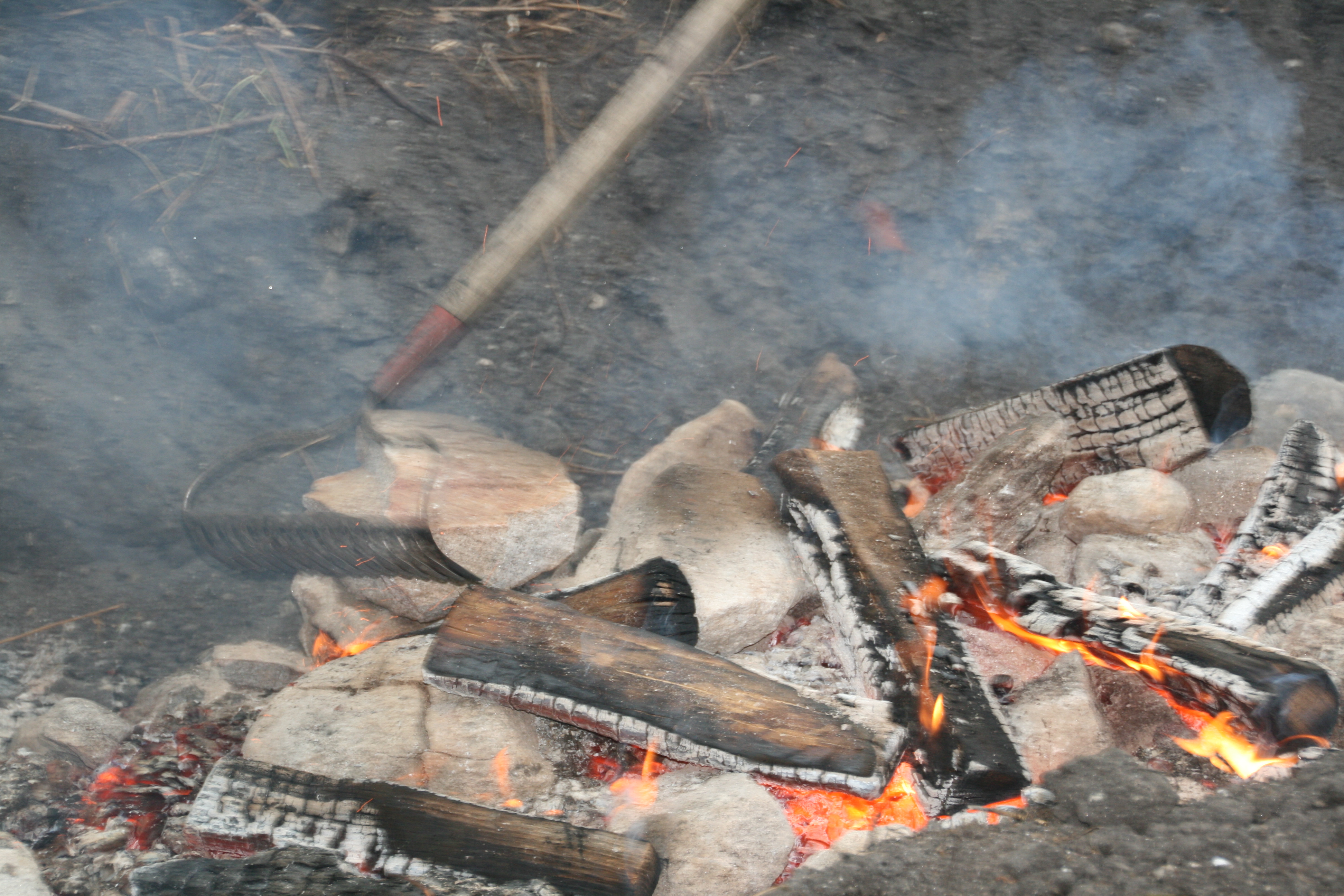
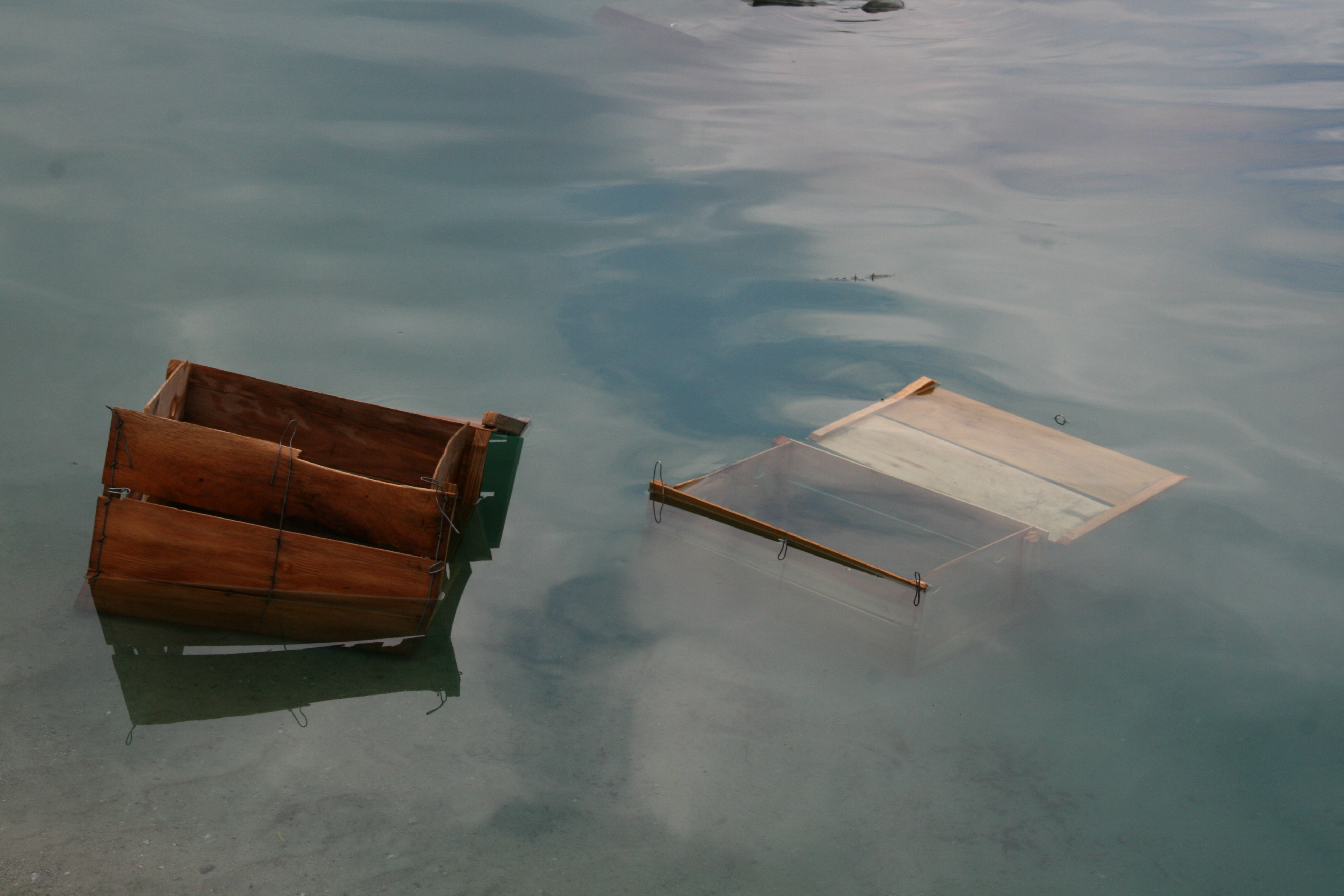
Next you add some large rocks, about the size of a basketball, along the bottom of the pit.  Then place wood on top of the rocks and  start a fire. The idea is to heat up the rocks so they are very, very hot.  This means the fire has to burn for several hours.

Meanwhile, soak the wooden baskets which will contain the lobsters so they won’t burn.

When the stones are good and hot, it’s time to start the cooking. Cover the entire pit with seaweed.

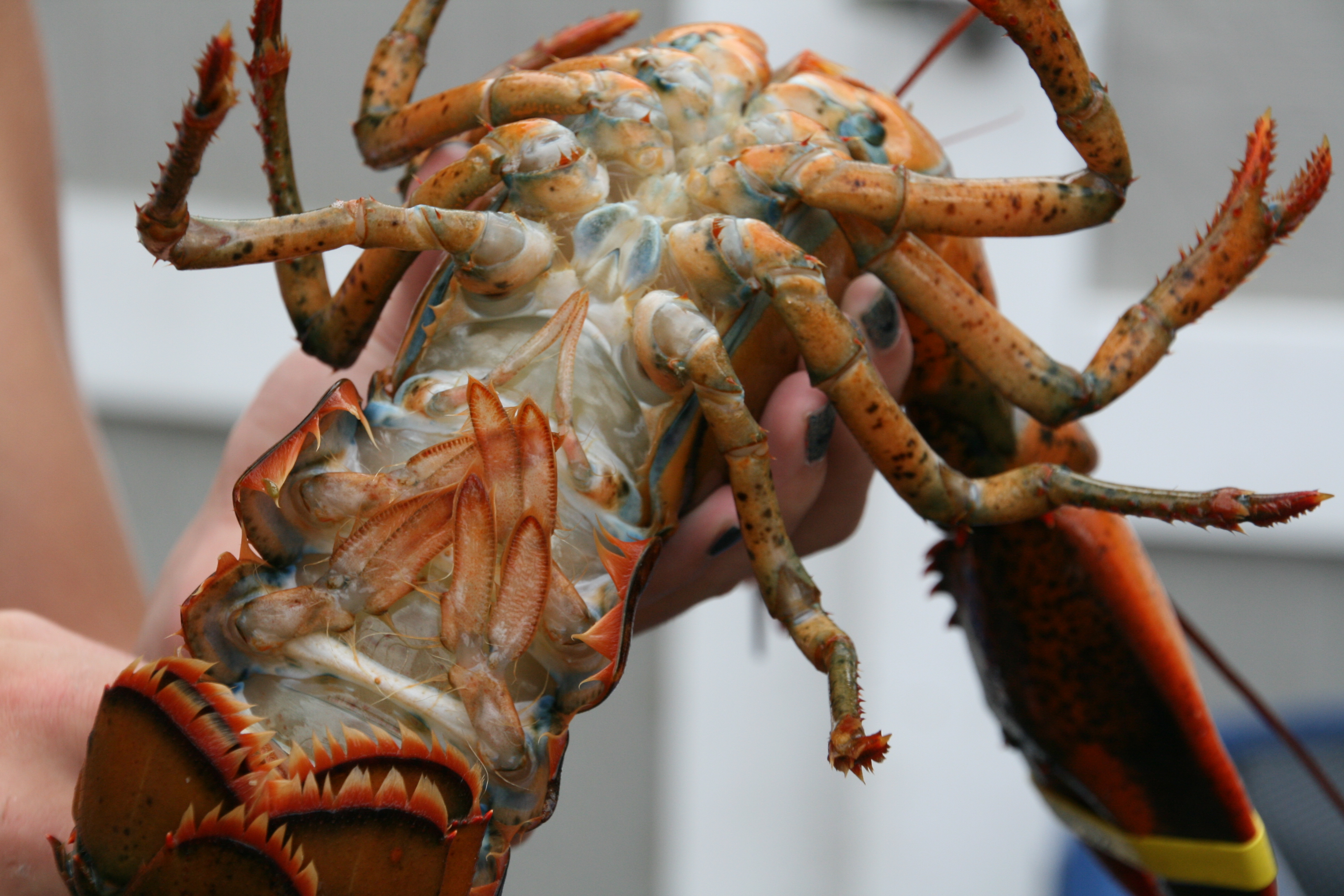
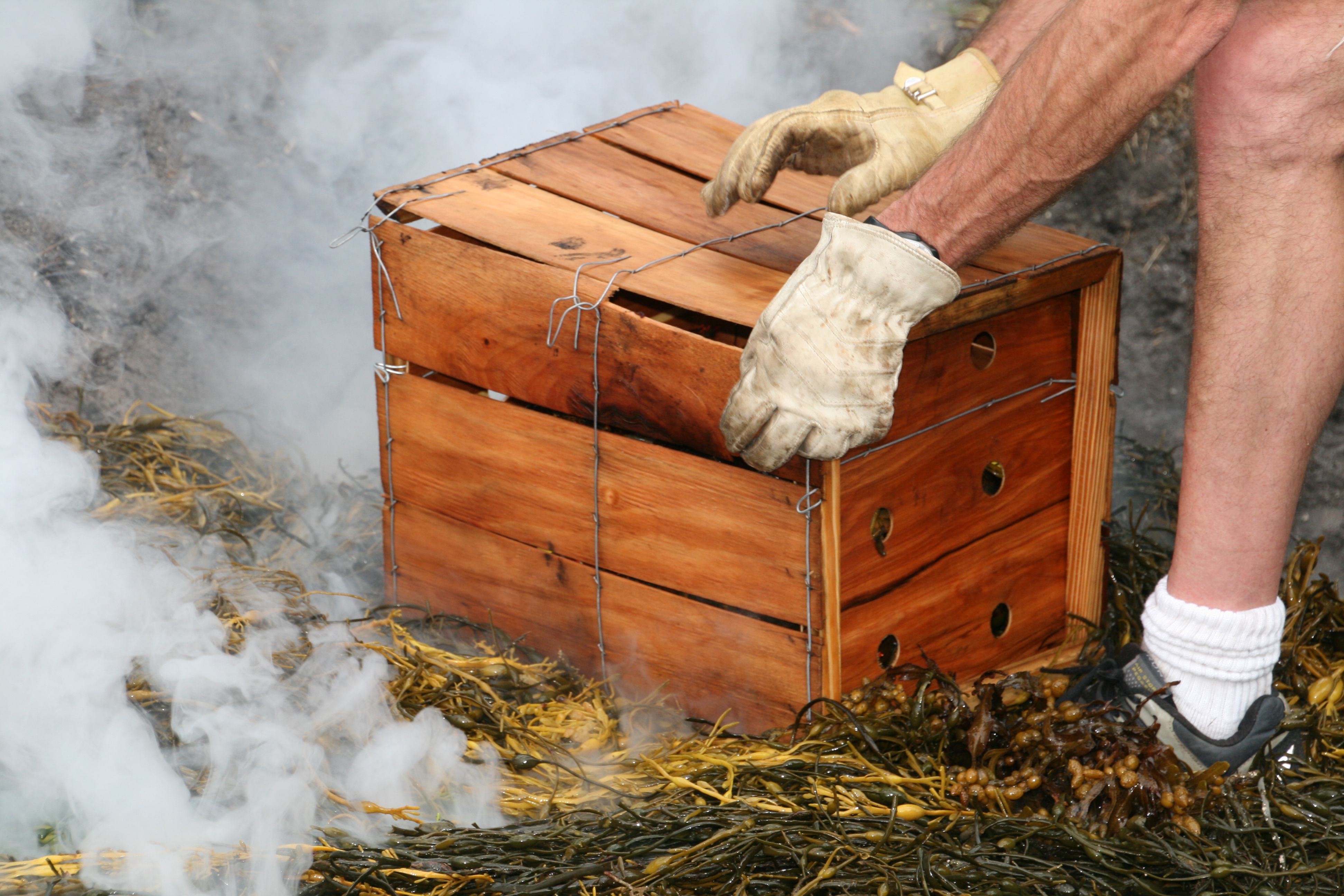
Add the live lobsters and steamers to the water soaked baskets and set them in the pit on top of the seaweed. Add potatoes or corn on the cob (in their husks) if desired, though in our experience, corn often takes on the flavor of the seaweed.

Cover the seaweed with one or two tarps to keep in the steam. And start counting.

According to our experts, it takes 47 minutes and 30 seconds to steam the lobsters.

Carefully, remove the tarps and uncover the baskets. The seafood is now ready to eat.

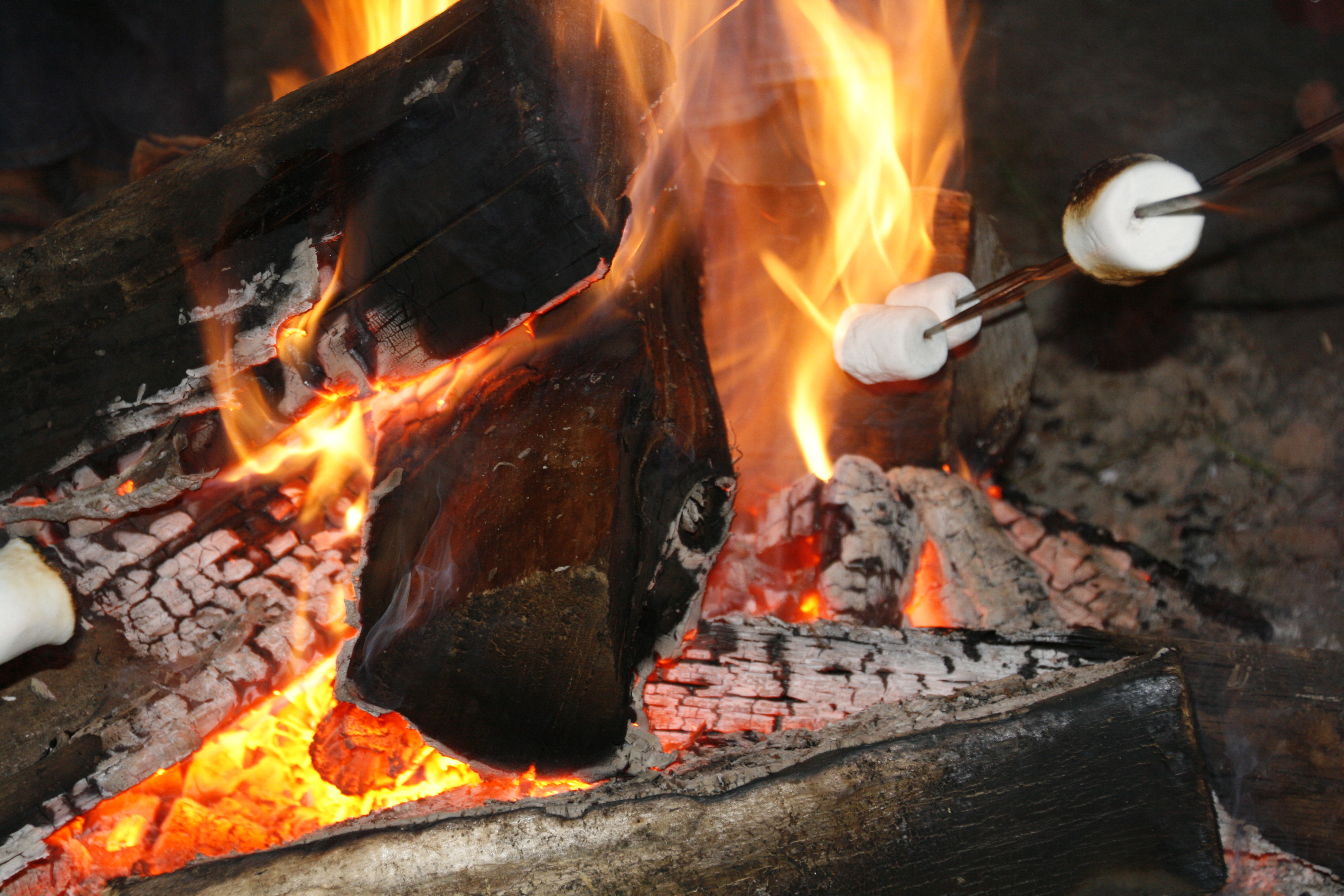
Be sure to serve the lobsters and steamers with melted butter, lemon, crackers and picks. Additional food items often include: potatoes, corn on the cob, clam chowder, corn bread, cole slaw or green salad. Serve with the beverage of your choice. For dessert, we like to follow our lobster with s’mores over a separate campfire (not over the pit!).

Enjoy!

Up, up, and away!

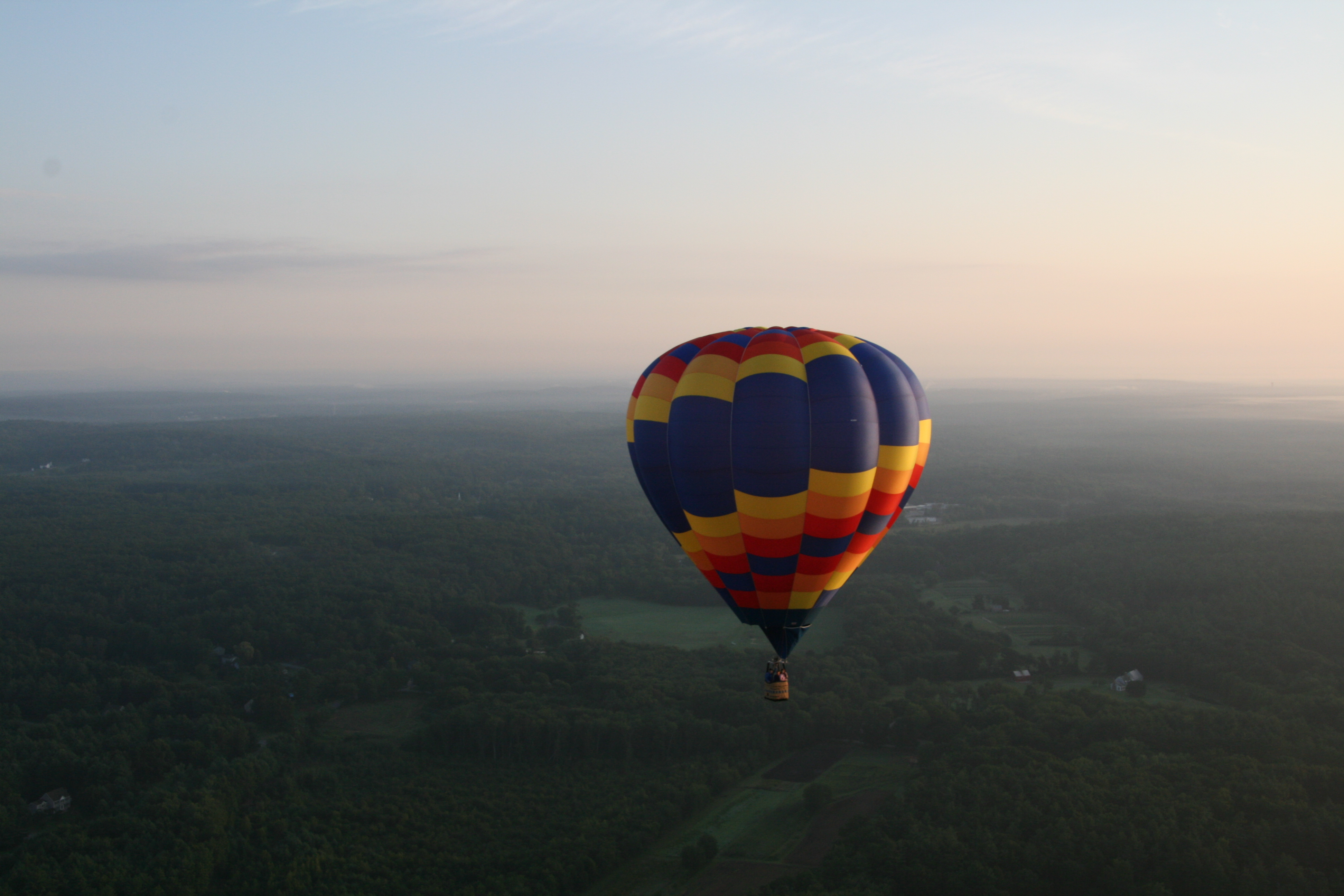
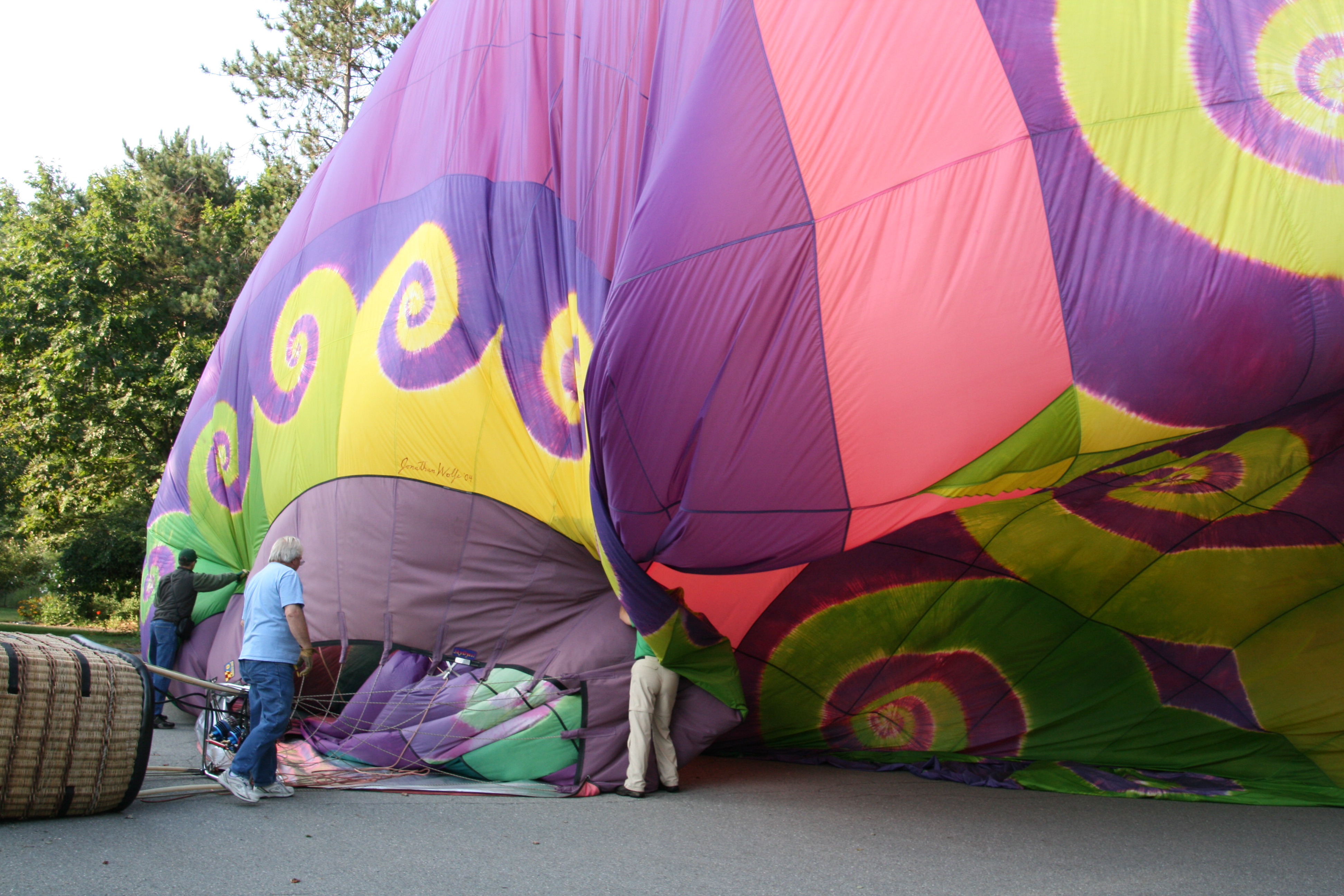
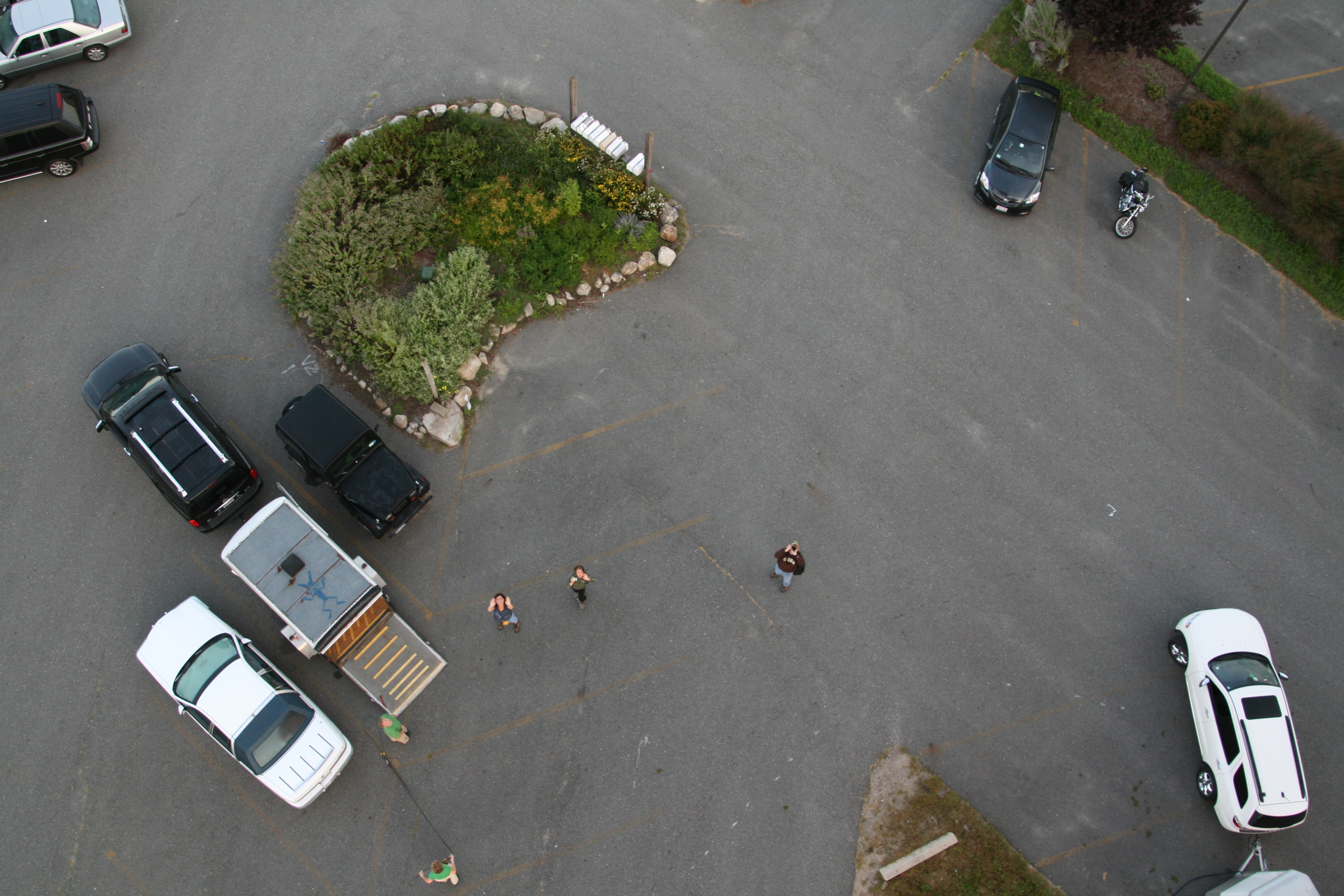
It’s 6 a.m. on a Sunday the end of August, and I am in one of two hot air balloons rising up over a small town in Massachusetts with the pilot, Rudi of Dragon Fire Balloon Adventures, my husband, and my teenage son.  We are in Lucy, one of Rudi’s two hot air balloons, this one featuring a tie dye design and formally called Lucy in the Sky with Diamonds.


The sun has just risen; the air is cool and still. So still, in fact, that at first we don’t go anywhere except straight up. The cars and planes and people get smaller and smaller as we rise to about 900 feet.

We can see beyond the airport to more trees and houses and hills in the distance. We watch as the other balloon moves further west while we hang out above the runway.

It is peaceful up here in the sky. There is no sound except for the noise of the burner and the occasional sounds of our voices.

Rudi expertly controls the hot air flow and lets us down a little, hoping to catch a breeze at a different altitude to move us away from the airport and beyond, and slowly we do move, now just above the trees and telephone wires, now just above the houses.

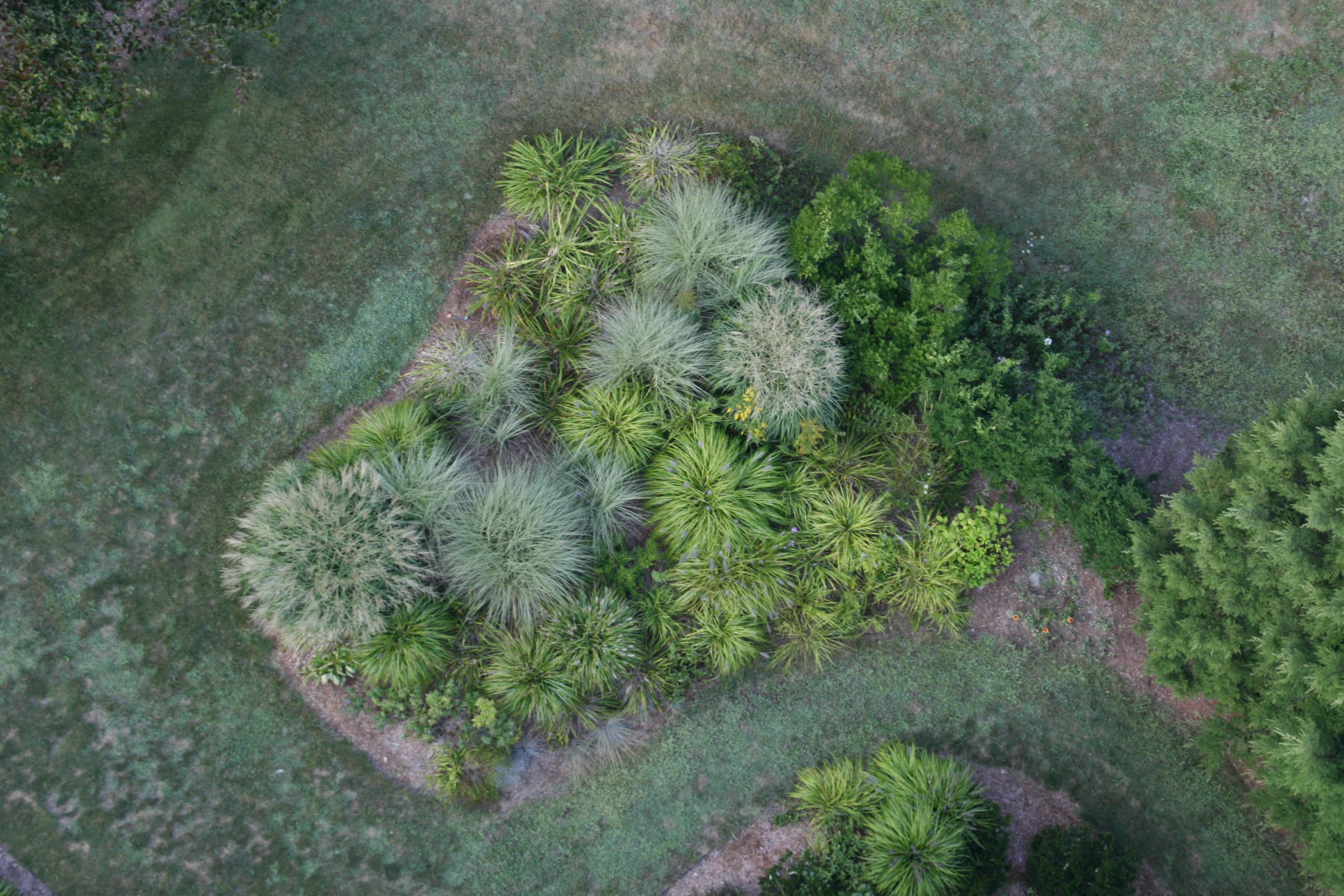
We check out the landscaping designs, the decks and patios and discover what’s hidden behind some of those houses.

We watch our reflection in a pond full of lilypads and touch down on a nearby road to change passengers. While the crew holds the basket, our teenage son gets out and our teenage daughter gets in.

And up we go again, followed by the chase vehicles, as we travel not as high but further with the wind.

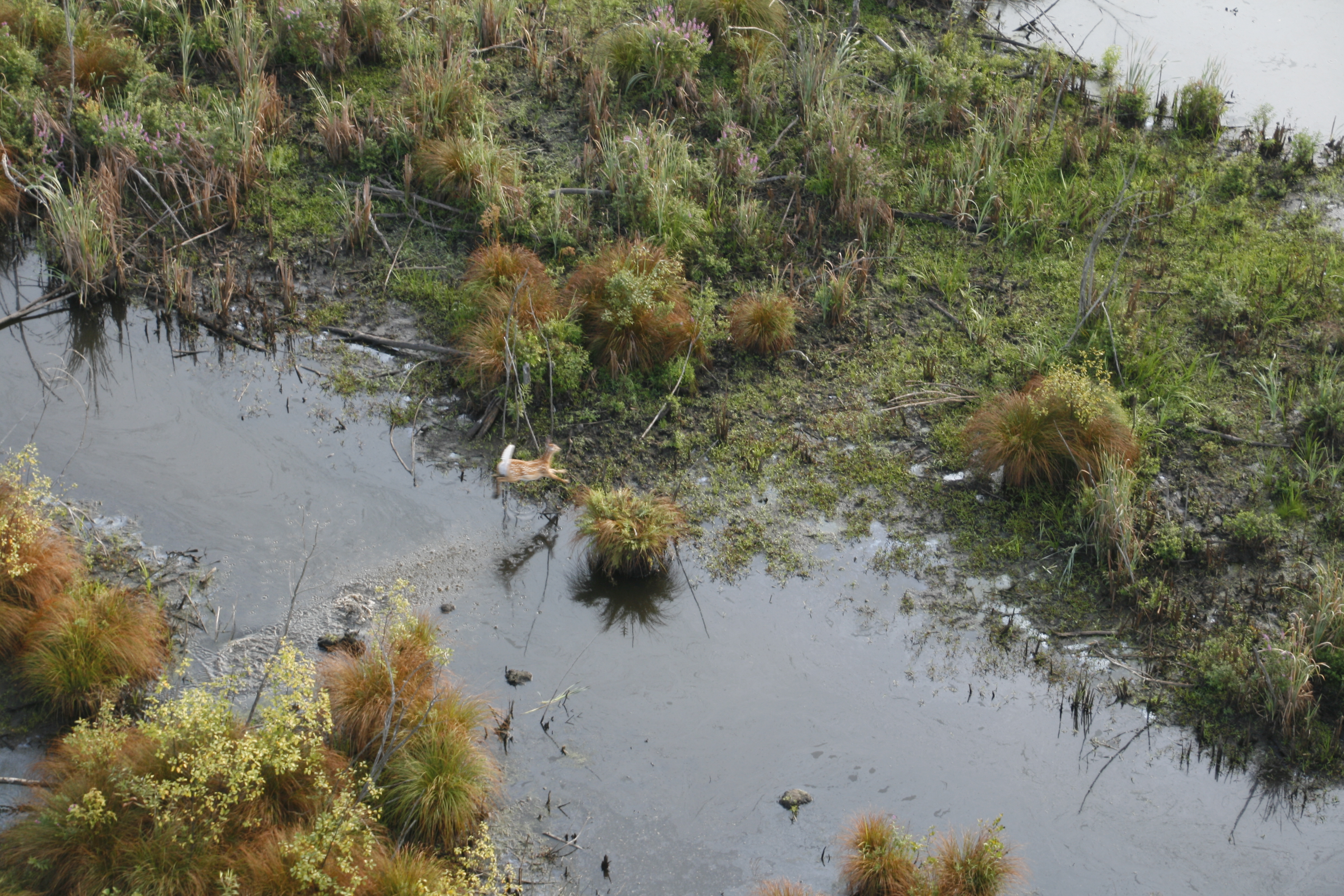
We see deer, startled by the inconsistent noise of the fire’s hot air.

We pass over conservation land and farm fields and more houses, finally landing in someone’s front yard at the end of a cul-de-sac.

As we wait for the chase vehicles to arrive with our crew, we notice that no one is home. The pool is covered, the shutters closed. They will miss the thrill of a hot air balloon in their front yard and the complimentary bottle of champagne.

We are watched by the neighbors as we help the crew pack up the balloon, quickly and efficiently, and head back to the airport where we join the other balloon’s crew and passengers for our own champagne.

To learn more about hot air balloons and how they work, click here.

Trip taken August 2012.