And on to Middlebury

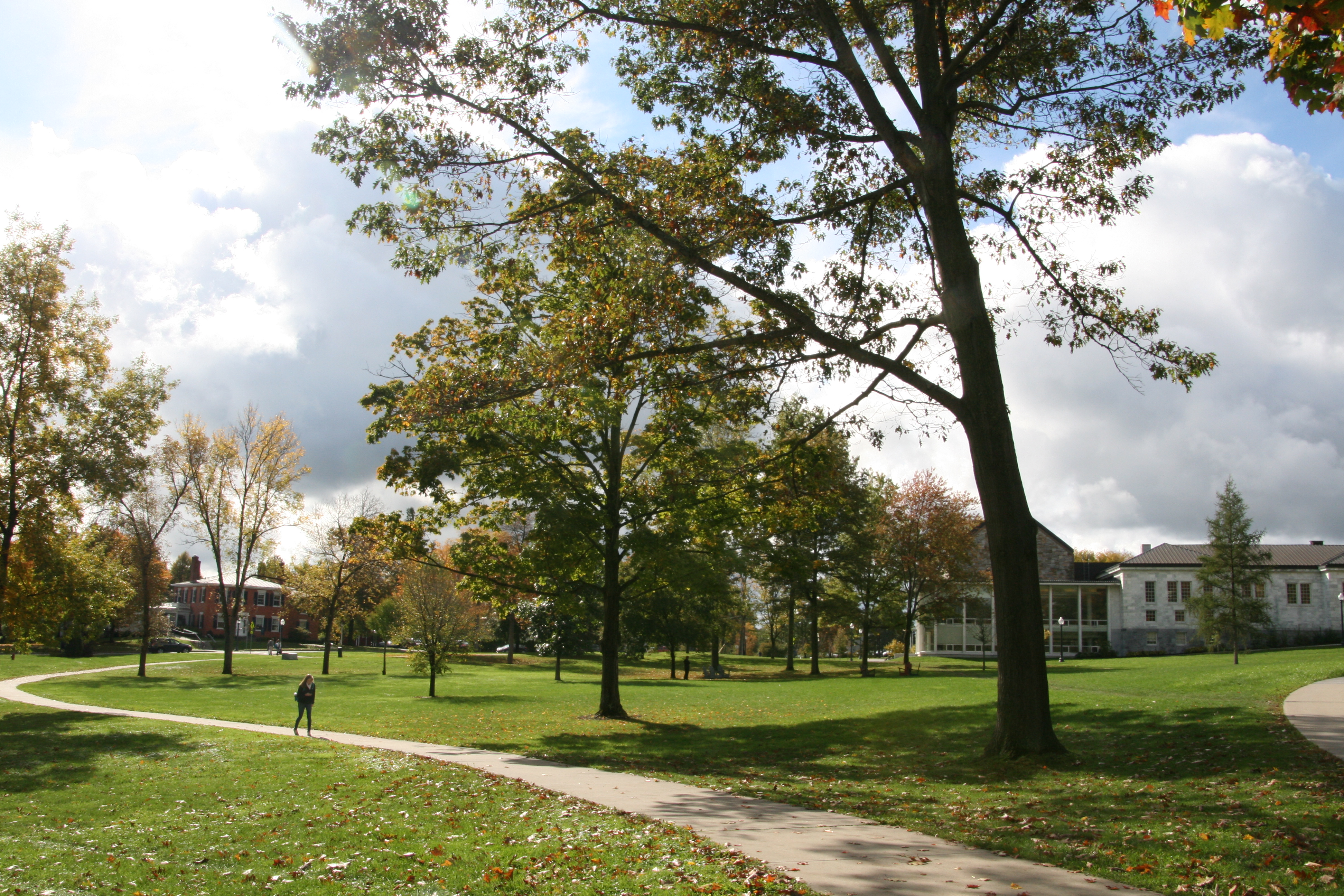
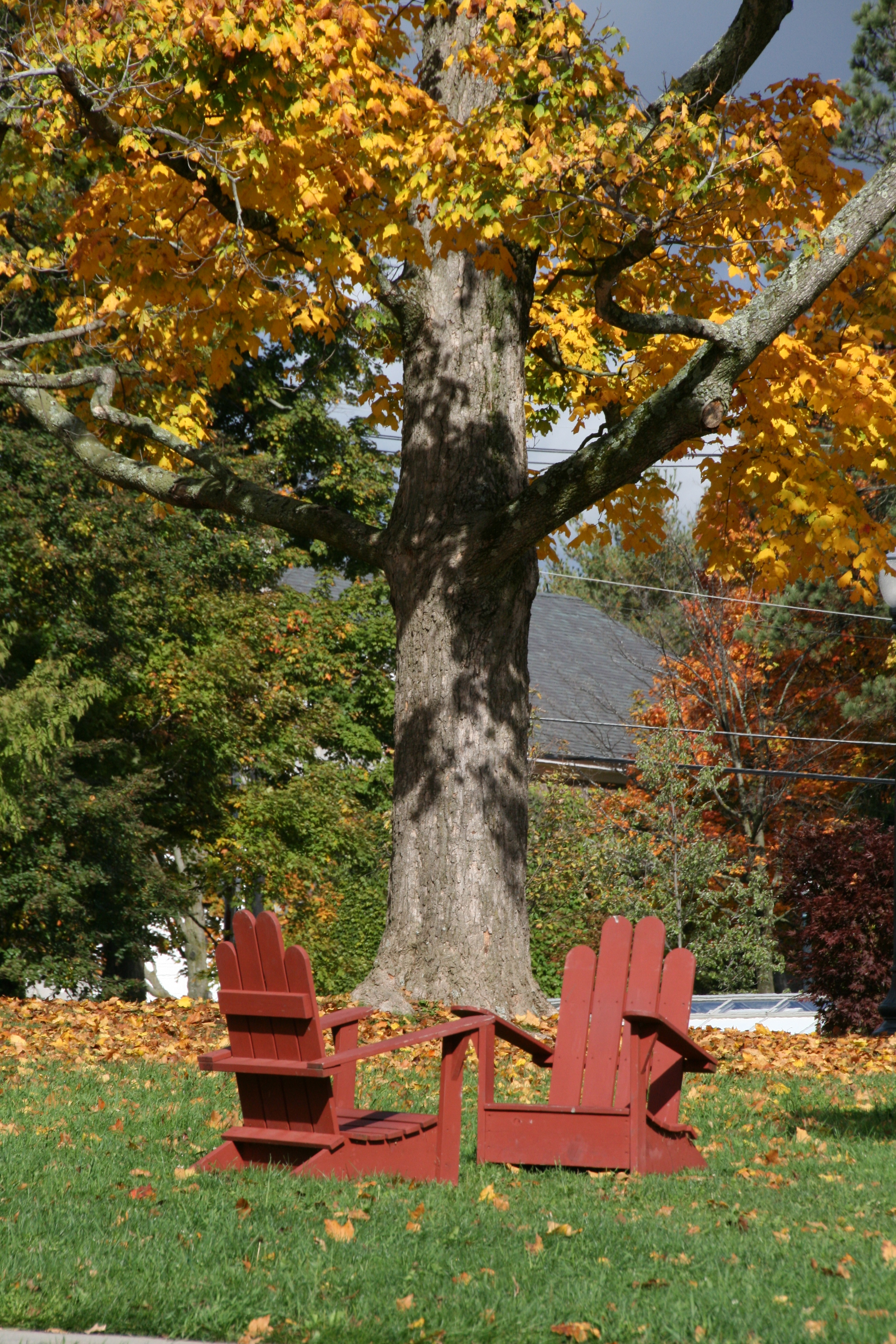
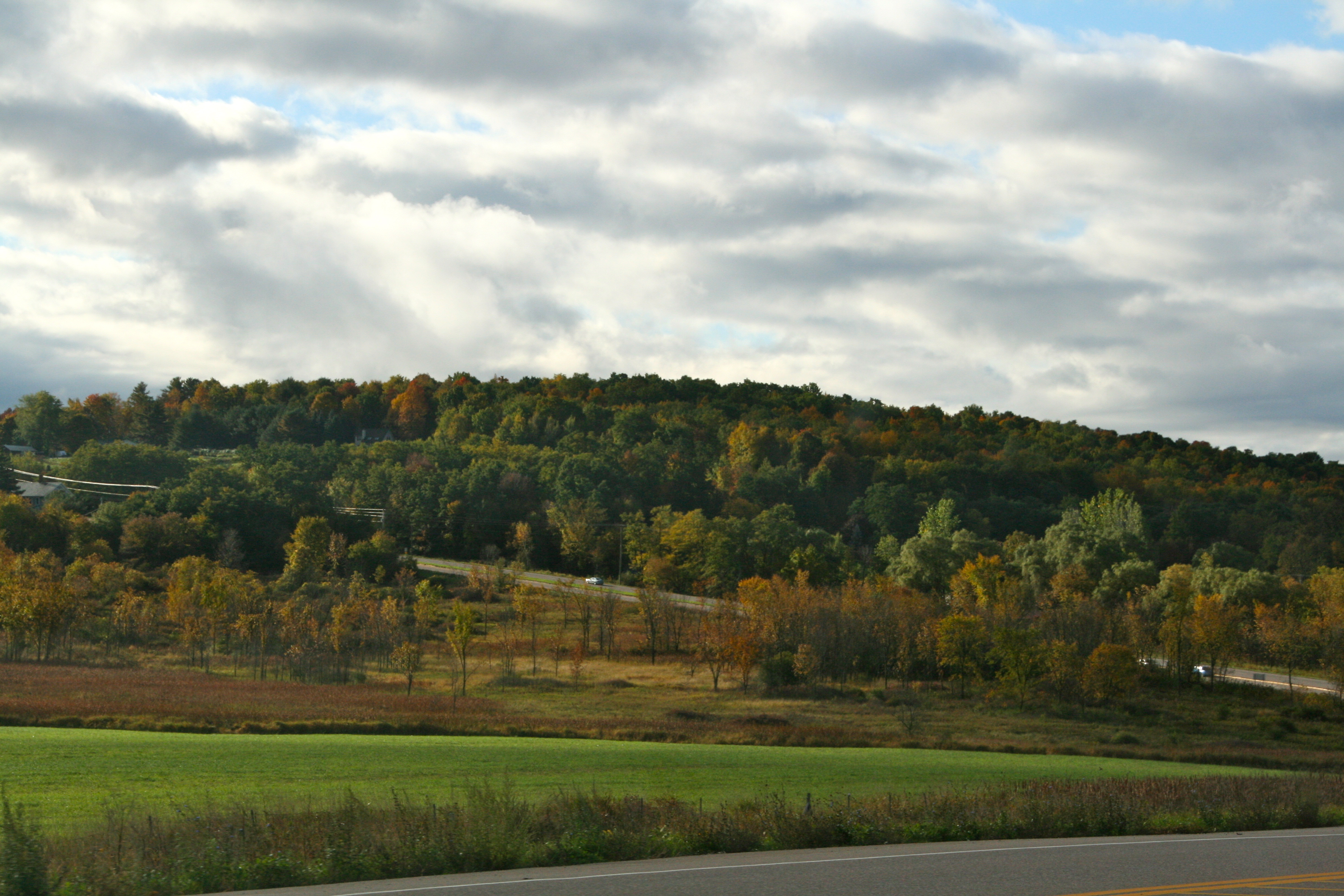
Over rolling hills and through trees of yellow and orange, we drove the 35 miles south from Burlington to Middlebury, Vermont, between the Green Mountains and the Adirondacks, arriving at Middlebury College in time for a 9:30 a.m. information session.

It was Columbus Day weekend, and we were on the third stop of a college tour.

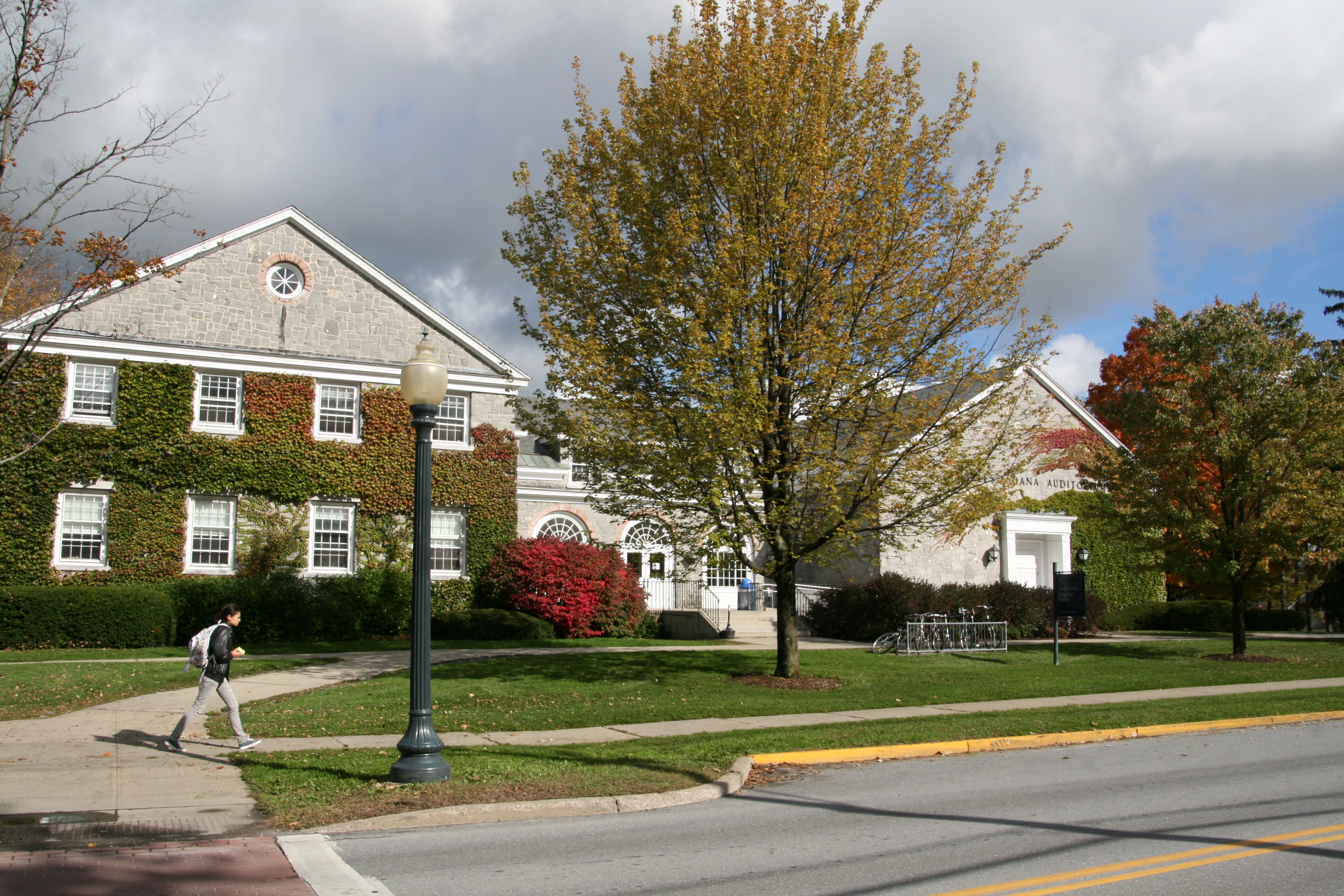
After a slideshow and informative talk, we followed our tour guide as he walked backwards down paths around the 350-acre campus.

With about 30 others, we wandered among several of the college’s buildings, including the library, student center, and a dorm room (complete with resident student).

When asked what surprised him most when arriving at Middlebury College as a freshman, our tour guide said it was the intelligence of the students.

Middlebury College was founded in 1800 and is one of the oldest private liberal arts colleges in the country. According to its website, its undergraduate enrollment is about 2,450 with students from 50 states and 70 countries.

Trip taken October 2012.

Road Trip to Burlington, Vermont

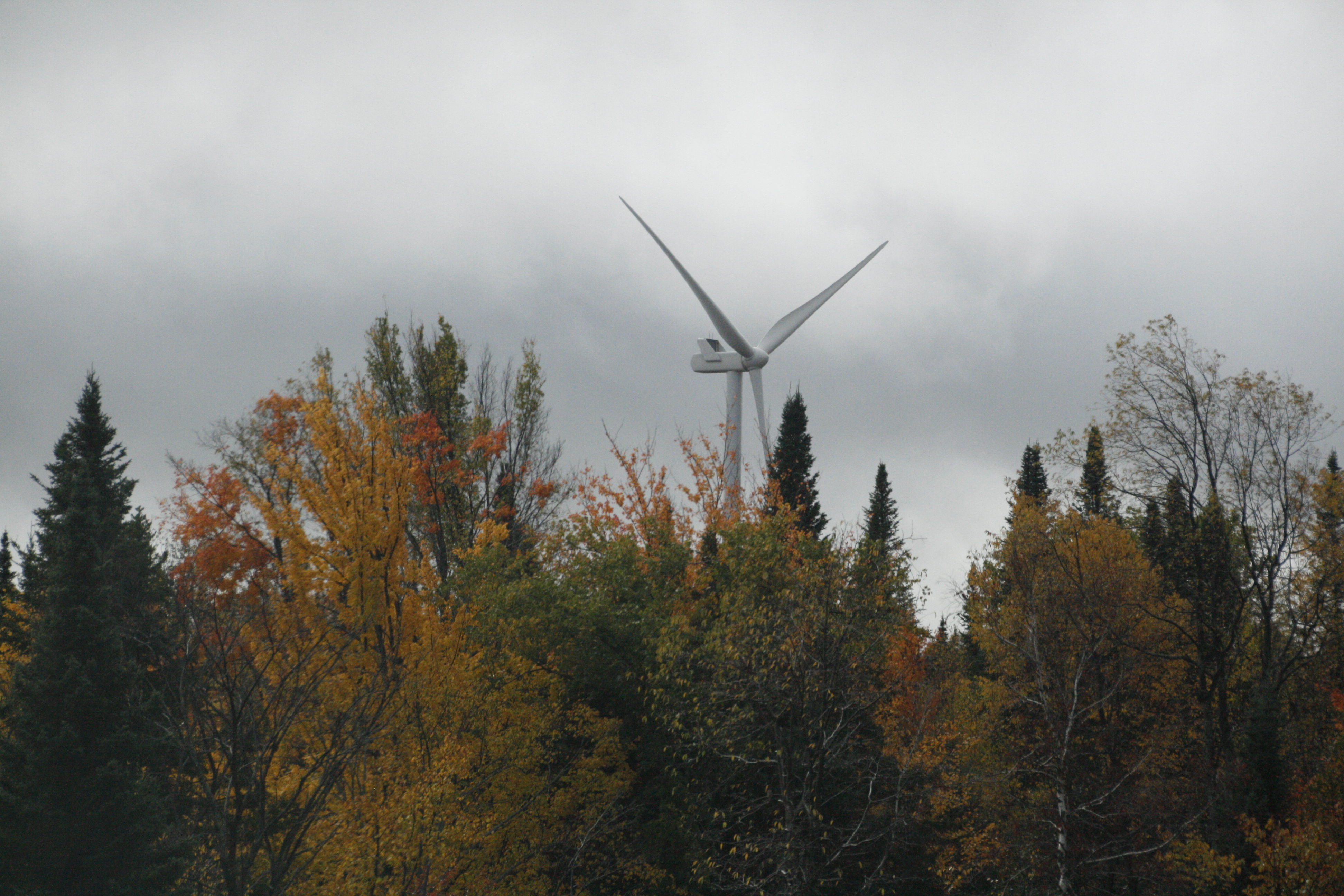
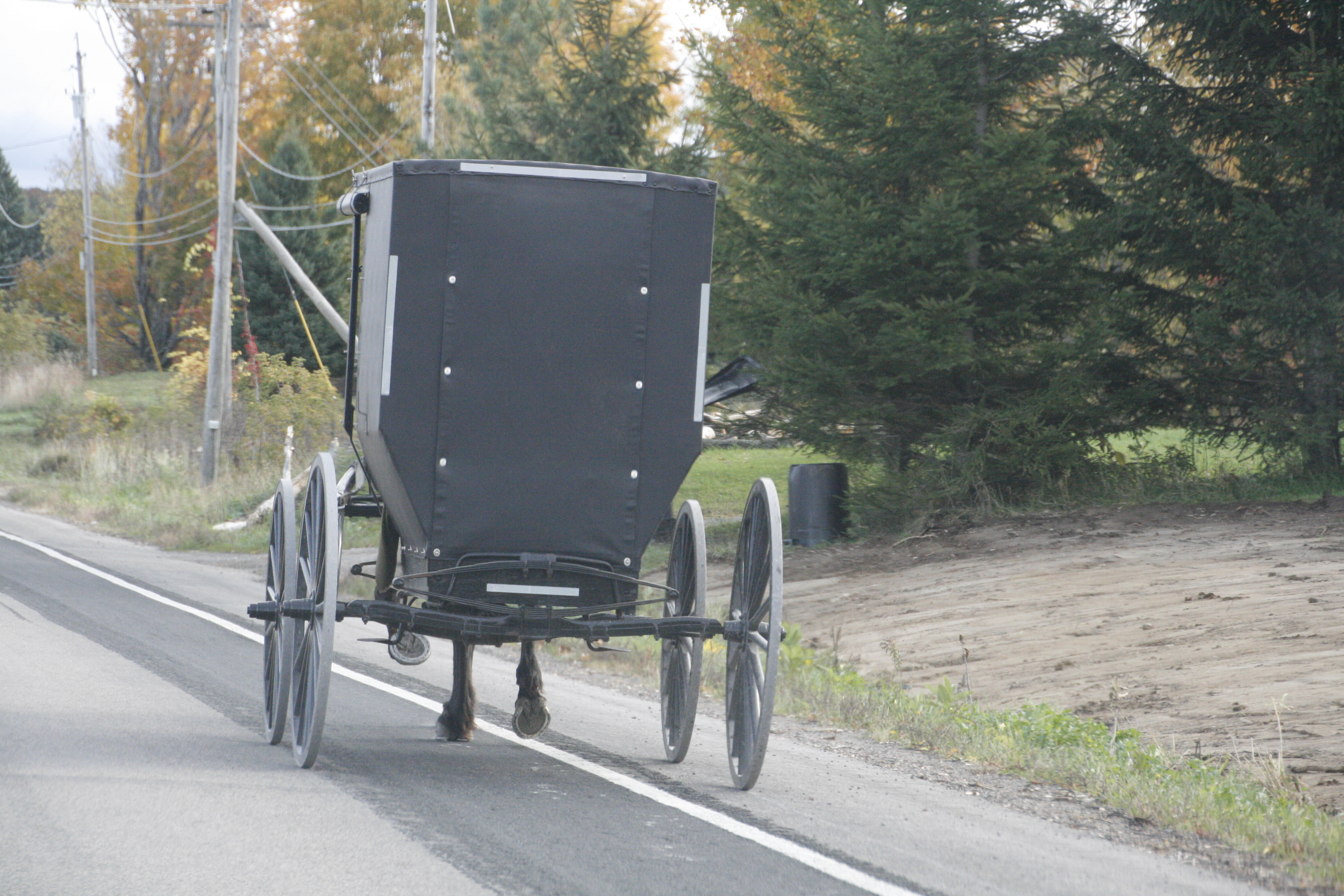
The 150-mile drive from Canton, New York, to Burlington, Vermont, went quickly as we listened to a book on tape (“Dog on It,” By Spencer Quinn) and looked out the window at windmills and Amish buggies going by.

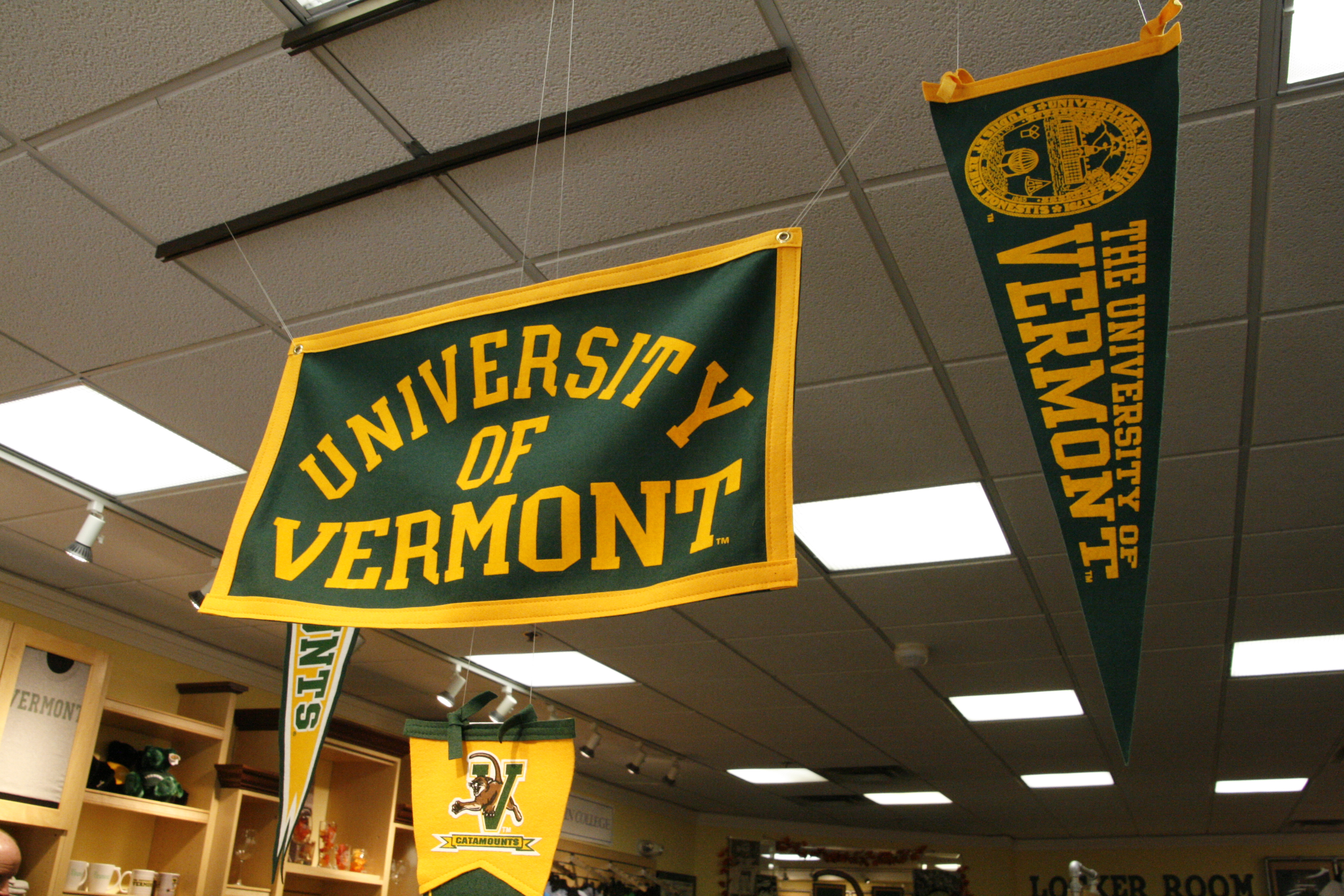
We toured the University of Vermont with 20 or so others, exploring the campus with our tour guide, a biology major.

She led us around the sprawling university which bustled with activity in spite of the day of the week (Sunday).

We learned about the seven undergraduate colleges where 10,500 students pick from 101 majors and the average undergraduate class size is 31. We learned about UVM’s “green mindset”: UVM was one of the first college campuses to ban bottled drinking water and has several LEED (Leadership in Energy and Environmental Design) certified buildings on campus.

We learned that there is always something to do when you’re not studying:  there are over 150 student clubs and organizations and over 70 opportunities to play sports, from varsity to club to intramural. And we learned (second hand) that the food is good and accommodates students with a variety of dietary restrictions, including vegan, vegetarian, gluten free, and food allergies. There is even a Ben & Jerry’s on campus.

We spent the afternoon and evening strolling around Burlington, in and out of stores on Church Street and swinging in swings by the shore of Lake Champlain.

We ate a snack at El Cortijo Taqueria and Cantina (I had a yummy taco with sweet potatoes, guajillo salsa, kale, and pepitas) and dinner at Sweetwaters where my daughter ate gluten free, and everyone agreed that the burgers and mashed potatoes were the best they’d ever eaten.

Trip taken October 2012.

Road Trip to Upstate New York!

Blue lights flashed behind us as we drove through the small town of Malone, New York, about 11:30 p.m. and just 40 miles from our destination, St. Lawrence University. Our right rear tail light was out according to the chatty young policeman who pulled us over. Less than 5 minutes later, blue lights flashed again, and another friendly policeman, this one from the state, told us the same thing. It wasn’t until after midnight that we pulled into the town of Canton, after 7 hours and over 370 miles in the car.

After replacing the tail light, we drove over to my husband’s alma matter where the trees were turning, the rain intermittent, the buildings old but majestic.

On our semi-private tour, with just one other family, we toured the campus, walking in and out of classrooms, lecture halls, and even a dorm room where a real student studied. (Unexpected bonus: students on the tour receive a giant cookie and their application fee waived.)

We saw the “treehouse” study areas at the library, bought shirts at the bookstore, and ate lunch in one of the dining halls, with meal passes from the admissions office: pasta, pizza, a turkey sandwich (on gluten-free bread), salad bar, and frozen yogurt.

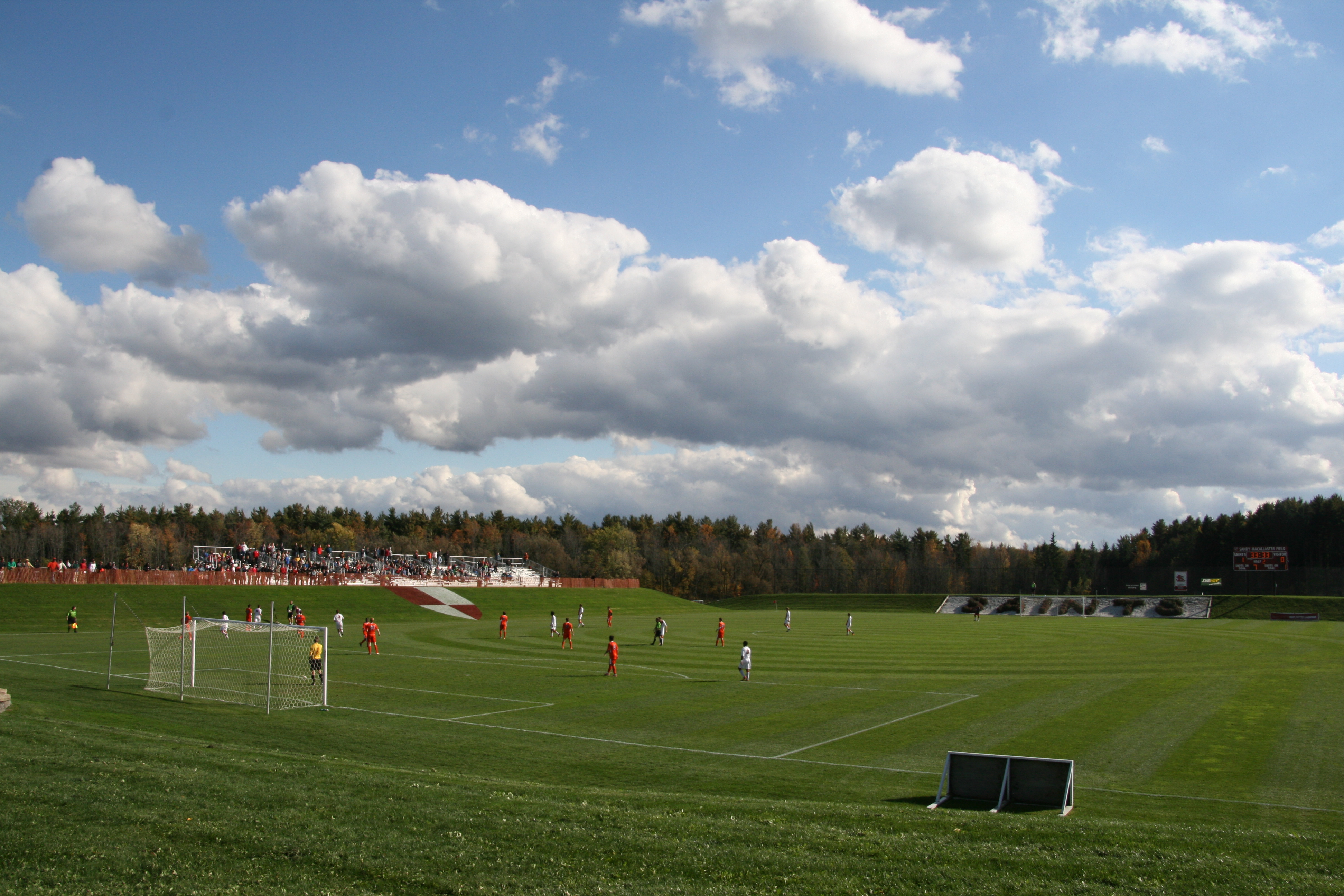
As we drove around campus, we stumbled upon a soccer game and stopped to watch SLU beat Hobart in the game’s second half (3-0).

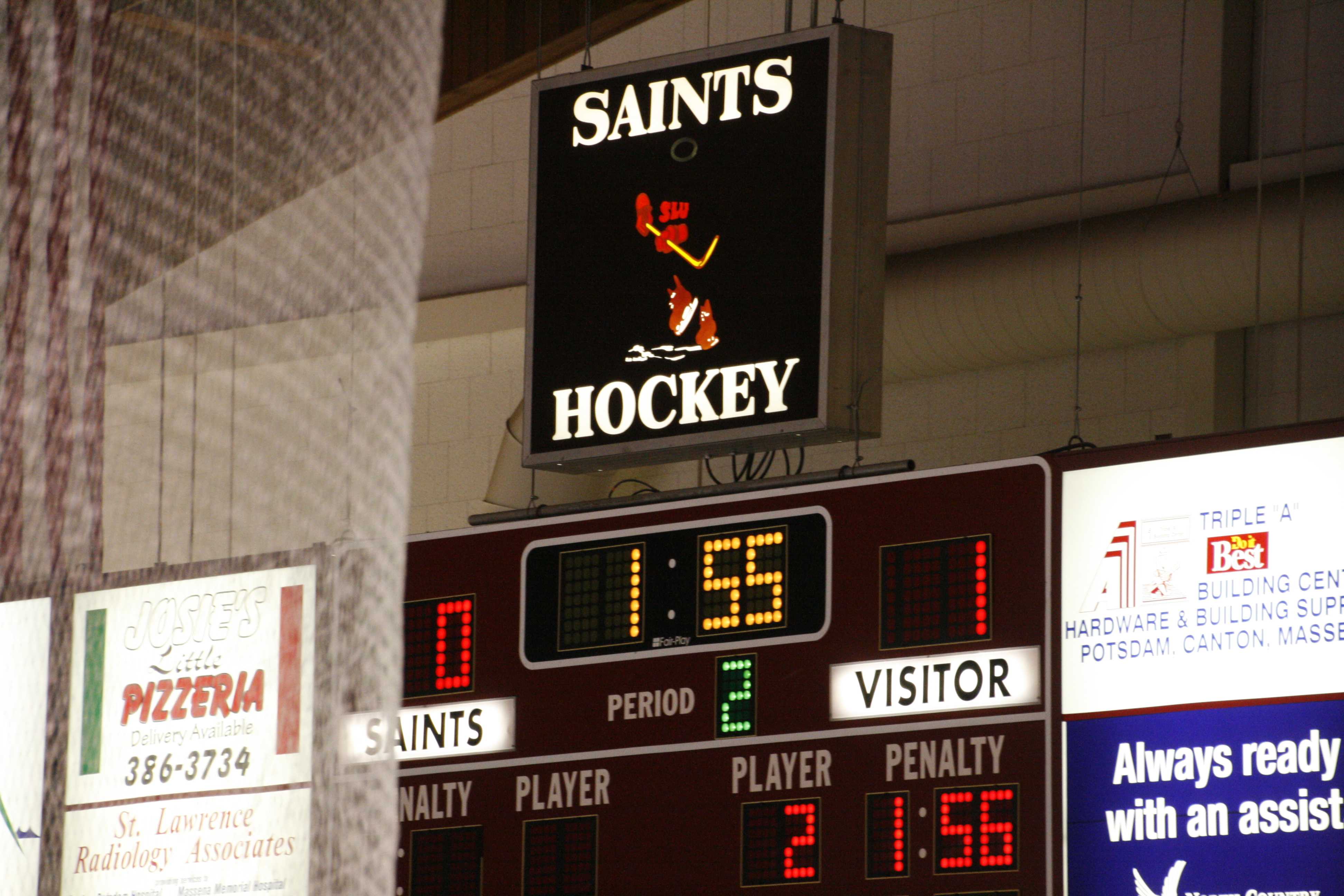
After gluten-free Mexican at the Hot Tamale in downtown Canton, we joined the crowds at Appleton Arena to watch the Saints’ ice hockey team beat Carleton University in overtime (3-2).

A pizza roll at Sergi’s was the late night snack for the boys.

According to its website, SLU was founded in 1856 and is a liberal arts college offering over 60 majors to its 2300 undergraduates. Seventy percent of the students participate in volunteer or community service while enrolled at SLU, and 50 percent of the students choose to study off campus, whether in the Adirondacks or abroad.

Pizza roll photos by Tommy Taft.

Trip taken October 2012.

From Y Meadow Lake to Chewing Gum Lake and Back to the Trailhead

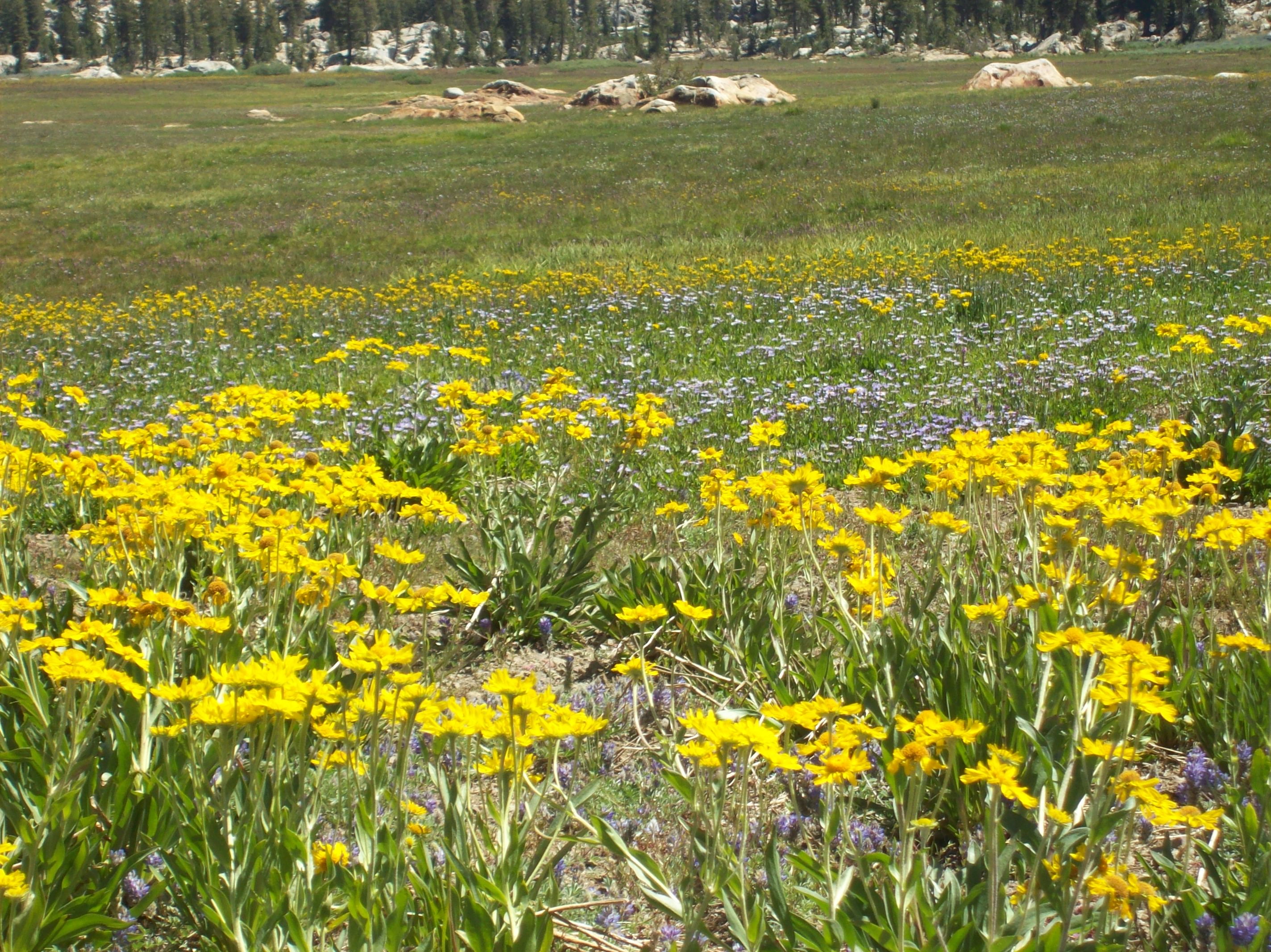
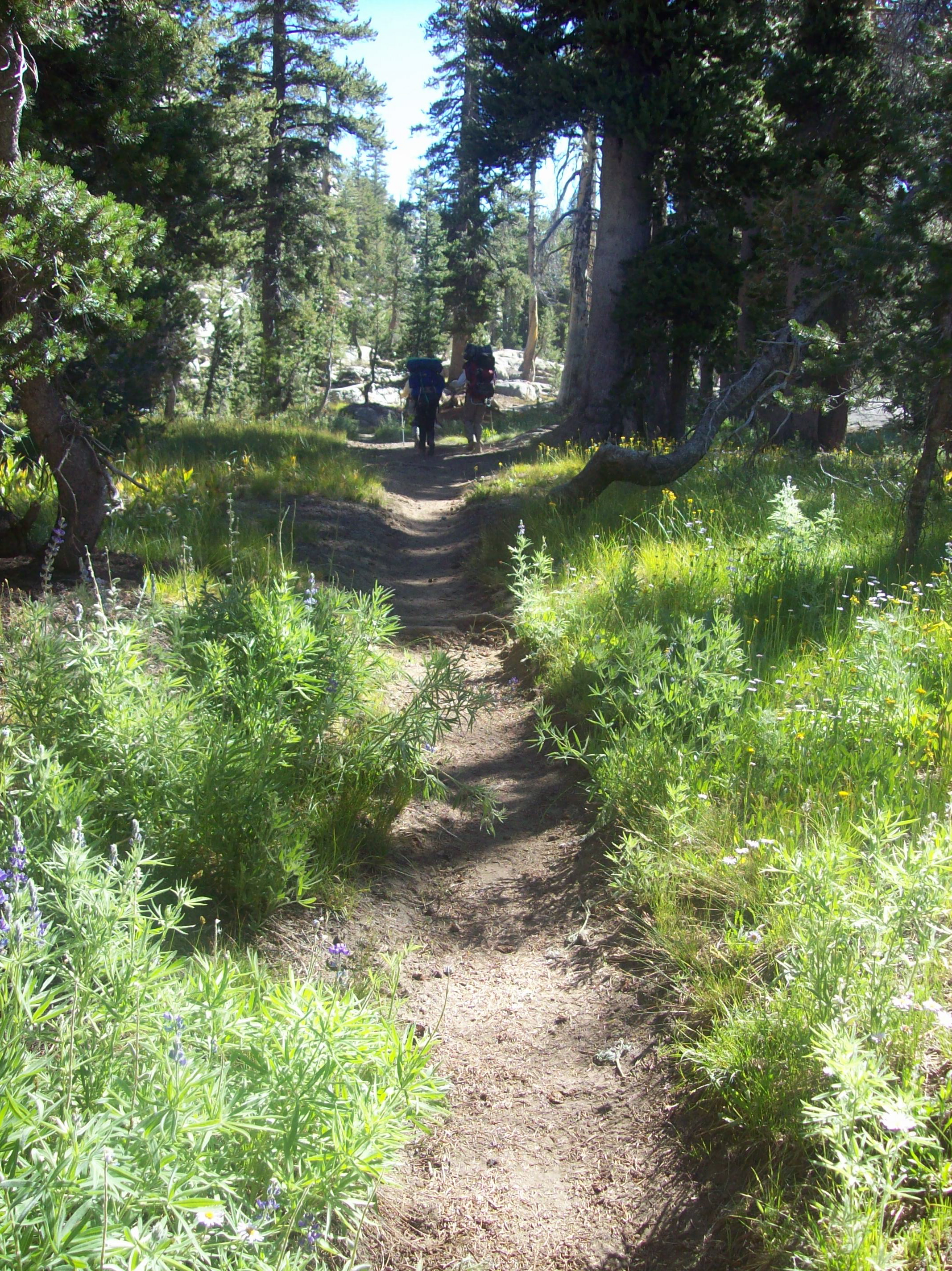
Our longest day was one of our easiest, as the 7 miles of trail wandered and wound through meadows of wildflowers:  blue lupine, red Indian paintbrush and yellow monkey flowers.

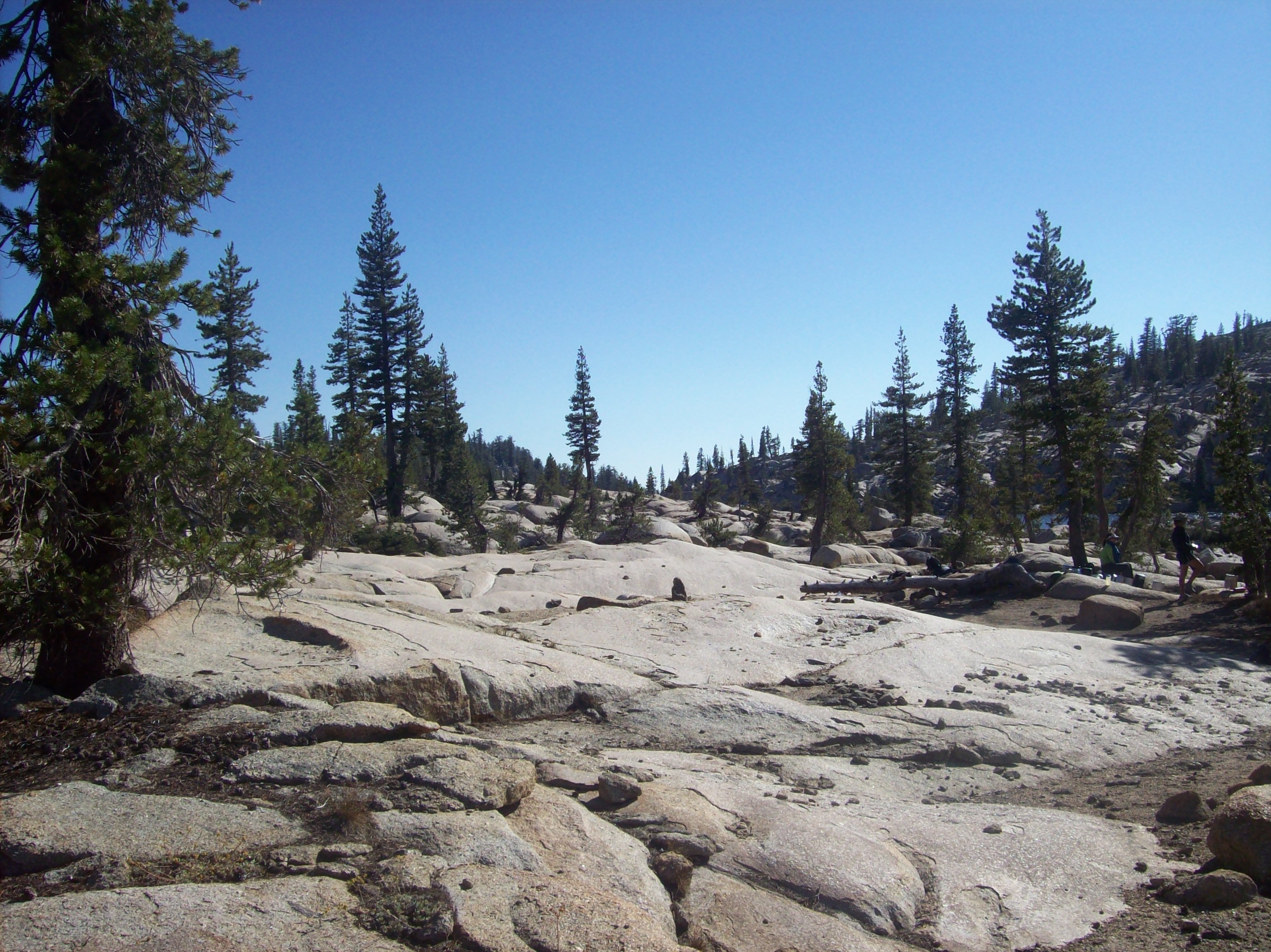
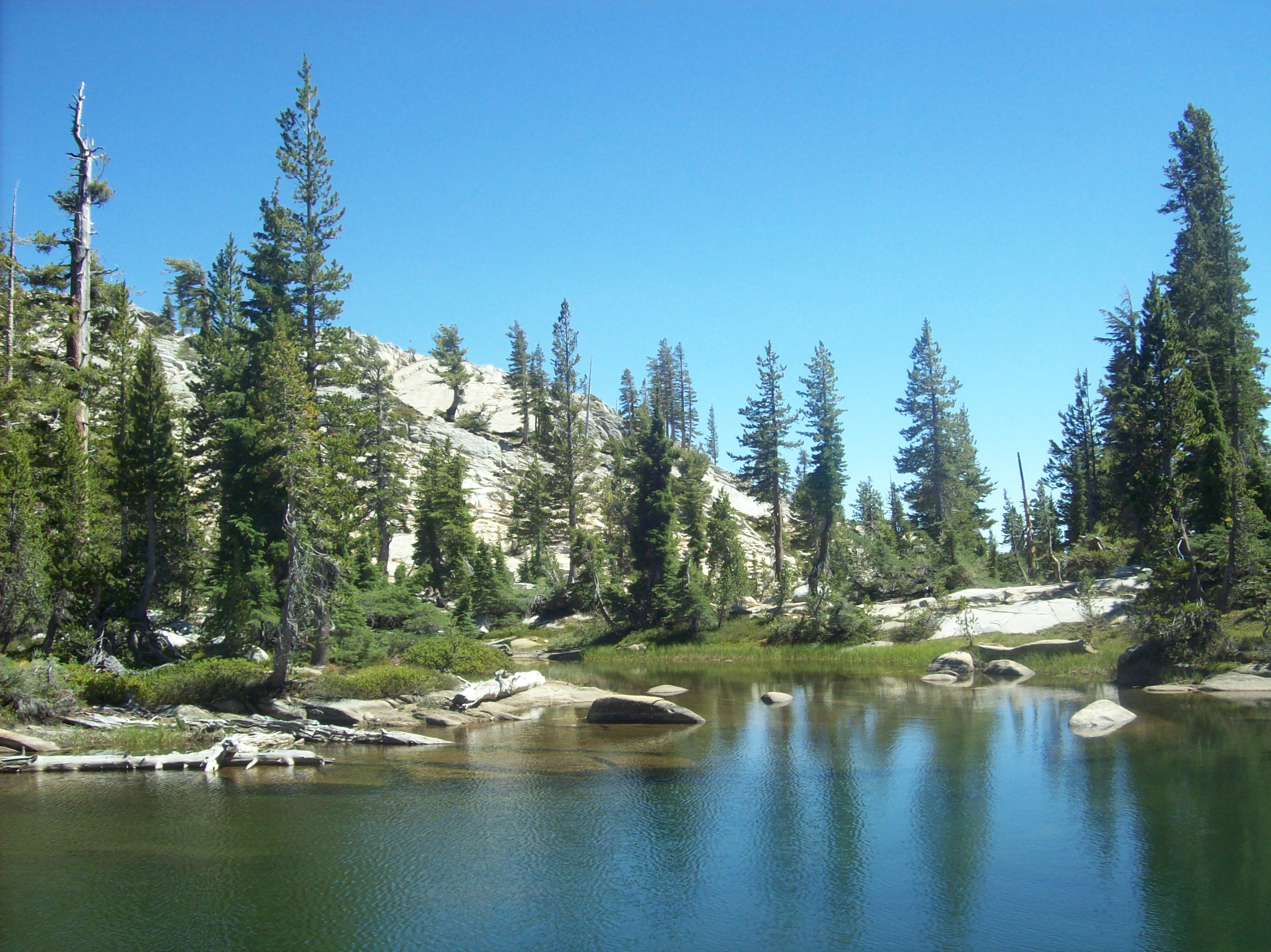
We spent the night at Y Meadow Lake, surrounded by granite without much vegetation.

We scattered our tents about between the rocks and enjoyed the quiet of this unpopulated lake, the only sign of civilization, someone’s food hung high on a tree branch over the lake away from any potential hungry bears. We didn’t swim in Y Meadow Lake, but sat by its edge, doing crossword puzzles, reading, and relaxing.
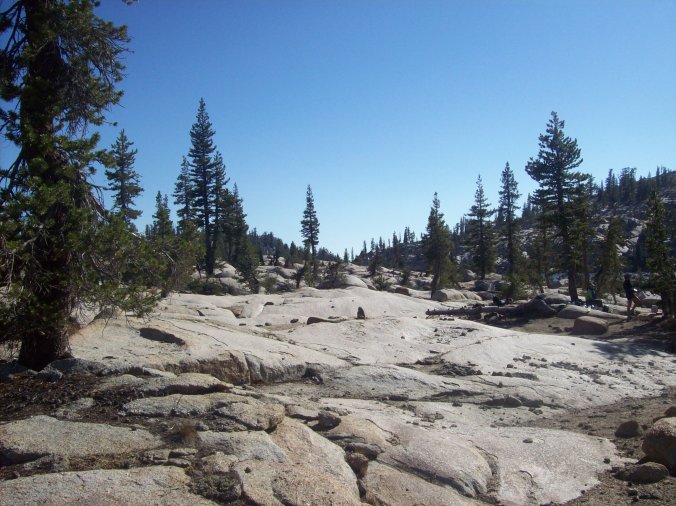
We spent our last night on the trail at Chewing Gum Lake and wondered how it got its name? Was it the muddy bottom that squished as our feet touched and sank several inches? Or was it the grey color of the mud banks? Motivated to get my feet off the mucky shore, I swam into the clear water and was soon gasping for breath. Surprised, I remembered the 8,700 foot elevation, pretty high for a flatlander like me.

At Chewing Gum Lake we were not alone; the lake was scattered with people of all ages jumping off its rocks, swimming and sunbathing or just hanging out on air mattresses on the water. Just 4.5 miles from a trail head, Chewing Gum Lake was easing us back into civilization.

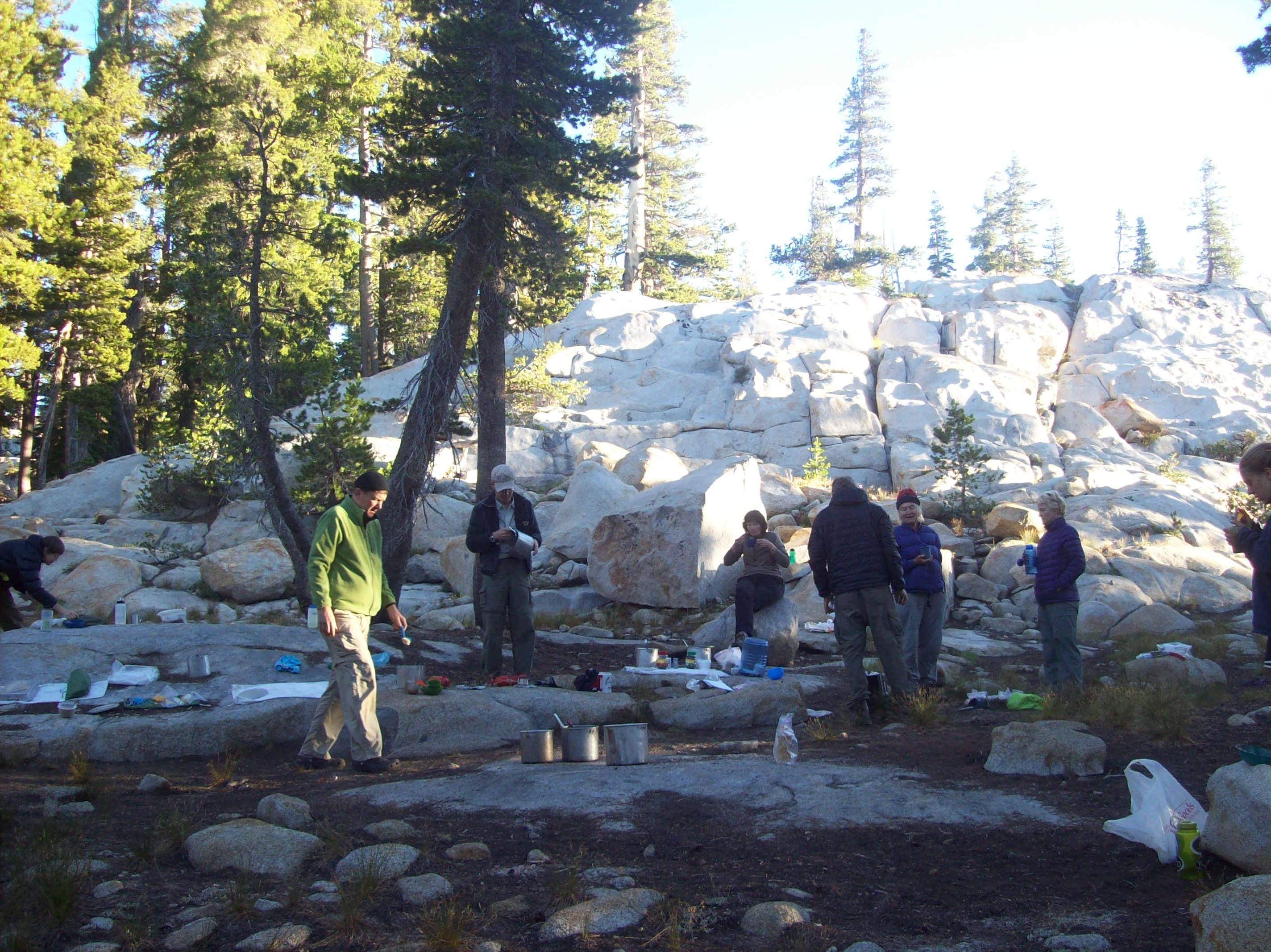
Once again, the group campsite was taken, so we each found our own nook among the rocks of this hilly area, our kitchen located between a couple of trees. That night, as we stayed up late playing a game of Uno, needing head lamps to see our cards, we could hear other campers and smell their campfires.

After peaking at 8,923 feet, we began our descent and hiked down to our beginning elevation of 7,200 feet. Our last day hike back to Crabtree Trailhead was quick, as our leader said it would be, referencing the Back to the Barn effect. Just like horses or cows, once we knew we were almost “home,” we picked up the pace and finished our hike in just 3 hours.

Back at Crabtree, we exchanged addresses, took photographs, said good-bye and marveled at our trip where 11 strangers hiked and camped easily together, wildflowers were in abundance, mosquitos were rarely seen, and it never rained.
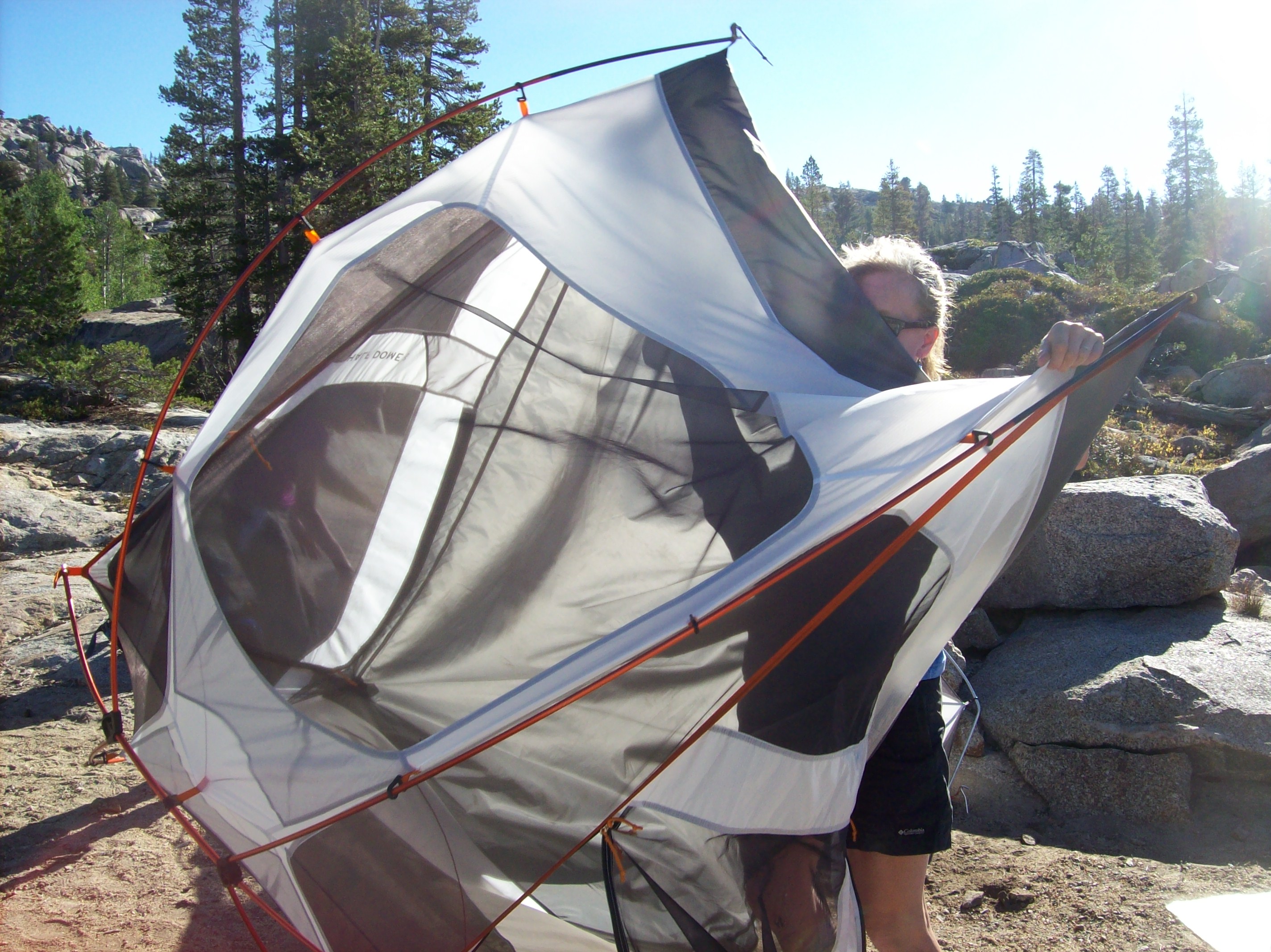
Camping at Wire Lakes

We awoke at Gem Lake to what would be our coldest morning: the thermometer read 25 degrees. Although I wore a hat and gloves for breakfast, by the time we were ready to begin hiking, the sun was higher in the sky, and I’d shed my outer layers.
On this trek from Gem Lake to Upper Wire Lake, only a 4-mile hike up and down, we encountered a family with a dog, Boy Scouts, and even a church group of youths learning to rock climb. We hiked quickly, our packs lighter each day, and arrived at Wire Lake, our next destination, for a late lunch. After eating, we surveyed the area, looking for a place to camp.
At first, Upper Wire Lake did not look promising. Much of the shoreline was rimmed by granite, the rest by woods or grassy meadows, the only group campsite already claimed.

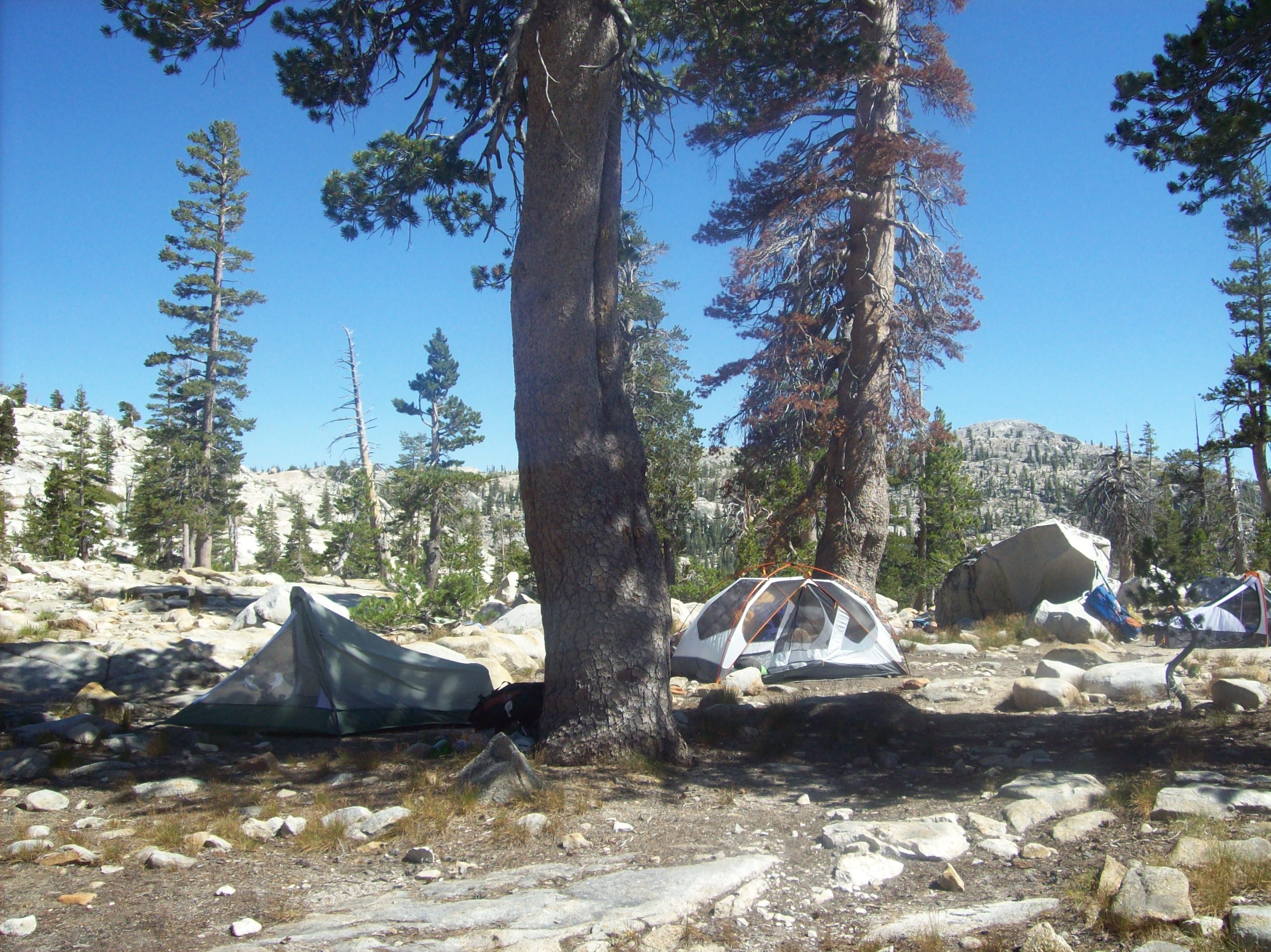
Following the Leave No Trace principles, we searched for areas void of new life to pitch our tents and separated. Beneath a grove of pines, I found a dirt and pine needle covered, somewhat flat area abutting a boulder strewn hill. A few of us pitched our tents there while others found small crevices of dirt between rocks on the edge of the granite hill. Walking to our “kitchen” and communal area was more of a challenge at this site, as we bushwacked through pinecones, over rocks, and around fallen trees for each meal.

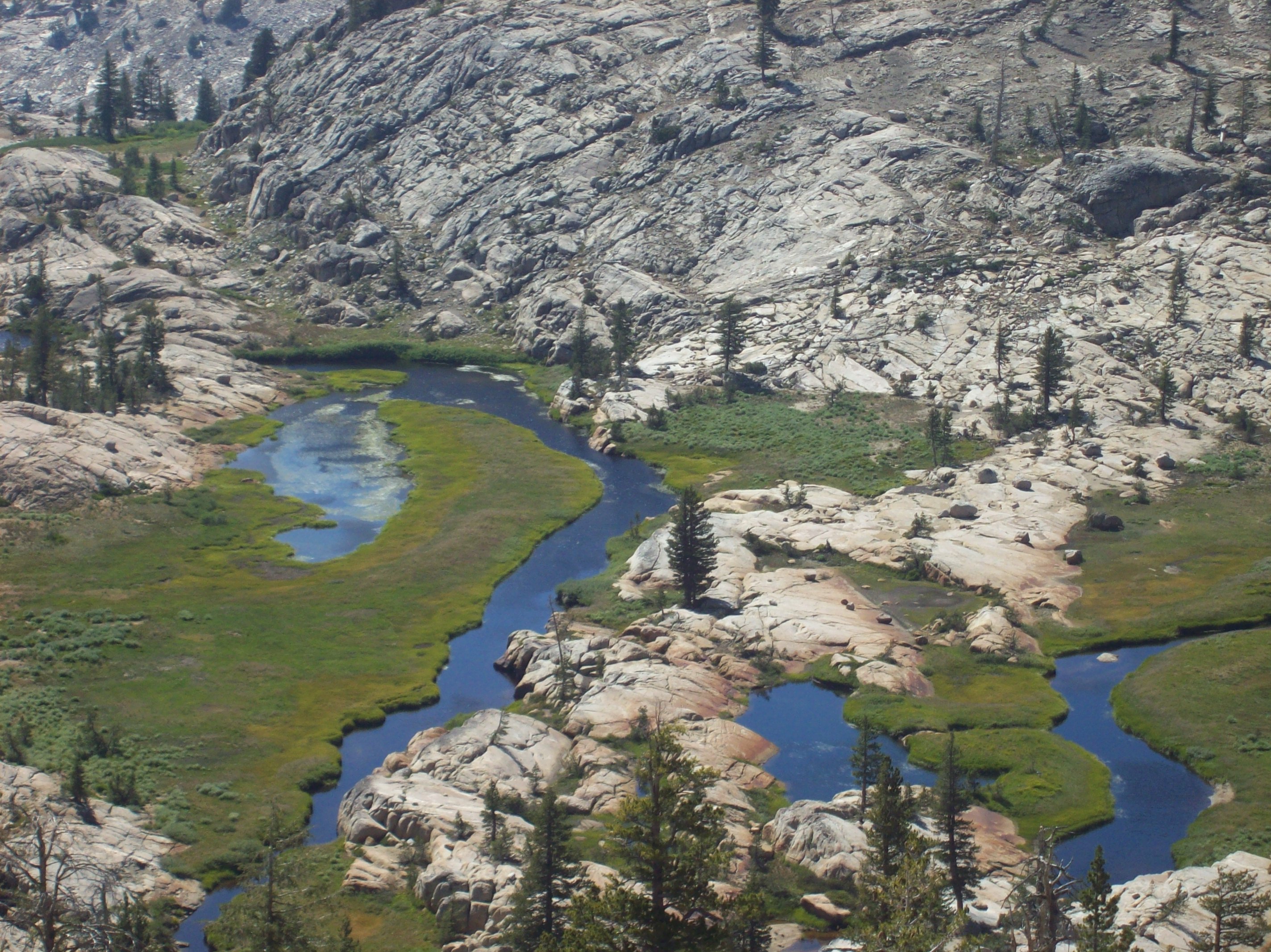
We hiked up the hill for the sunset, viewing the rest of the Wire Lakes and wondering at the castle looking rock formation in the distance.

We spent two nights at Upper Wire Lake, exploring the shoreline and its coves, swimming out to a boulder then warming ourselves in the sun as the breeze picked up, and hiking to nearby Long Lake. On this morning only, we were able to sleep a little longer (until 7 a.m.!), not hurrying to pack up our tents or our packs.

We woke again early on our fifth day on the trail, said good-bye to Upper Wire Lake, and headed back on the trail.

From Lily Pad Lake to Gem Lake

I started to fall and couldn’t right myself. With 40 or so pounds on my back, my center of gravity was off and I fell face first into the dirt. Fortunately, the dirt was soft and except for a ruddy face and smudged sunglasses, I was fine, just tired and a little embarrassed. We were at the end of a 4-mile hike from Lily Pad Lake to Gem Lake on the third day of our backpacking trip.

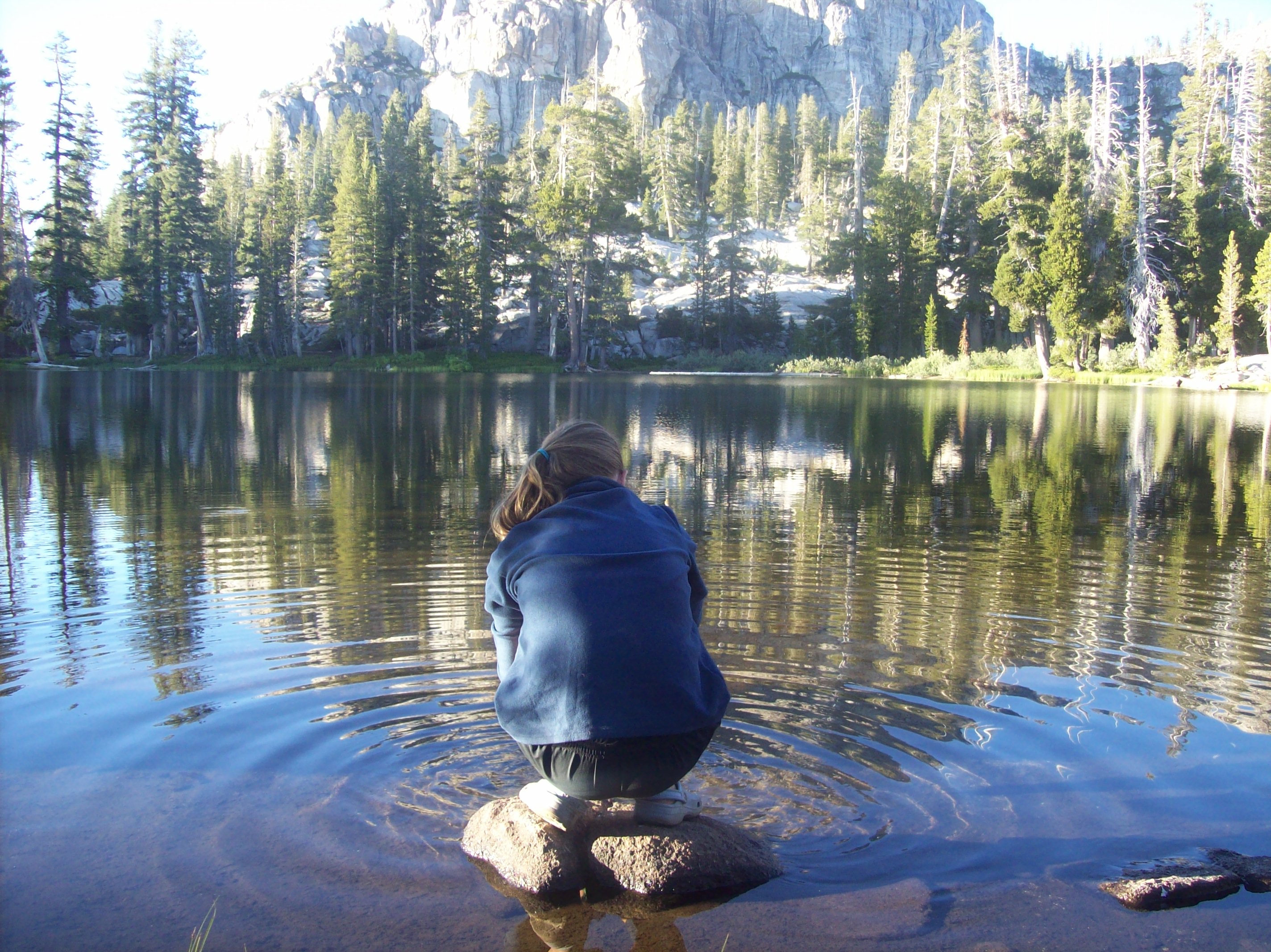
With its plentiful campsites, several small beaches and its clear, blue water, Gem Lake is a popular destination; and while we found the lake idyllic, others did too. Their tents hidden behind boulders and lodgepole pines, we caught an occasional flash of red or green and heard swimmers yell as they dove and swam, a dog barking excitedly.

Electric blue fireflies flitted around us as we relaxed on the warm rocks, talking and reading.

We slept without a rain fly that night and gazed at the stars through the screen of our tent.

From Crabtree Camp to Lily Pad Lake

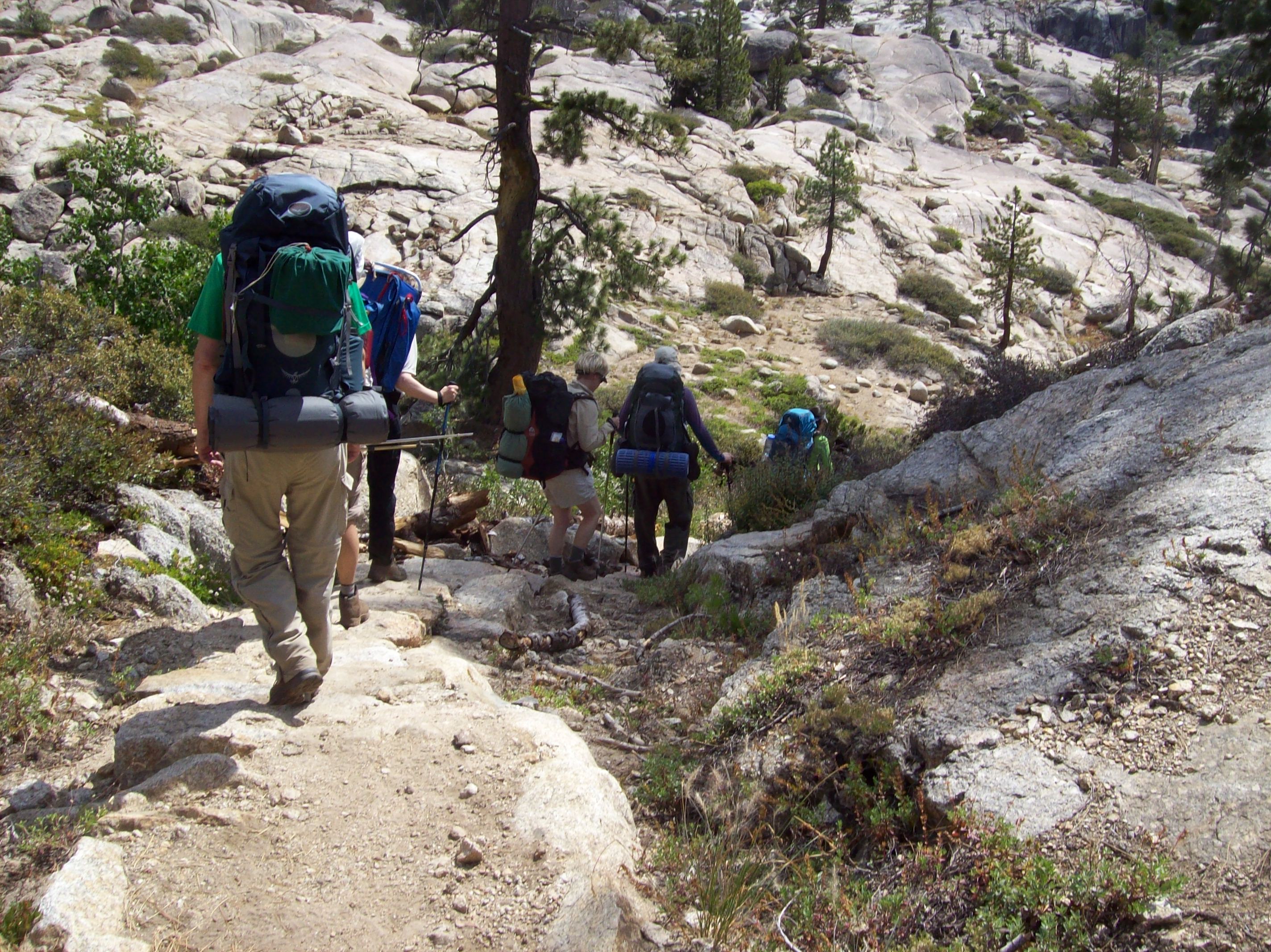
With our 45-pound packs on our backs, we began our journey about 8:30 a.m. and set out on the Crabtree trail in the Stanislaus National Forest before entering the Emigrant Wilderness.

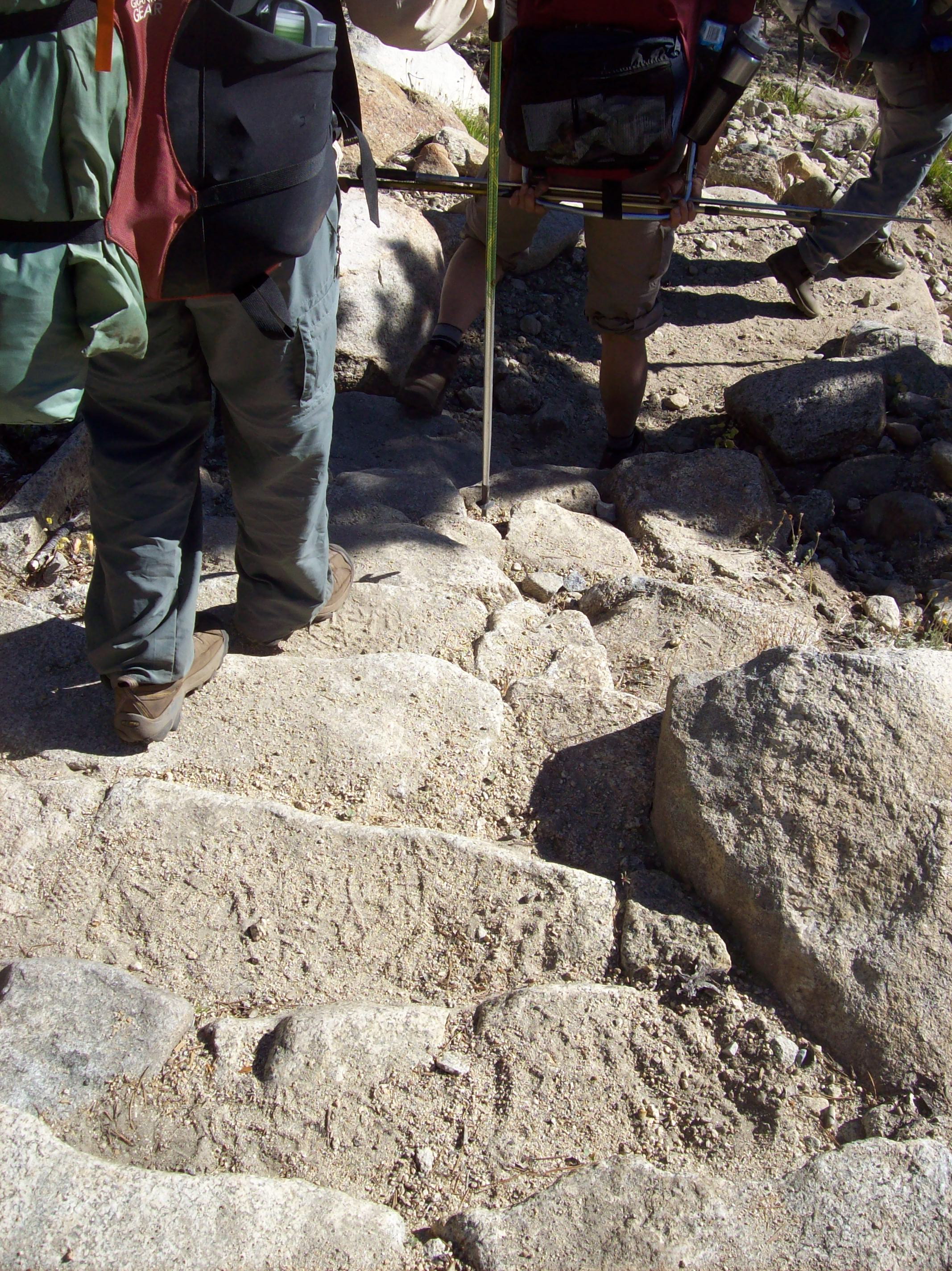
We climbed up and down steps made of granite, stopped briefly for a view of Camp Lake then up again and down a dusty switchback trail.

It was hot, our packs were heavy, and after a water and lunch break, our conversation stopped and we headed up again, each of us concentrating on the next step as our packs dug into our shoulders.

After 5 miles, we arrived at Lily Pad Lake, named for the abundance of lily pads on its surface.

After setting up our tent, we grabbed our water bottles and headed for a large granite rock by the lake. We slid into the water, the lily pads preventing us from swimming but allowing us a small space to cool off.

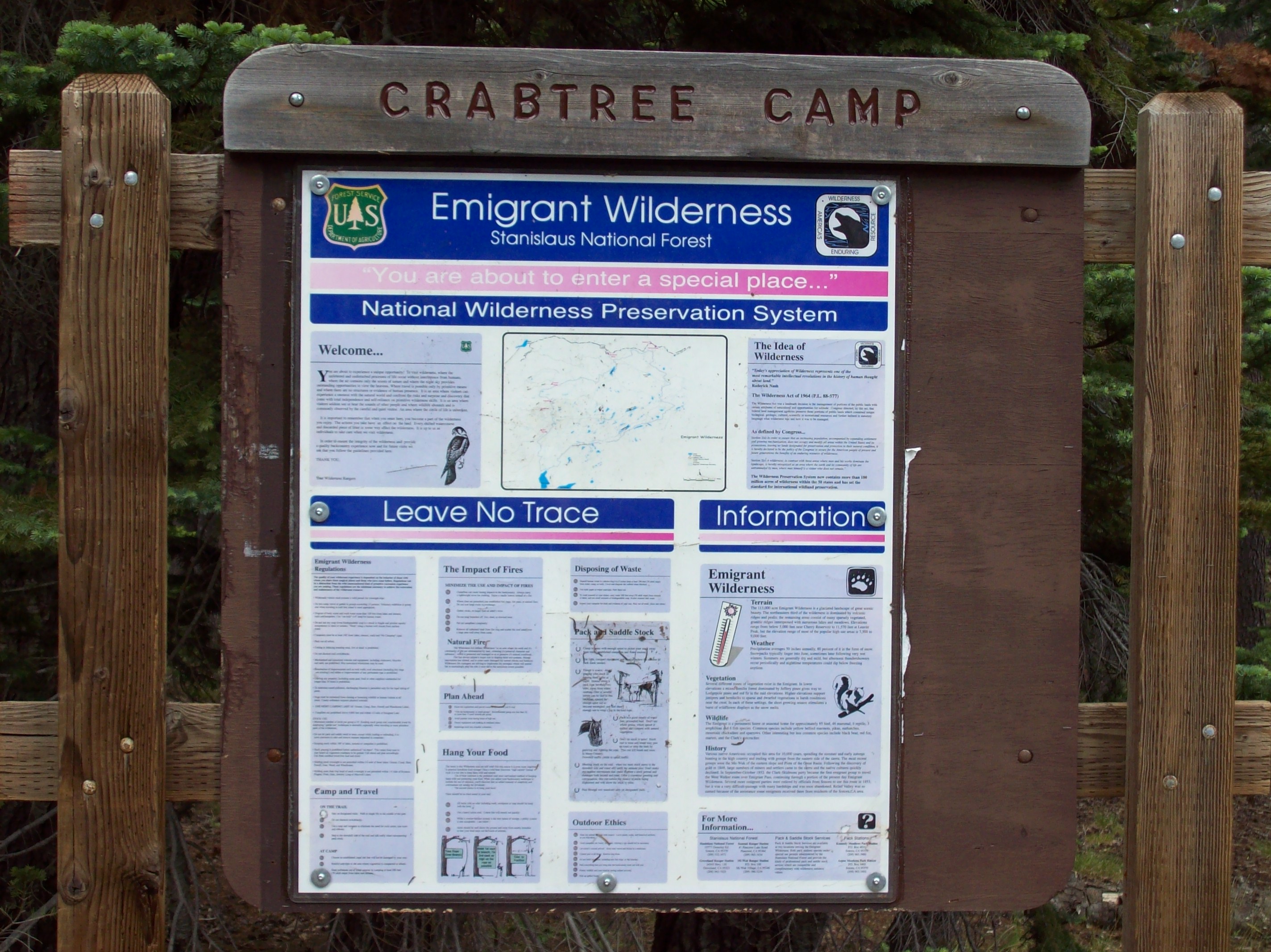
Refreshed, we joined our group for a Leave No Trace presentation by a volunteer of the Emigrant Wilderness and Stanislaus National Forest. We learned that the seven Leave No Trace principles are: 1) Plan Ahead and Prepare; 2) Travel and Camp on Durable Surfaces; 3) Dispose of Waste Properly; 4) Leave What You Find; 5) Minimize Campfire Impacts; 6) Respect Wildlife; 7) Be Considerate of Other Visitors.

On a large flat rock against a pink sky, one of our fellow backpackers spontaneously led us in yoga exercises. We fell asleep that night tired but relaxed.

Among Strangers in the Emigrant Wilderness

Have you ever chosen to spend a week of your vacation with people you’ve never met? My teenage daughter and I signed up for a week long Sierra Club backpacking trip not knowing a soul.

We met two of our fellow backpackers at the BART station in Walnut Creek, California, where we agreed to meet in order to carpool to the trailhead. We met our leaders and the rest of the group at the Crabtree Camp in Stanislaus National Forest near Dodge Ridge Ski Area not too far from Sonora. Not only were there people from Northern and Southern California, there were backpackers from Alaska, Texas, Connecticut, and Massachusetts. We were teenagers and over age 65, men and women, married and single, backpacking for the first time or for the umpteenth time.

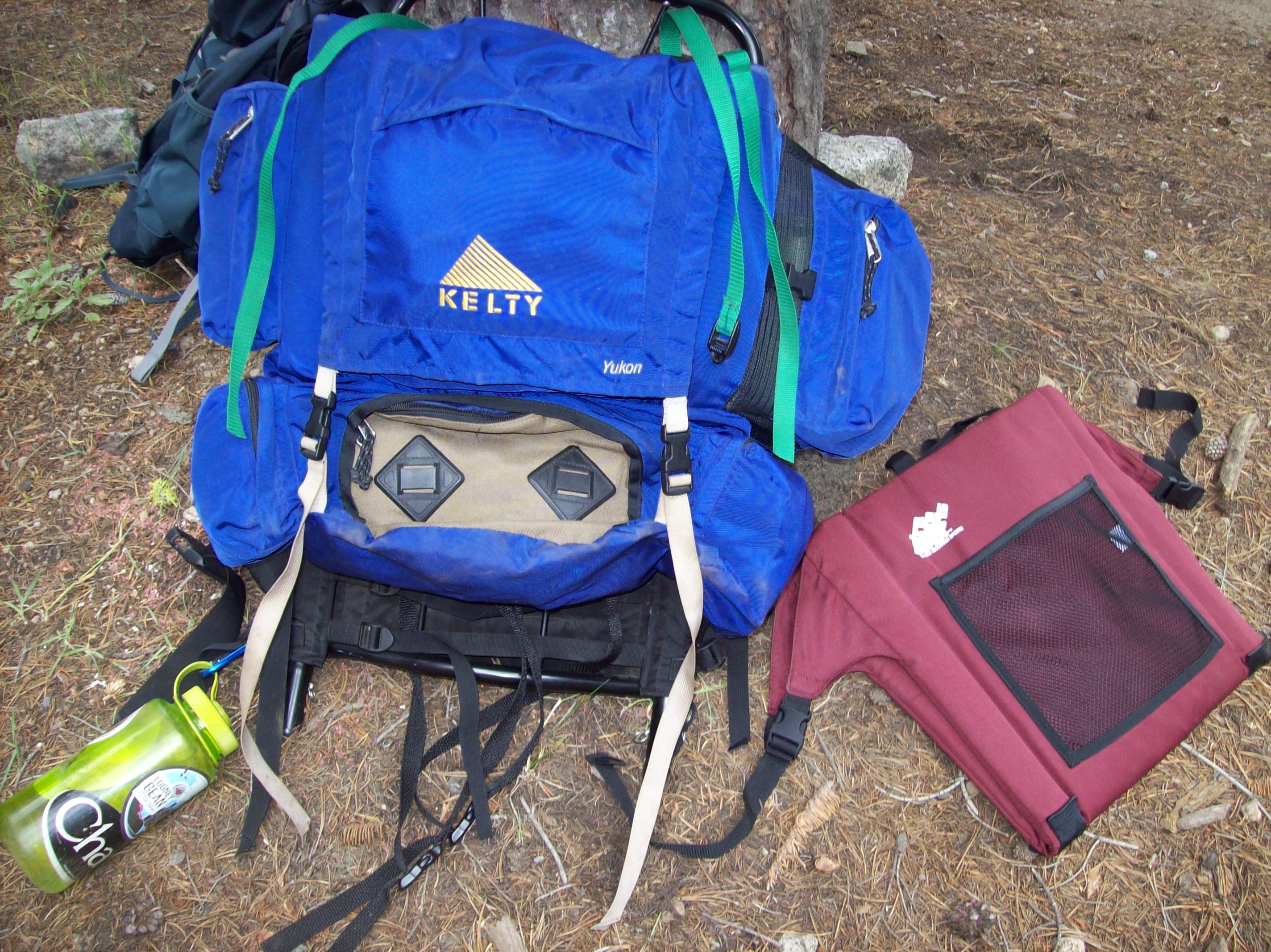
Once everyone arrived, it was time to weigh in. How much weight was I really going to carry on my back while hiking several miles at elevations of over 8,000 feet? After packing and repacking, adding, replacing and removing items, I did my best to keep the weight of my pack as low as I could. Our leader recommended we start with no more than 25 pounds, including pack, water, tent, first aid kit, and clothes for a week where temperatures could range from 25 to 85 degrees with rain or sun. Each of us would add a bear canister, containing at least 15 pounds of food and cooking utensils, to our pack.

One by one, we hooked our backpacks onto the portable scale hung on a pole next to the picnic table. In spite of my efforts (a fellow backpacker and I even split a book in half to share the weight), my pack weighed a hefty 28 pounds.

That night we ate burritos and chatted around our only campfire of the week. We studied the map and shared experiences before heading to our tents for the night, ready to begin backpacking the following morning.

Gluten-Free Backpacking

When my son and husband signed up for a Boy Scout backpacking trip in the Eastern Sierras, I was determined to find an equally exciting adventure for my daughter and me. And I did, without much searching. I was surprised to find a week-long gluten-free beginner’s backpacking trip offered by the Sierra Club in the Emigrant Wilderness just north of Yosemite. Since my daughter is gluten free and a beginner backpacker, and it had been over 15 years since I carried a pack, we signed up.

Over the next few months, our leader changed from a woman with celiac disease to a woman who does NOT eat gluten free, and the trip description changed to a beginner’s backpacking trip.”   We were given the option to opt out of the trip but were assured that my daughter and another backpacker would still eat gluten free, and they did.

From burritos to quinoa to pasta with pesto or sundried tomatoes to lentils and rice, we all ate well. We ate granola, oatmeal, and scrambled eggs for breakfast; tuna, peanut butter and jelly, and cheese and crackers for lunch. At breakfast and lunch, while the rest of us ate cereal, crackers, tortillas, and pita bread containing wheat, my daughter ate gluten-free substitutes. Dinners were gluten free for all.

The trip was great, she was never sick, we were introduced to a few new gluten-free products, and the rest of our 11-member group learned a lot about eating gluten free and preventing cross contamination between wheat products and gluten-free ones.


Seaweed and Lobsters

Have you ever been to a New England clambake? Not just a lobster boil or a barbeque, but a real clambake where lobsters and clams are steamed by seaweed sitting on very hot rocks. In case you haven’t been lucky enough to have the experience, here’s how it works:

First you dig a big pit.

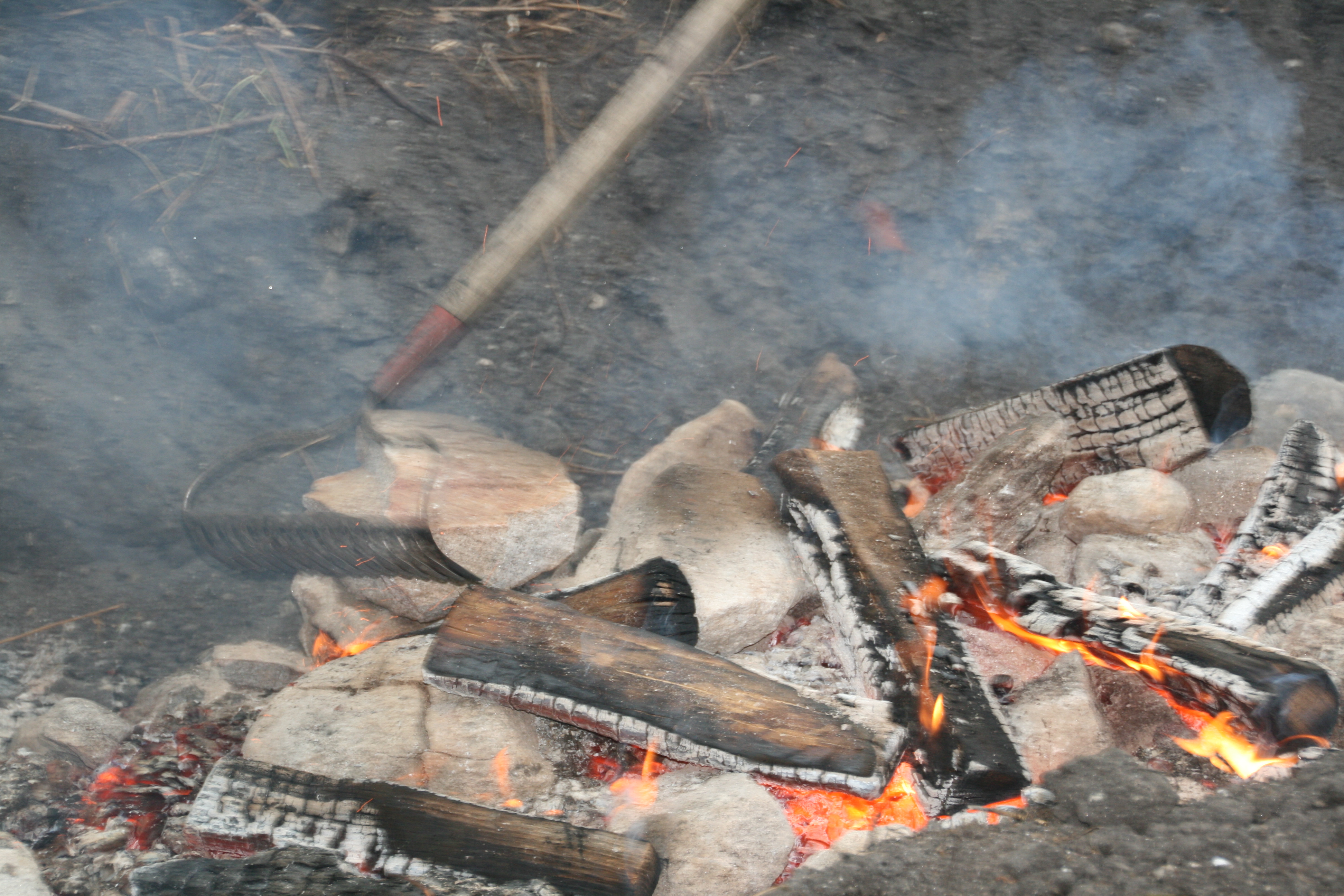
Next you add some large rocks, about the size of a basketball, along the bottom of the pit.  Then place wood on top of the rocks and  start a fire. The idea is to heat up the rocks so they are very, very hot.  This means the fire has to burn for several hours.

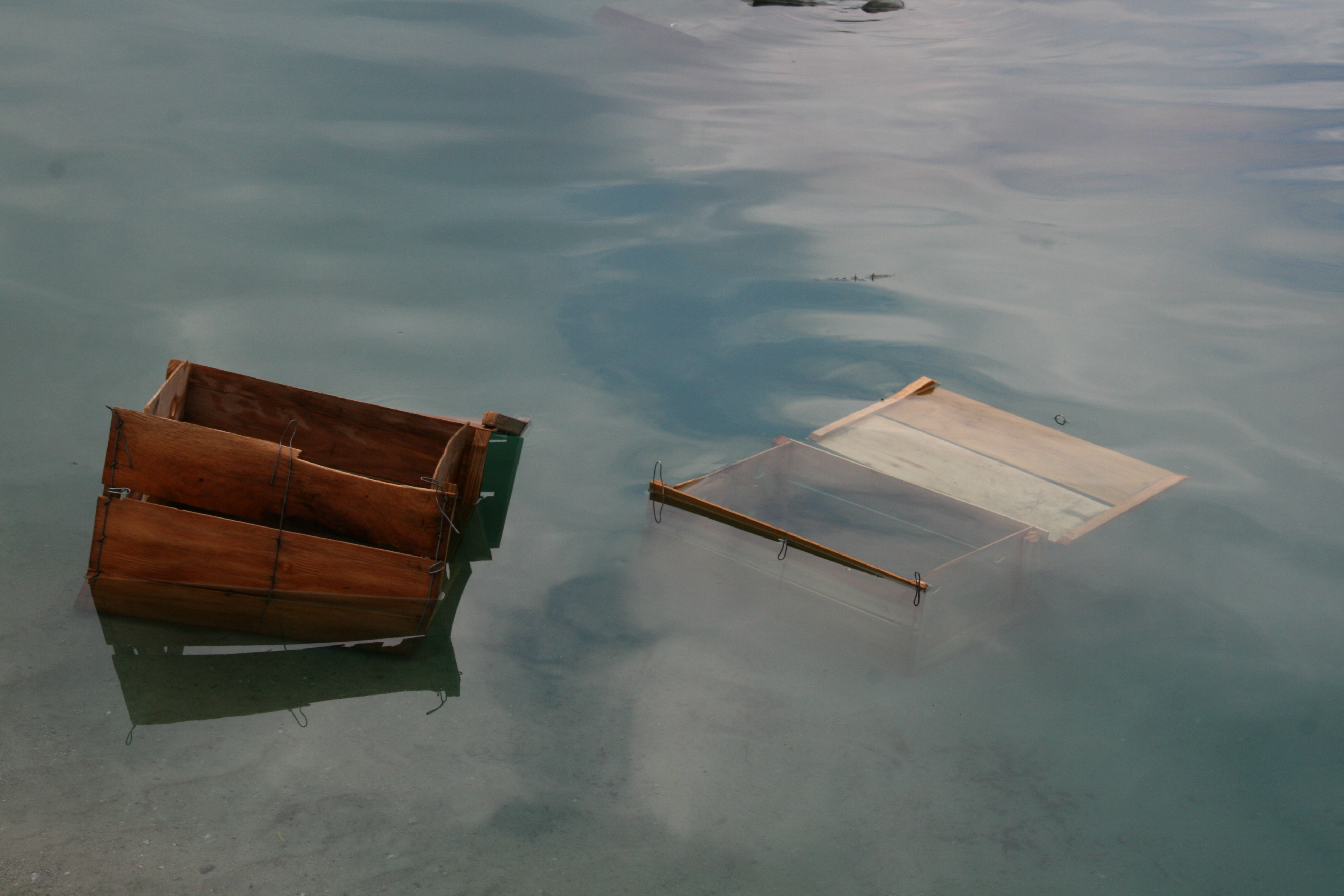
Meanwhile, soak the wooden baskets which will contain the lobsters so they won’t burn.

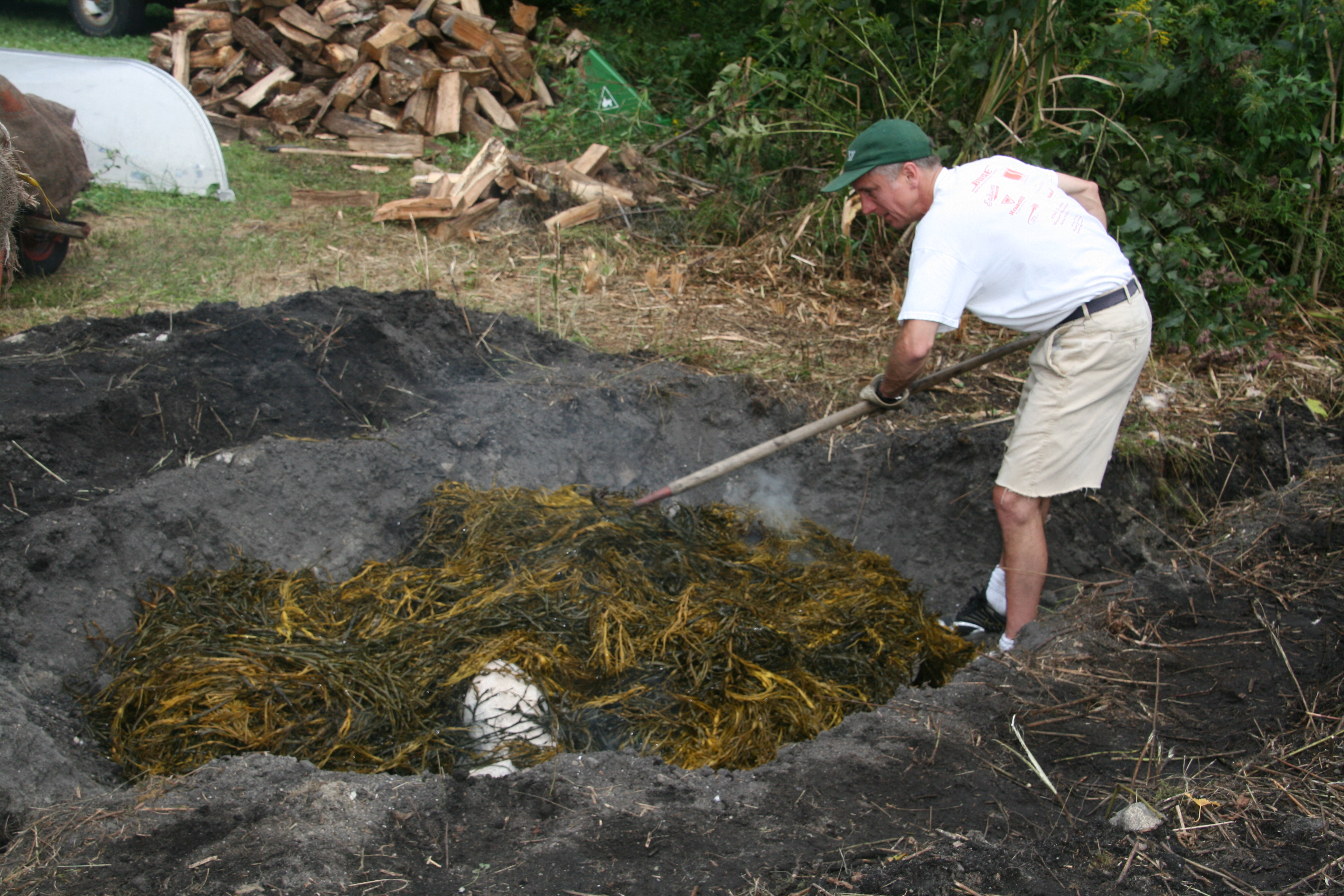
When the stones are good and hot, it’s time to start the cooking. Cover the entire pit with seaweed.

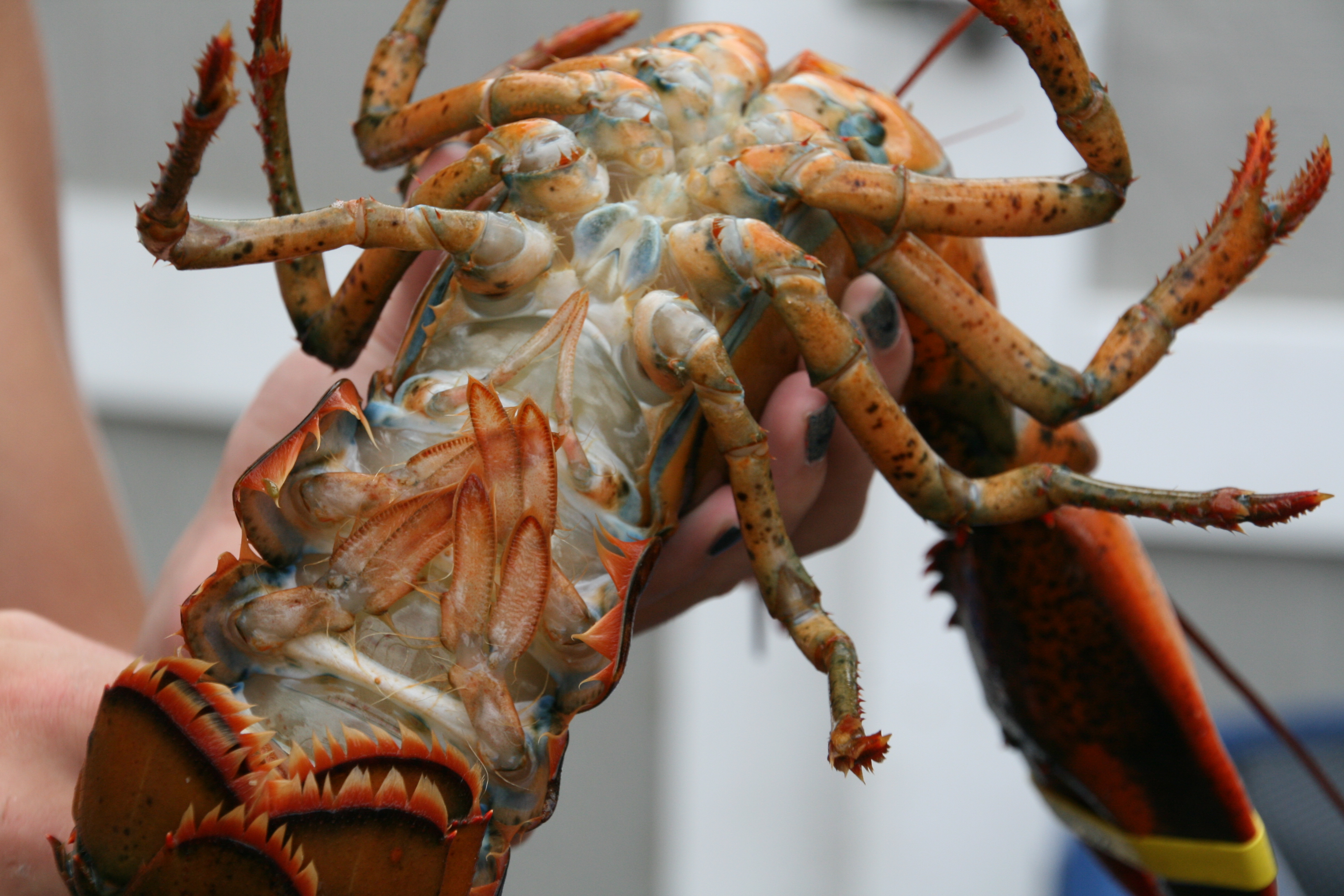
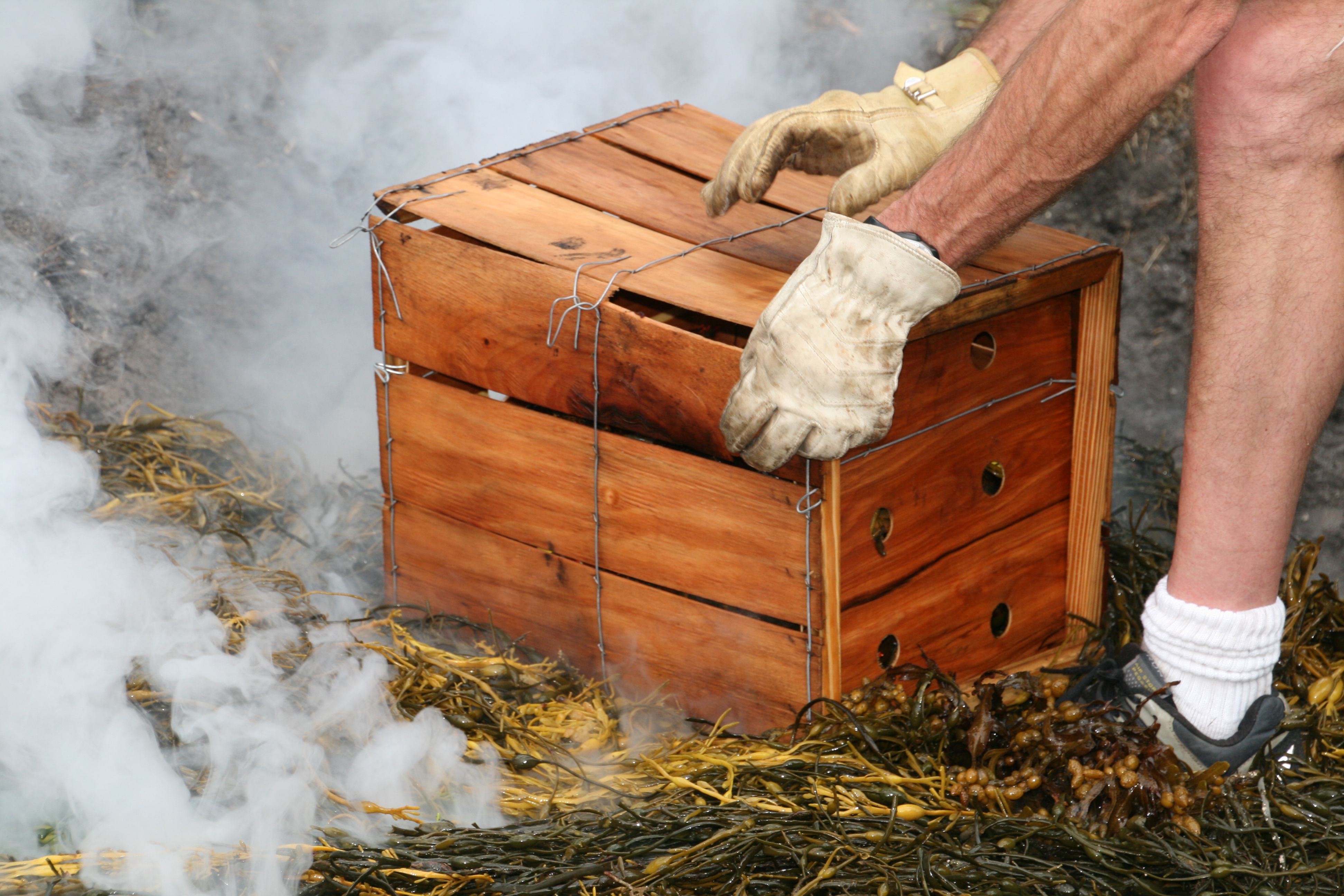
Add the live lobsters and steamers to the water soaked baskets and set them in the pit on top of the seaweed. Add potatoes or corn on the cob (in their husks) if desired, though in our experience, corn often takes on the flavor of the seaweed.

Cover the seaweed with one or two tarps to keep in the steam. And start counting.

According to our experts, it takes 47 minutes and 30 seconds to steam the lobsters.

Carefully, remove the tarps and uncover the baskets. The seafood is now ready to eat.

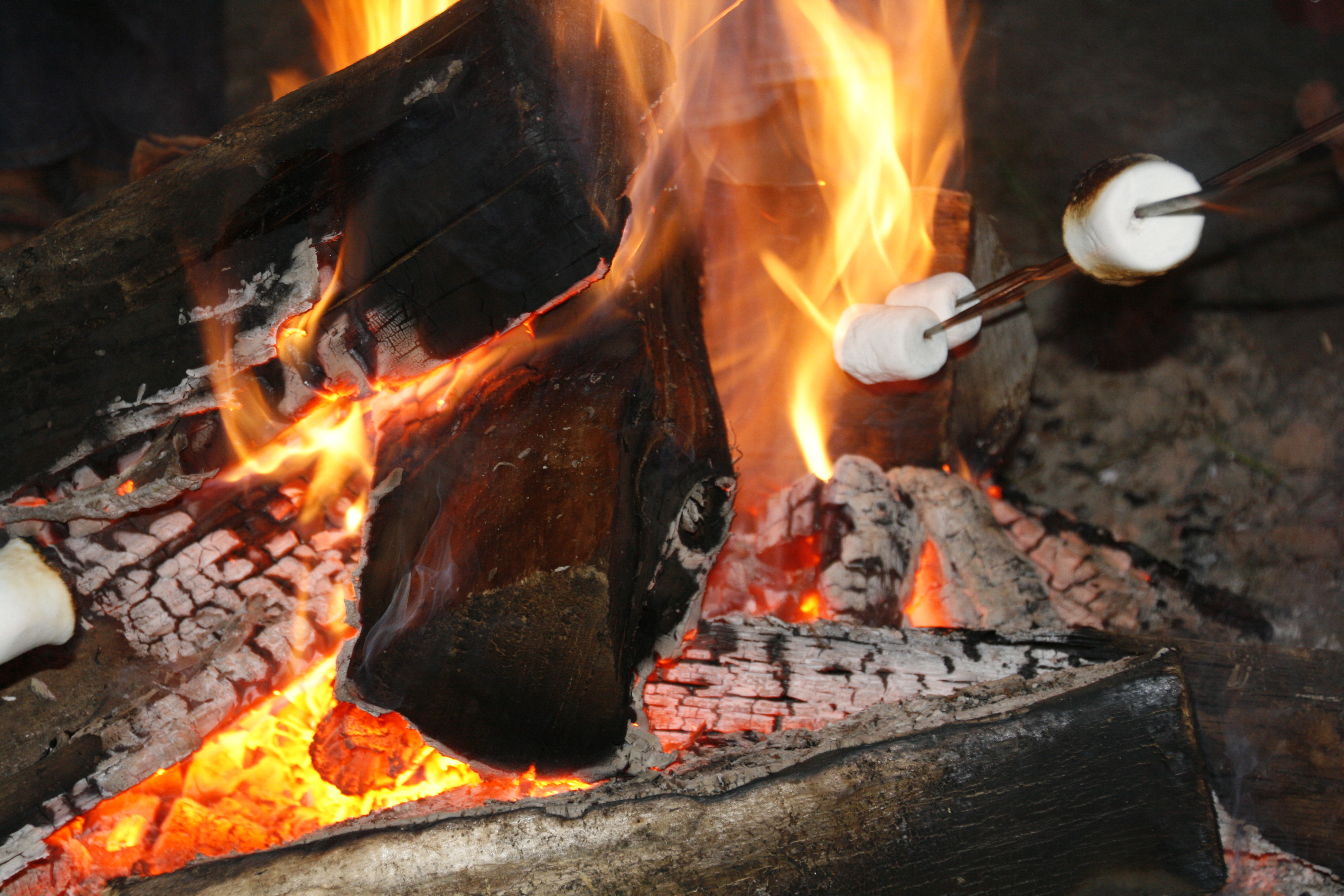
Be sure to serve the lobsters and steamers with melted butter, lemon, crackers and picks. Additional food items often include: potatoes, corn on the cob, clam chowder, corn bread, cole slaw or green salad. Serve with the beverage of your choice. For dessert, we like to follow our lobster with s’mores over a separate campfire (not over the pit!).

Enjoy!