Where did you go this holiday season? I stayed near home the month of December but went shopping around the world and bought several gifts handmade by women and children in places like Sri Lanka, Ghana, Kenya, Uganda, and Thailand. Each item made me pause and smile, and I have no doubt, they made the recipient feel good, too.
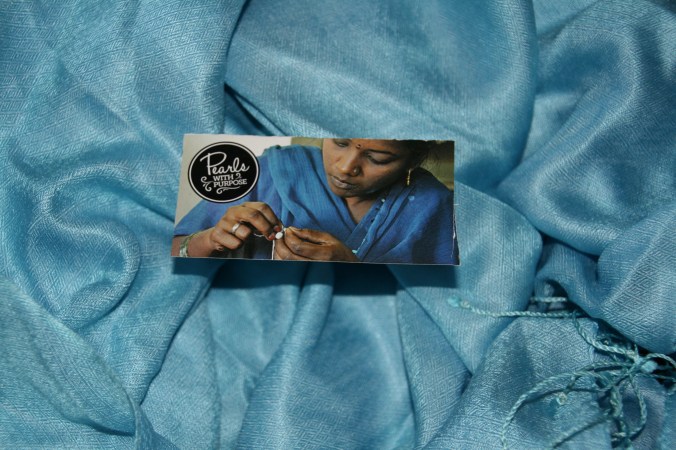
I oohed and awed at jewelry made in the Philippines and in India from genuine pearls. Pearls with Purpose was created to instill self-sustainability and hope in women throughout the world.
I smelled the candles and admired the containers at Prosperity Candle, a company whose mission is to “empower women to rebuild their lives through candle making, one gift at a time.” After training women as candle making entrepreneurs in Baghdad, the company began working with Burmese and Bhutanese women refugees living in Massachusetts. If you buy a candle, you can email its creator through the organization’s website.
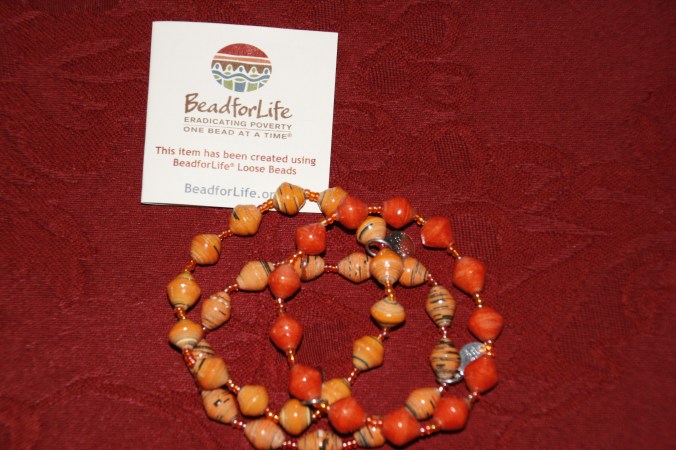
I bought recycled bead bracelets made in Uganda from BeadforLife. Bead for Life teaches women the art of bead making as well as entrepreneurial and business skills so that they may successfully run their own sustainable business once they graduate.
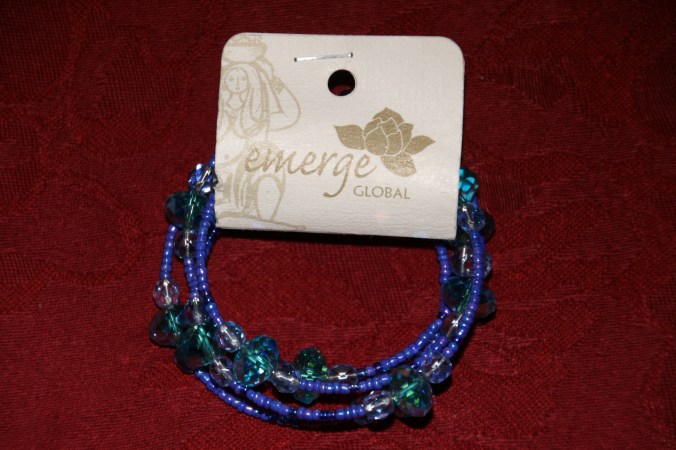
I bought bracelets for gifts and a necklace for myself from Emerge Global, an organization which supports teenage girls in Sri Lanka, ages 10-18, who have survived abuse and helps them develop business and life skills needed for self-sufficiency.
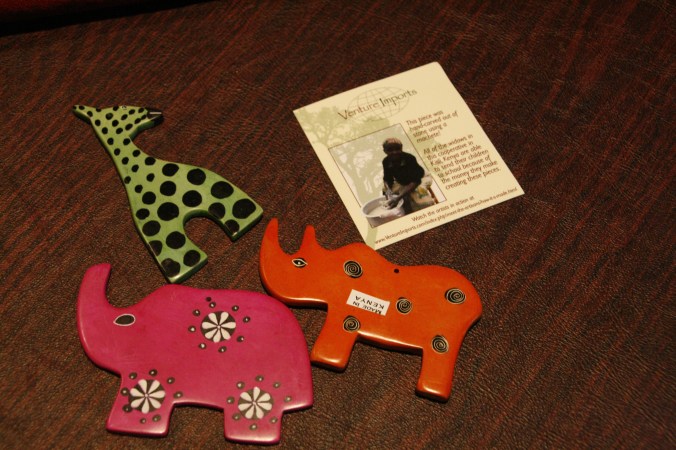
 I gave animal shaped ornaments made from soapstone to my family to hang on our tree. Venture Imports sells these ornaments and other carvings which are cut with machetes by Kenyans as part of the Tabaka project. Tabaka was established to eradicate suffering throughout the Kisii area of Kenya and provide an opportunity for a better quality of life by providing fair wages and the ability to market products outside of Kenya.
And I don’t know about you, but when I’m shopping, I sometimes buy gifts for myself. So, what did I buy?
 I bought a string of lights and flowers made from real leaves of the rubber tree and the bodhi tree by Burmese women. Money from the sale of “flowers from real leaves” supports local women and other projects at Whispering Seed, “a village-based sustainable living and learning center and home for children who have been orphaned, abused and neglected along the Thai-Burmese border.”
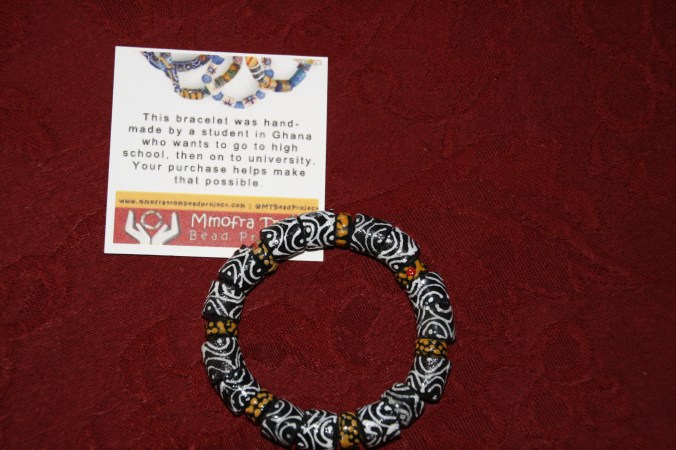
I bought a bracelet for myself from the Mmofra Trom Bead Project whose motto is “Give the gift of education, one bracelet at a time.” Children in Ghana string beads made from recycled glass to help fund their high school and college education. The beads are made by local Ghana artisans.
In the past, I’ve given shares of animals as gifts through Heifer International and bought jewelry and art from Ugandan artists through Project Have Hope, an organization that empowers women in the Acholi region of Uganda. What unique and handmade gifts did you discover as you traveled around the planet this past holiday season?



 Snapshots and Sojourns