From Lily Pad Lake to Gem Lake

I started to fall and couldn’t right myself. With 40 or so pounds on my back, my center of gravity was off and I fell face first into the dirt. Fortunately, the dirt was soft and except for a ruddy face and smudged sunglasses, I was fine, just tired and a little embarrassed. We were at the end of a 4-mile hike from Lily Pad Lake to Gem Lake on the third day of our backpacking trip.

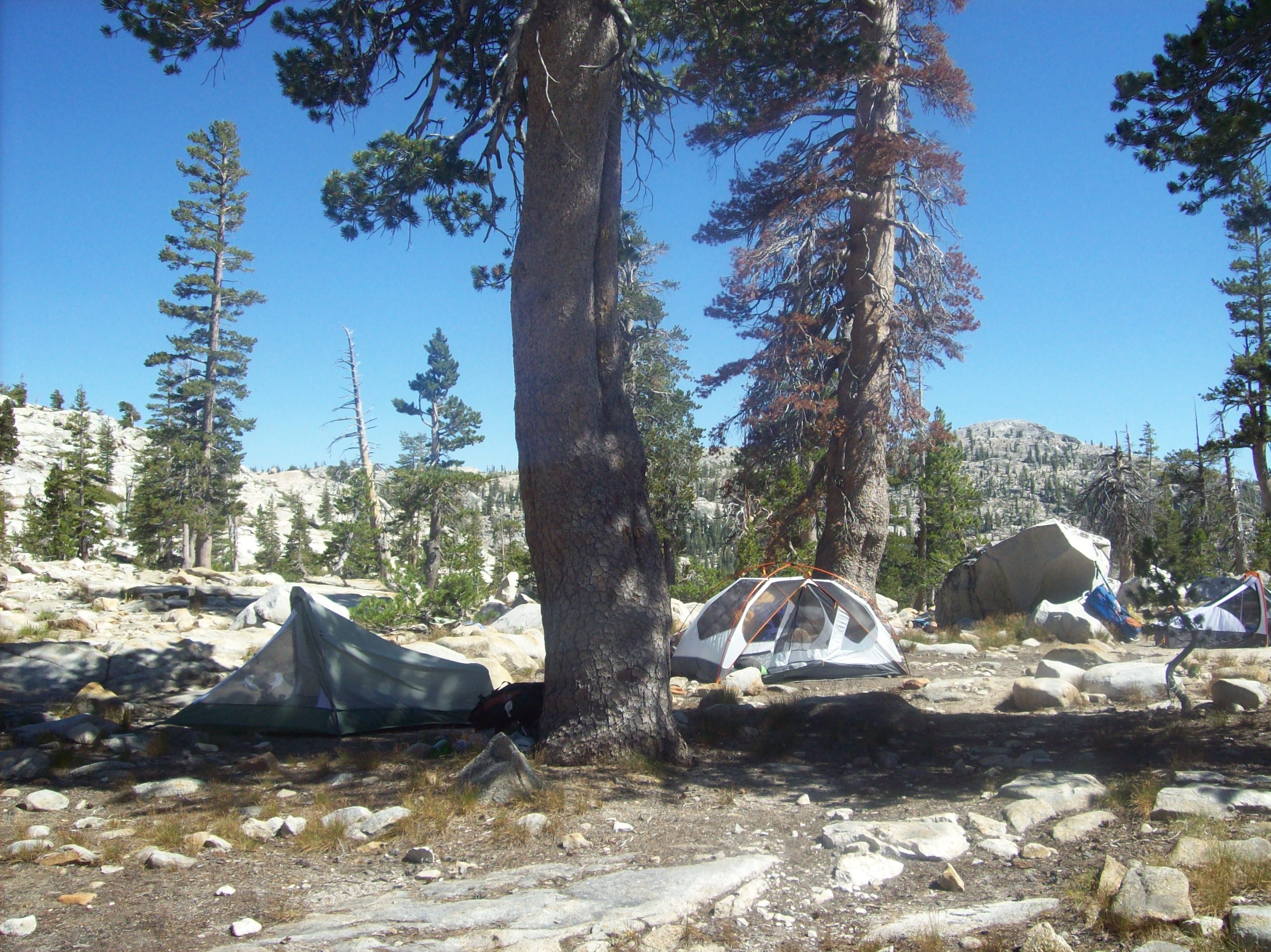
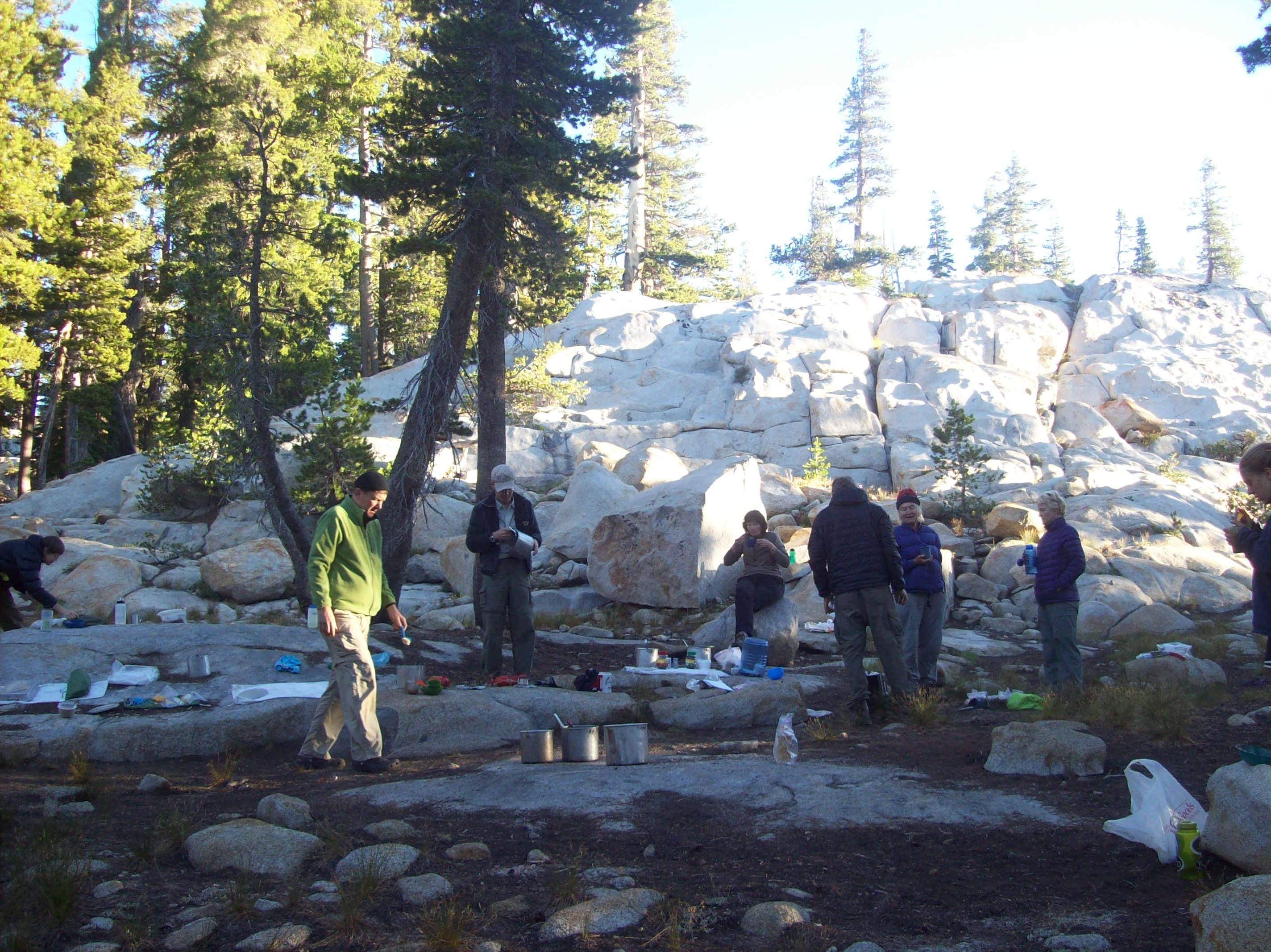
With its plentiful campsites, several small beaches and its clear, blue water, Gem Lake is a popular destination; and while we found the lake idyllic, others did too. Their tents hidden behind boulders and lodgepole pines, we caught an occasional flash of red or green and heard swimmers yell as they dove and swam, a dog barking excitedly.

Electric blue fireflies flitted around us as we relaxed on the warm rocks, talking and reading.

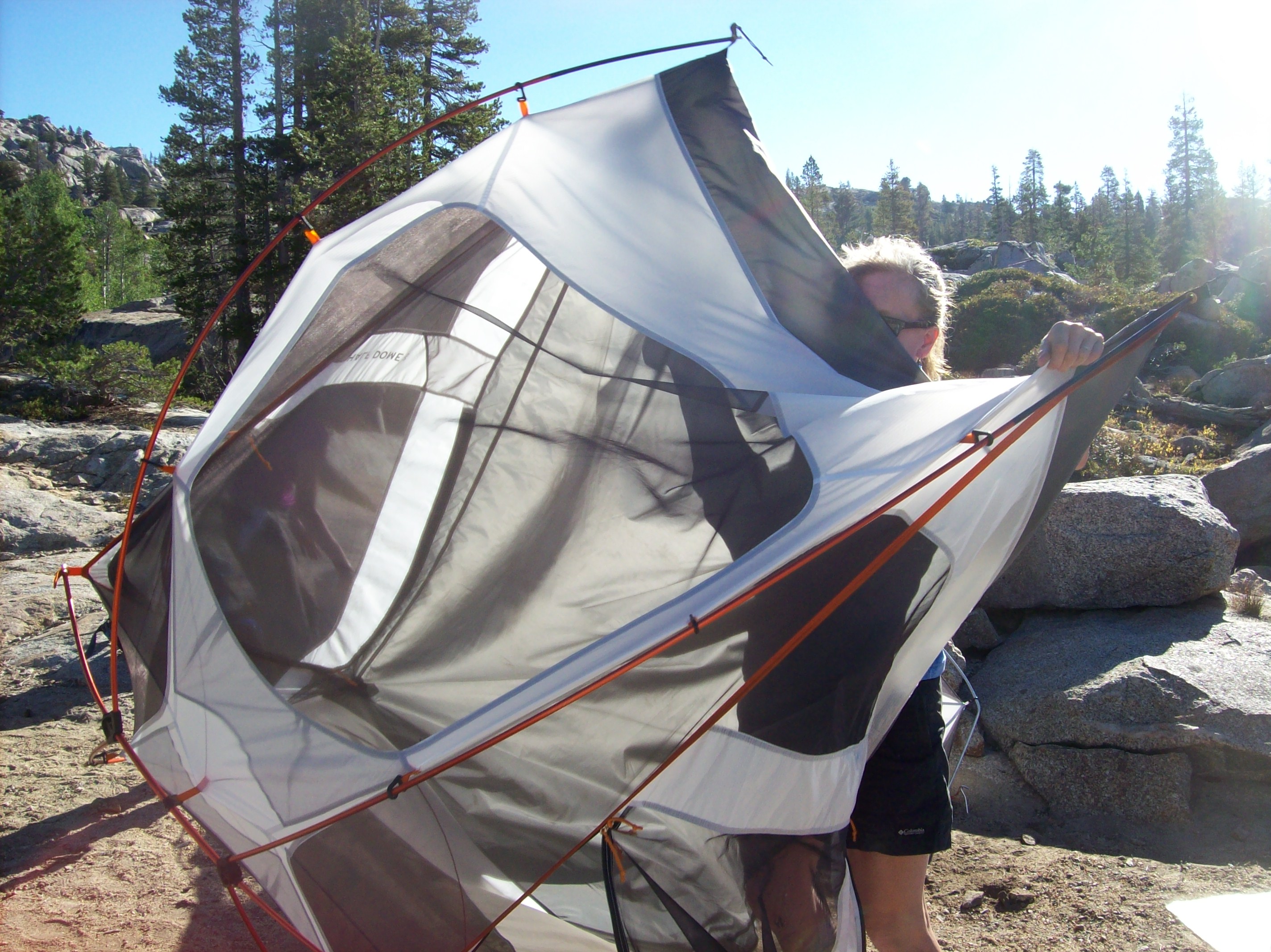
We slept without a rain fly that night and gazed at the stars through the screen of our tent.

From Crabtree Camp to Lily Pad Lake

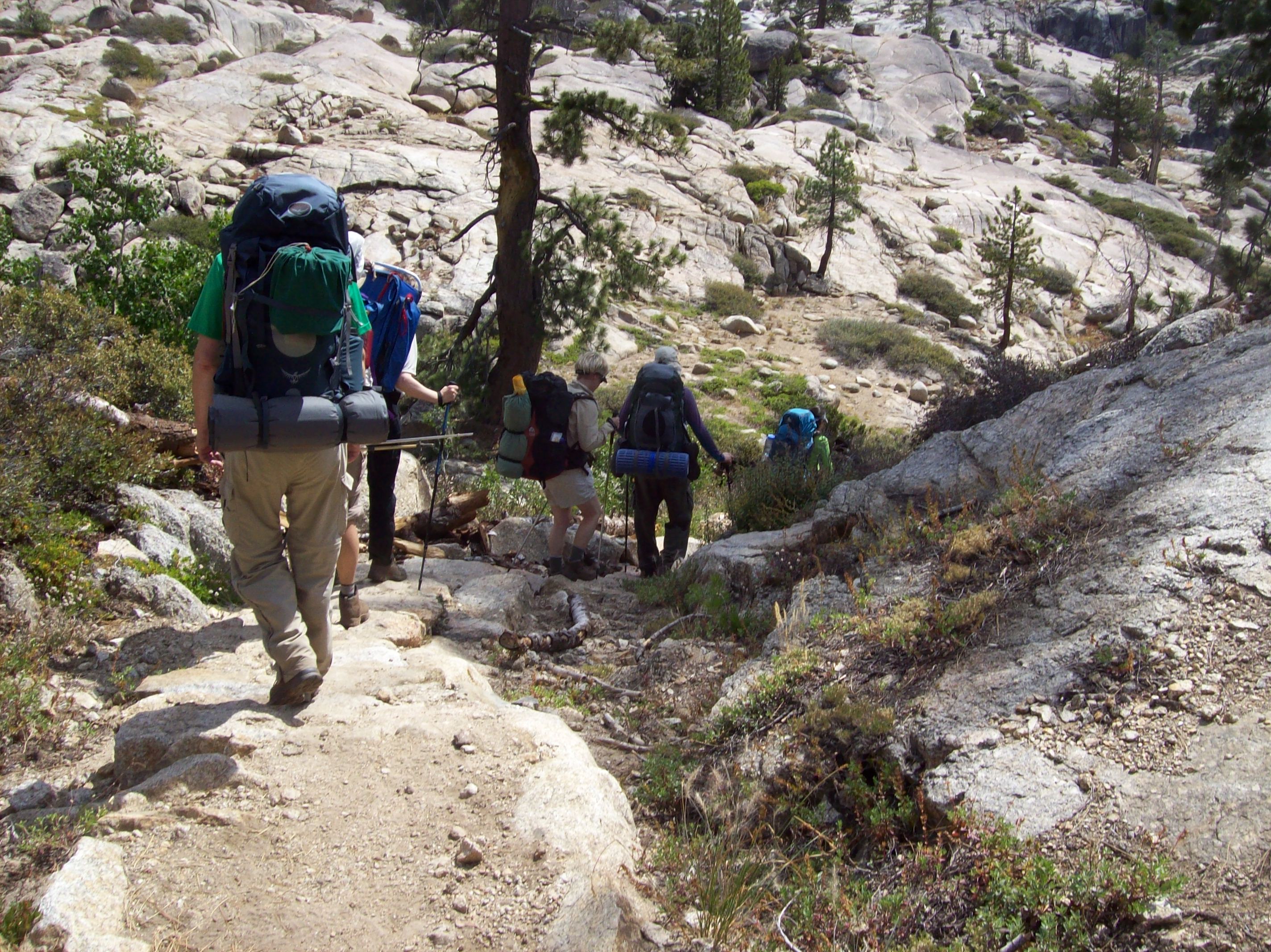
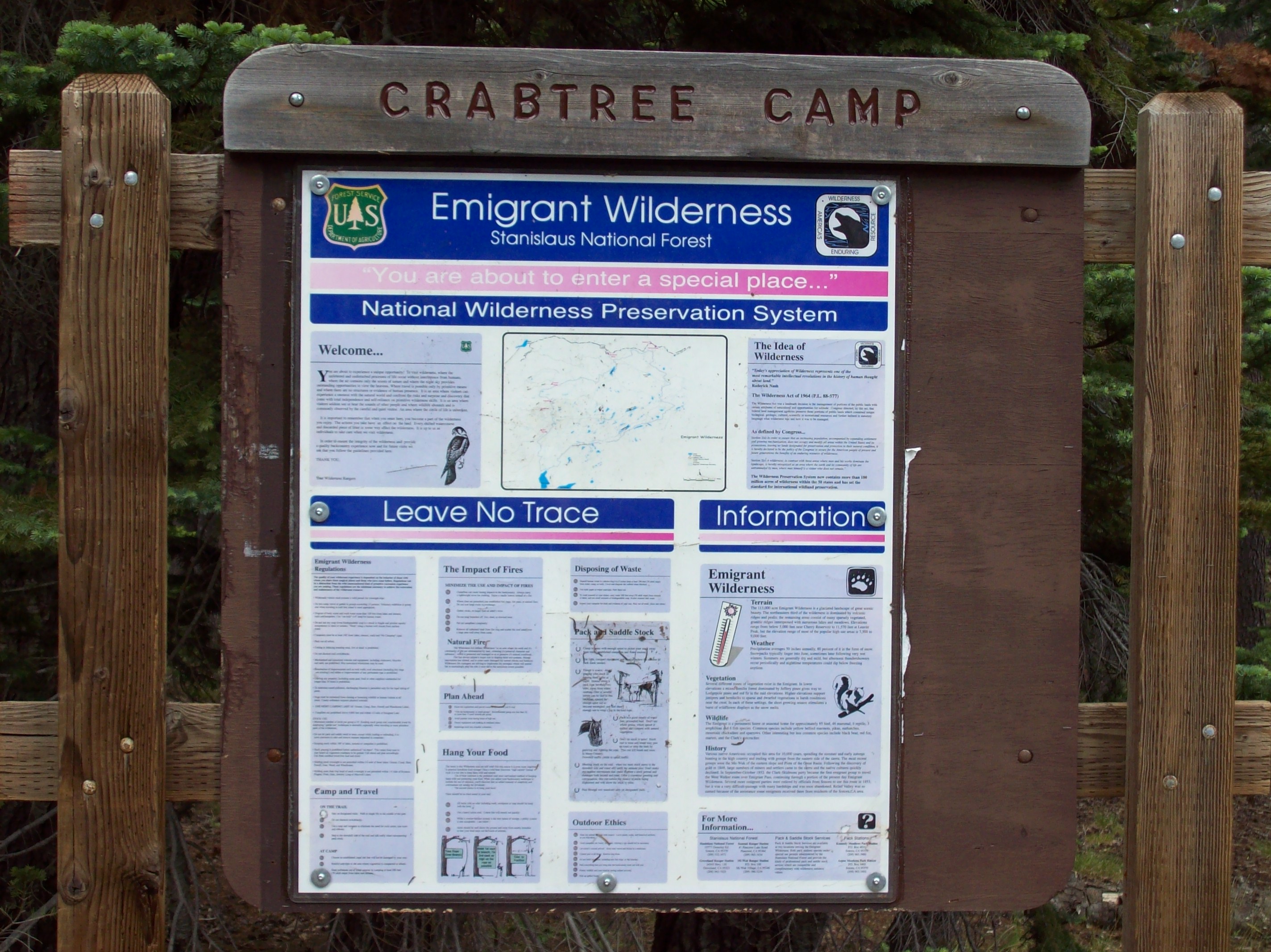
With our 45-pound packs on our backs, we began our journey about 8:30 a.m. and set out on the Crabtree trail in the Stanislaus National Forest before entering the Emigrant Wilderness.

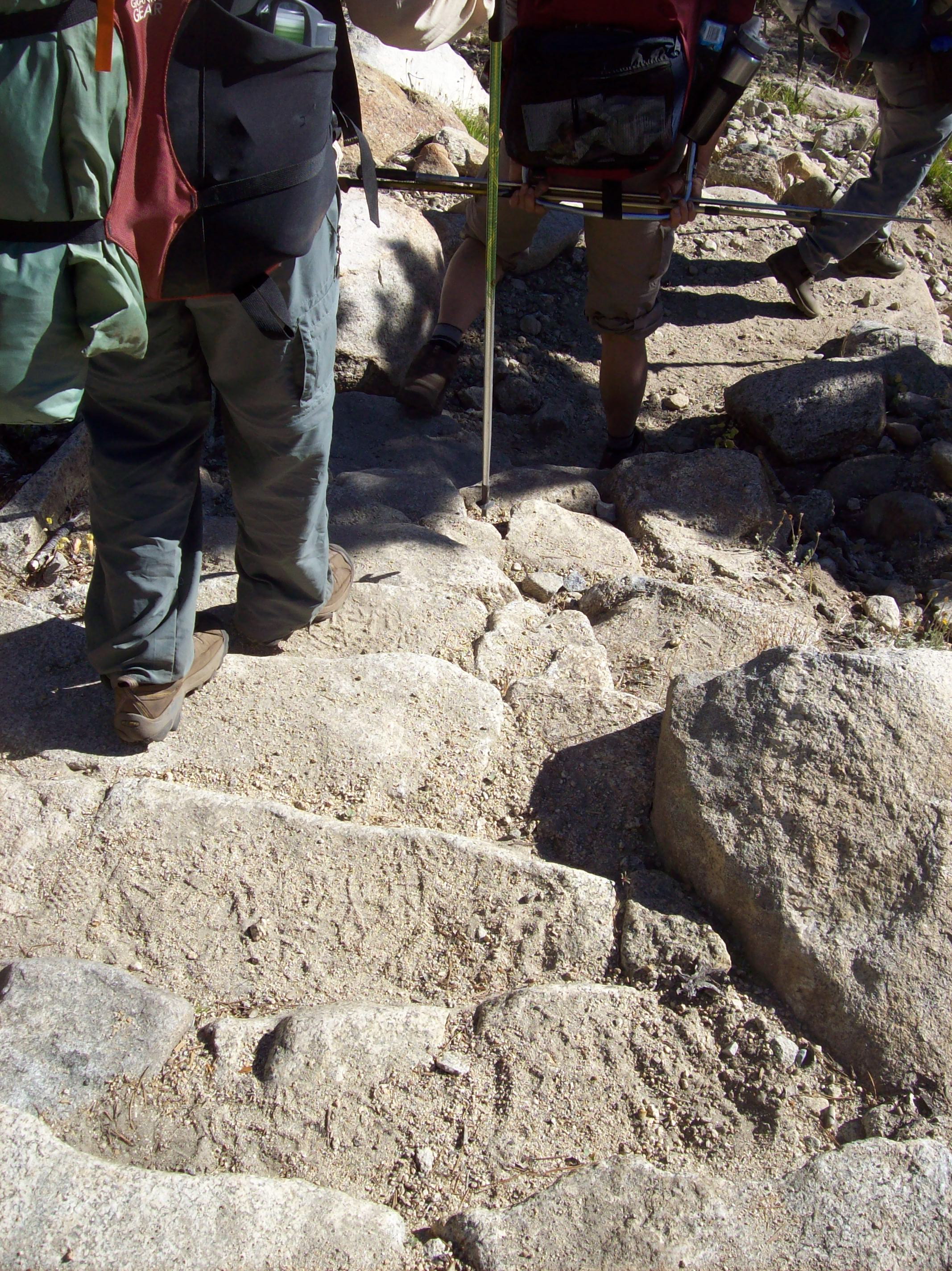
We climbed up and down steps made of granite, stopped briefly for a view of Camp Lake then up again and down a dusty switchback trail.

It was hot, our packs were heavy, and after a water and lunch break, our conversation stopped and we headed up again, each of us concentrating on the next step as our packs dug into our shoulders.

After 5 miles, we arrived at Lily Pad Lake, named for the abundance of lily pads on its surface.

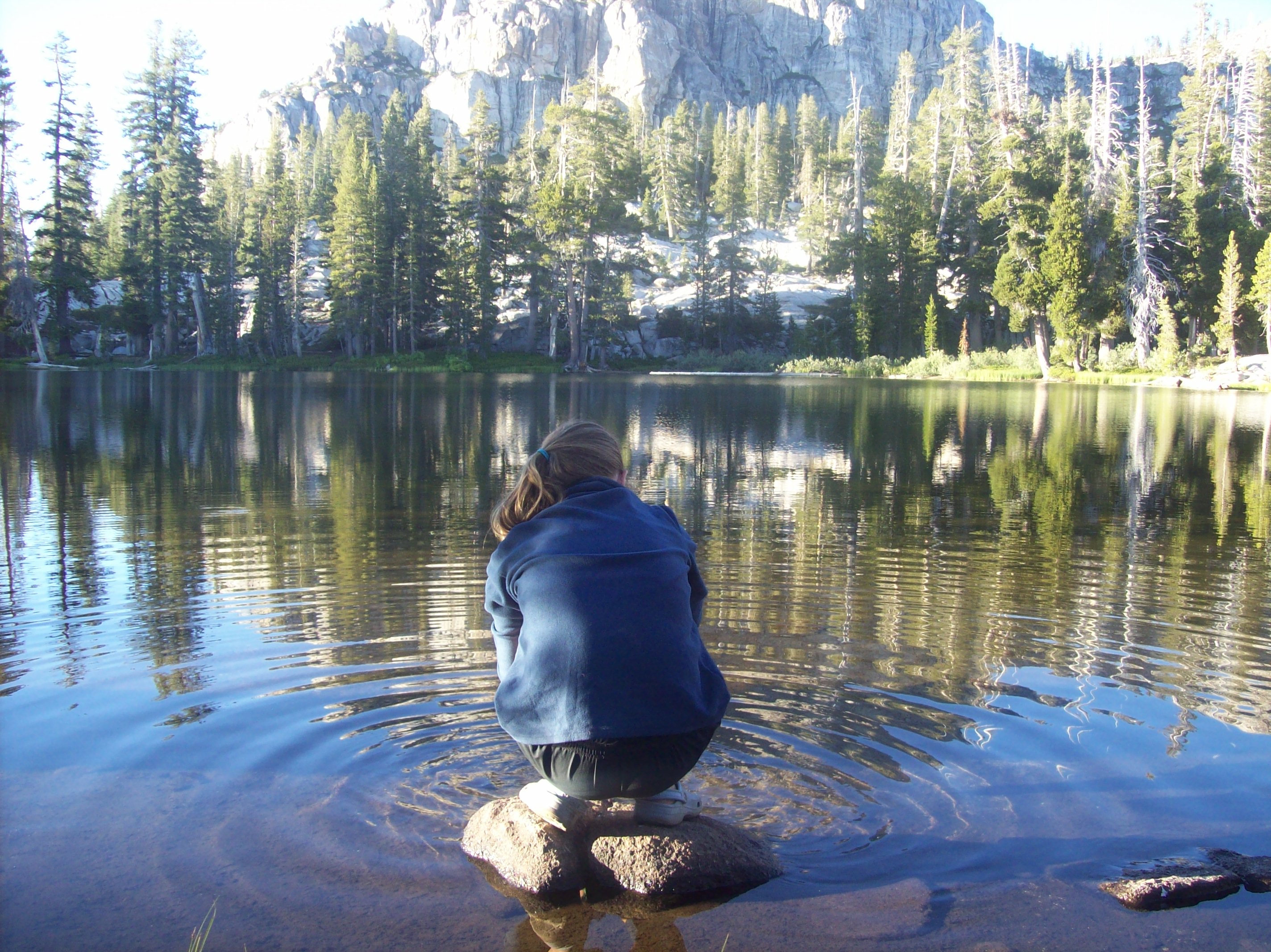
After setting up our tent, we grabbed our water bottles and headed for a large granite rock by the lake. We slid into the water, the lily pads preventing us from swimming but allowing us a small space to cool off.

Refreshed, we joined our group for a Leave No Trace presentation by a volunteer of the Emigrant Wilderness and Stanislaus National Forest. We learned that the seven Leave No Trace principles are: 1) Plan Ahead and Prepare; 2) Travel and Camp on Durable Surfaces; 3) Dispose of Waste Properly; 4) Leave What You Find; 5) Minimize Campfire Impacts; 6) Respect Wildlife; 7) Be Considerate of Other Visitors.

On a large flat rock against a pink sky, one of our fellow backpackers spontaneously led us in yoga exercises. We fell asleep that night tired but relaxed.

Among Strangers in the Emigrant Wilderness

Have you ever chosen to spend a week of your vacation with people you’ve never met? My teenage daughter and I signed up for a week long Sierra Club backpacking trip not knowing a soul.

We met two of our fellow backpackers at the BART station in Walnut Creek, California, where we agreed to meet in order to carpool to the trailhead. We met our leaders and the rest of the group at the Crabtree Camp in Stanislaus National Forest near Dodge Ridge Ski Area not too far from Sonora. Not only were there people from Northern and Southern California, there were backpackers from Alaska, Texas, Connecticut, and Massachusetts. We were teenagers and over age 65, men and women, married and single, backpacking for the first time or for the umpteenth time.

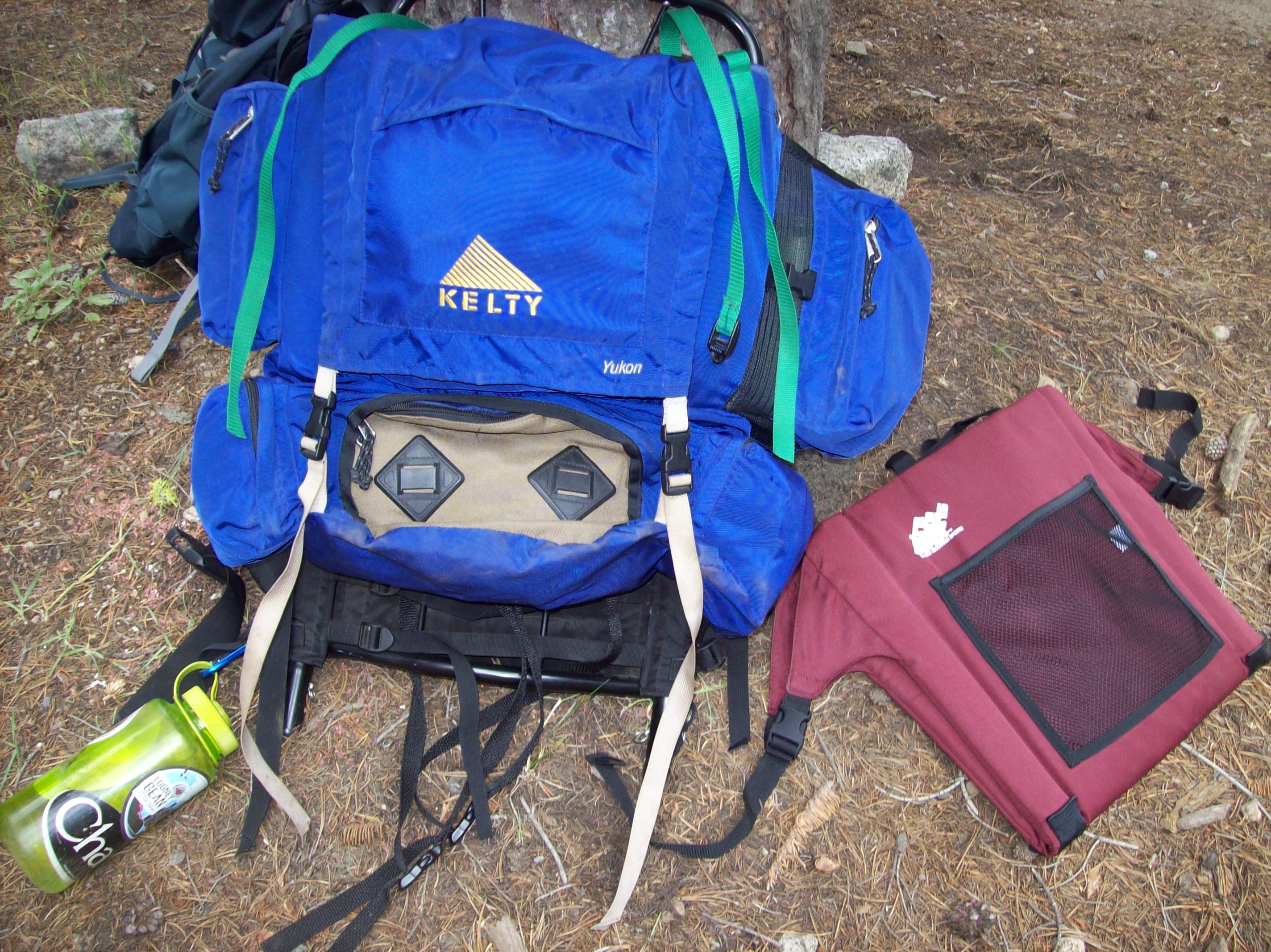
Once everyone arrived, it was time to weigh in. How much weight was I really going to carry on my back while hiking several miles at elevations of over 8,000 feet? After packing and repacking, adding, replacing and removing items, I did my best to keep the weight of my pack as low as I could. Our leader recommended we start with no more than 25 pounds, including pack, water, tent, first aid kit, and clothes for a week where temperatures could range from 25 to 85 degrees with rain or sun. Each of us would add a bear canister, containing at least 15 pounds of food and cooking utensils, to our pack.

One by one, we hooked our backpacks onto the portable scale hung on a pole next to the picnic table. In spite of my efforts (a fellow backpacker and I even split a book in half to share the weight), my pack weighed a hefty 28 pounds.

That night we ate burritos and chatted around our only campfire of the week. We studied the map and shared experiences before heading to our tents for the night, ready to begin backpacking the following morning.

Gluten-Free Backpacking

When my son and husband signed up for a Boy Scout backpacking trip in the Eastern Sierras, I was determined to find an equally exciting adventure for my daughter and me. And I did, without much searching. I was surprised to find a week-long gluten-free beginner’s backpacking trip offered by the Sierra Club in the Emigrant Wilderness just north of Yosemite. Since my daughter is gluten free and a beginner backpacker, and it had been over 15 years since I carried a pack, we signed up.

Over the next few months, our leader changed from a woman with celiac disease to a woman who does NOT eat gluten free, and the trip description changed to a beginner’s backpacking trip.”   We were given the option to opt out of the trip but were assured that my daughter and another backpacker would still eat gluten free, and they did.

From burritos to quinoa to pasta with pesto or sundried tomatoes to lentils and rice, we all ate well. We ate granola, oatmeal, and scrambled eggs for breakfast; tuna, peanut butter and jelly, and cheese and crackers for lunch. At breakfast and lunch, while the rest of us ate cereal, crackers, tortillas, and pita bread containing wheat, my daughter ate gluten-free substitutes. Dinners were gluten free for all.

The trip was great, she was never sick, we were introduced to a few new gluten-free products, and the rest of our 11-member group learned a lot about eating gluten free and preventing cross contamination between wheat products and gluten-free ones.


Seaweed and Lobsters

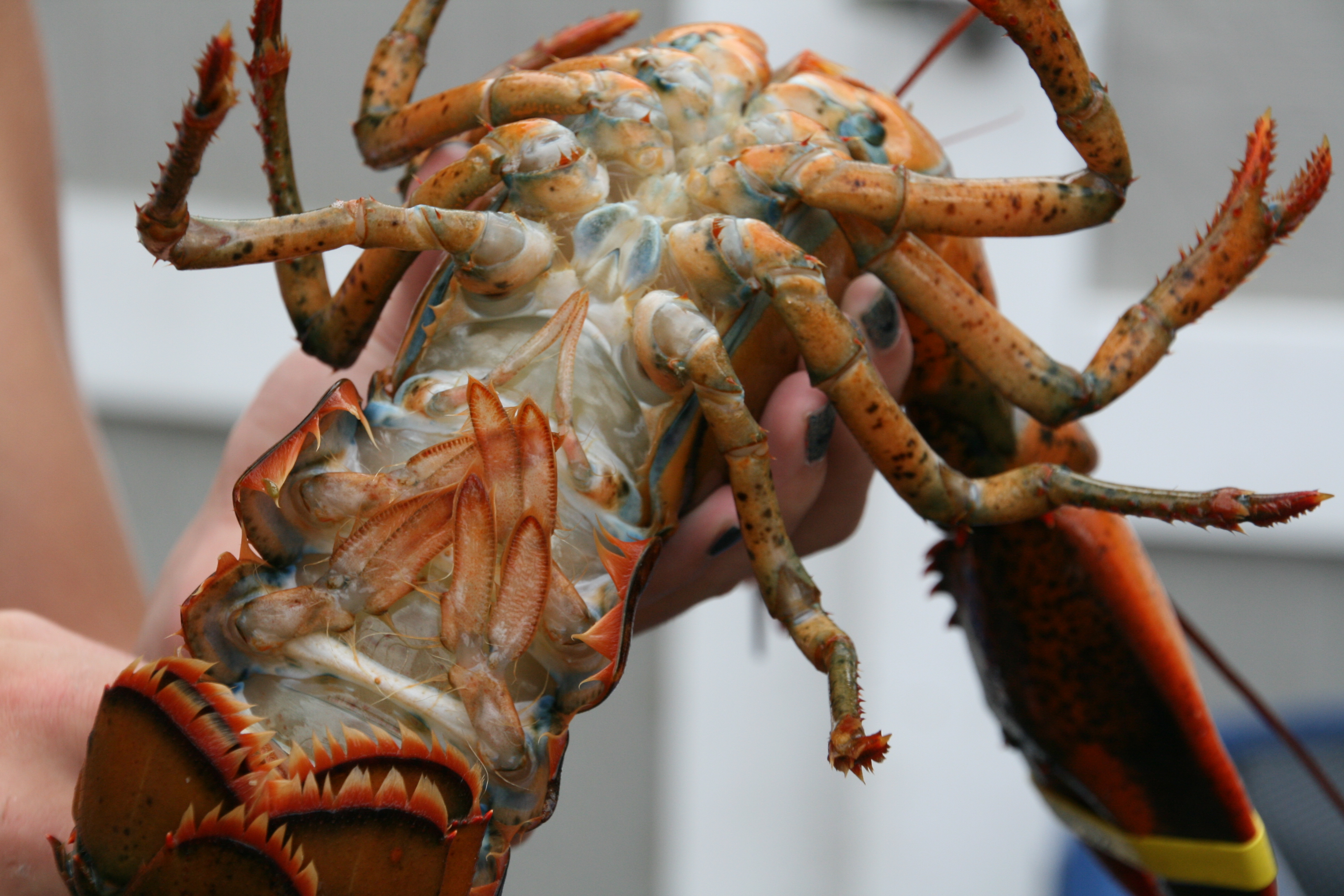
Have you ever been to a New England clambake? Not just a lobster boil or a barbeque, but a real clambake where lobsters and clams are steamed by seaweed sitting on very hot rocks. In case you haven’t been lucky enough to have the experience, here’s how it works:

First you dig a big pit.

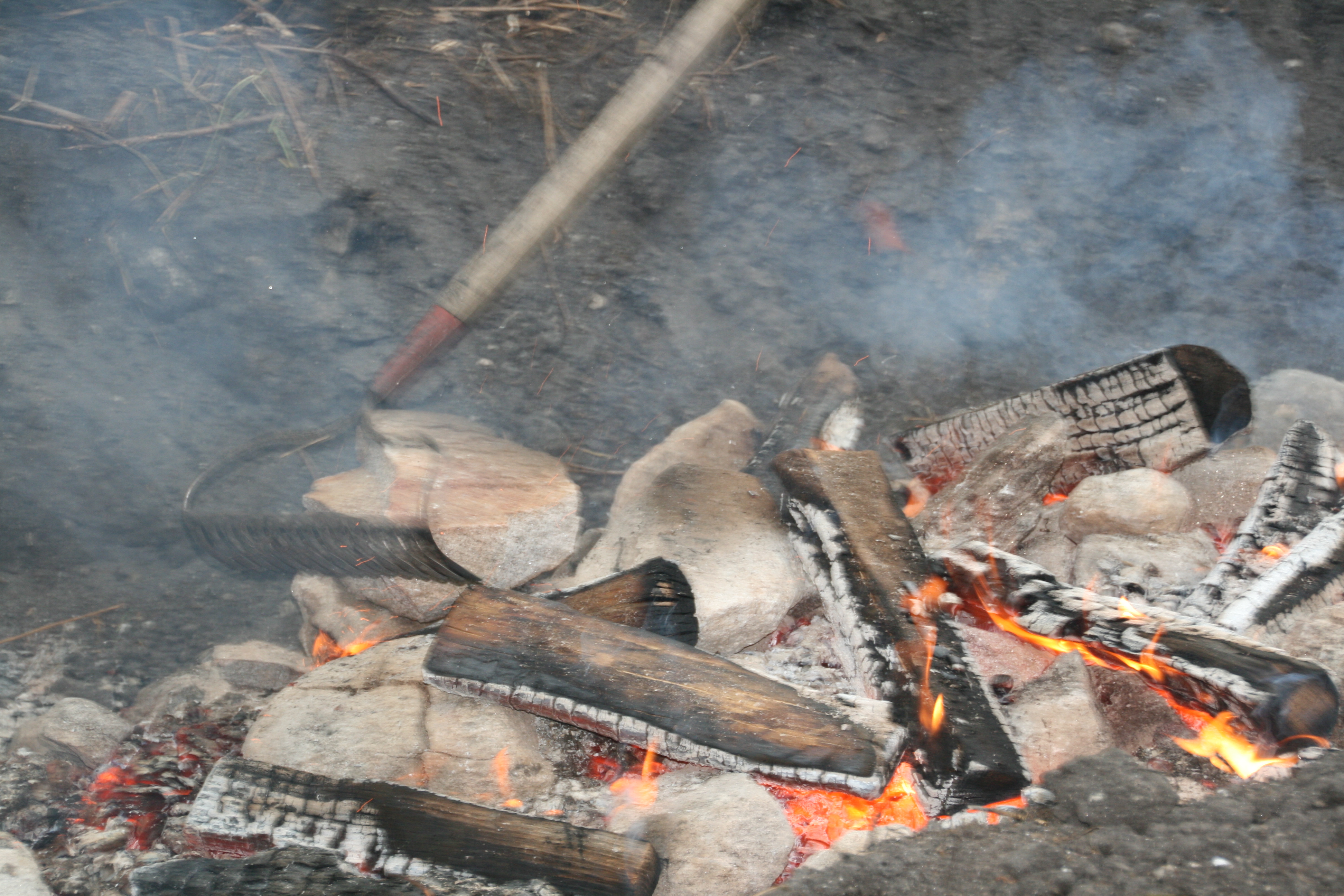
Next you add some large rocks, about the size of a basketball, along the bottom of the pit.  Then place wood on top of the rocks and  start a fire. The idea is to heat up the rocks so they are very, very hot.  This means the fire has to burn for several hours.

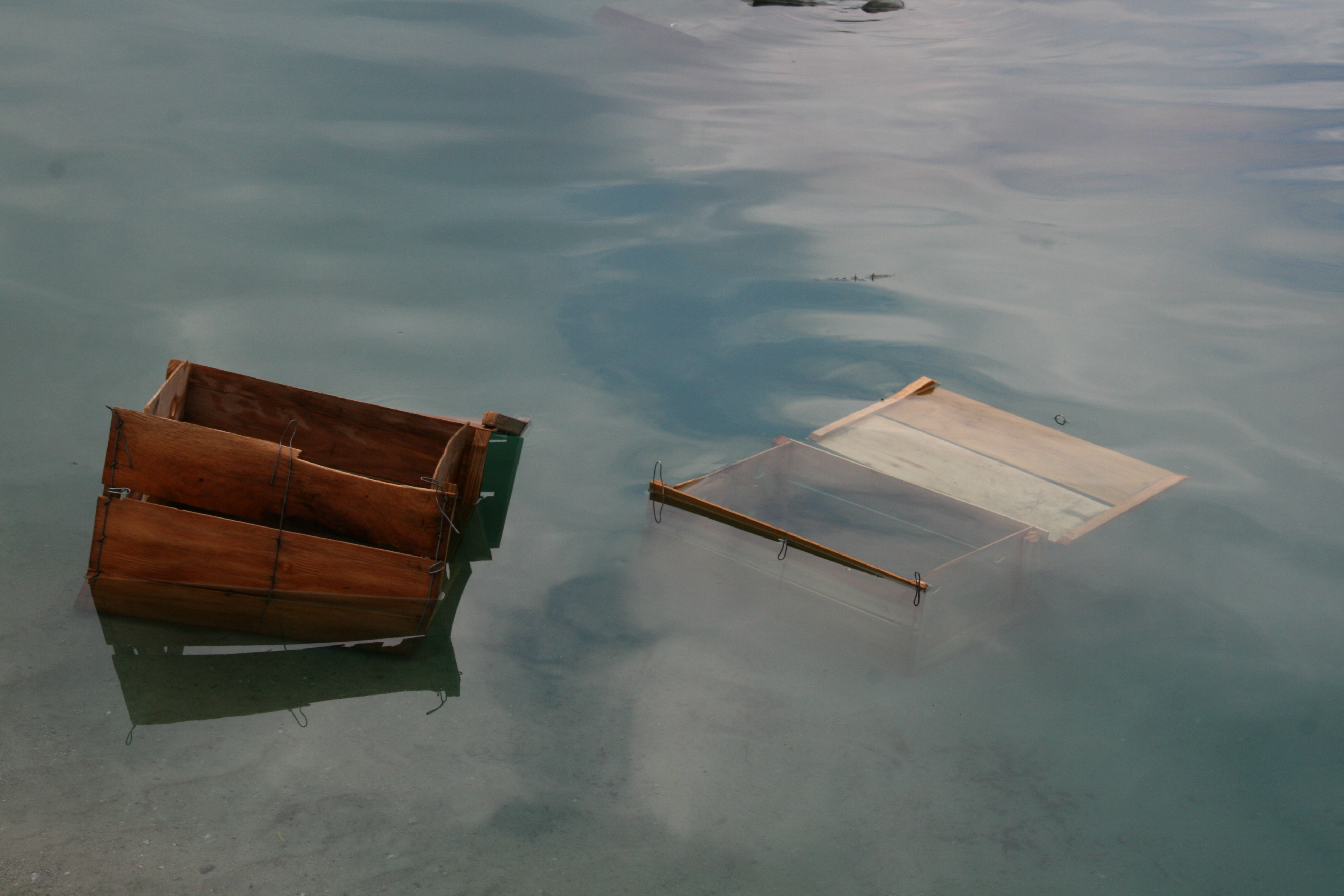
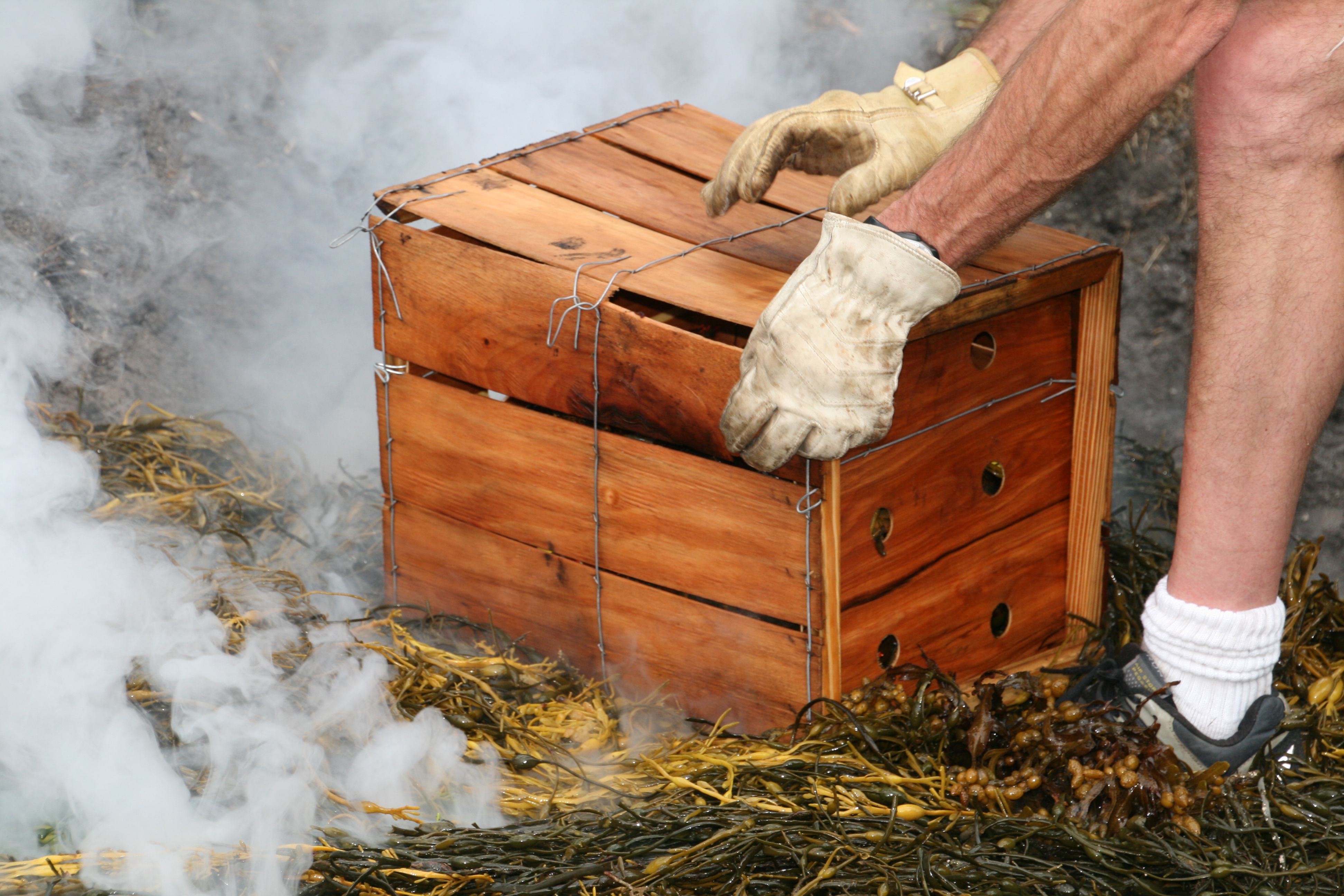
Meanwhile, soak the wooden baskets which will contain the lobsters so they won’t burn.

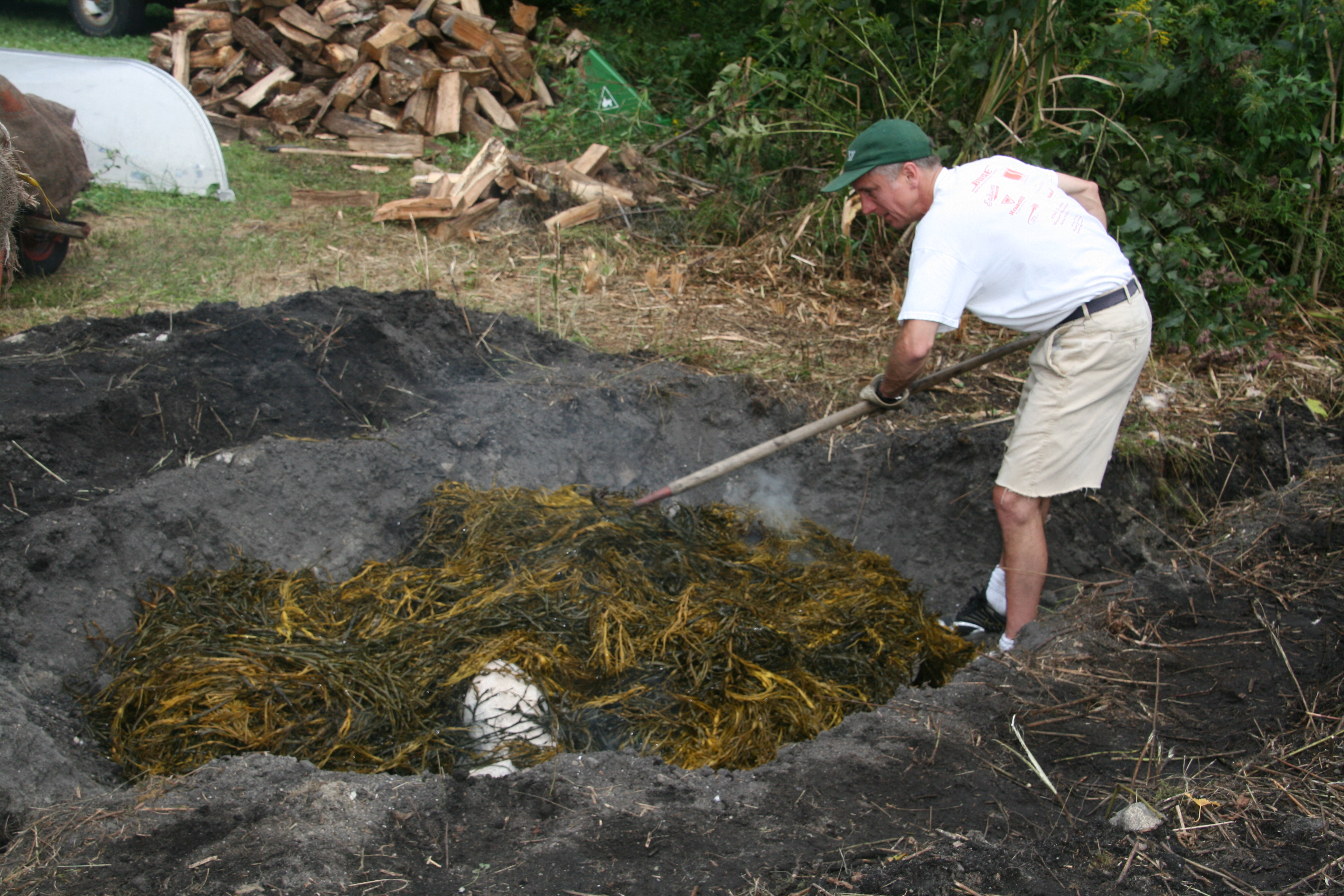
When the stones are good and hot, it’s time to start the cooking. Cover the entire pit with seaweed.

Add the live lobsters and steamers to the water soaked baskets and set them in the pit on top of the seaweed. Add potatoes or corn on the cob (in their husks) if desired, though in our experience, corn often takes on the flavor of the seaweed.

Cover the seaweed with one or two tarps to keep in the steam. And start counting.

According to our experts, it takes 47 minutes and 30 seconds to steam the lobsters.

Carefully, remove the tarps and uncover the baskets. The seafood is now ready to eat.

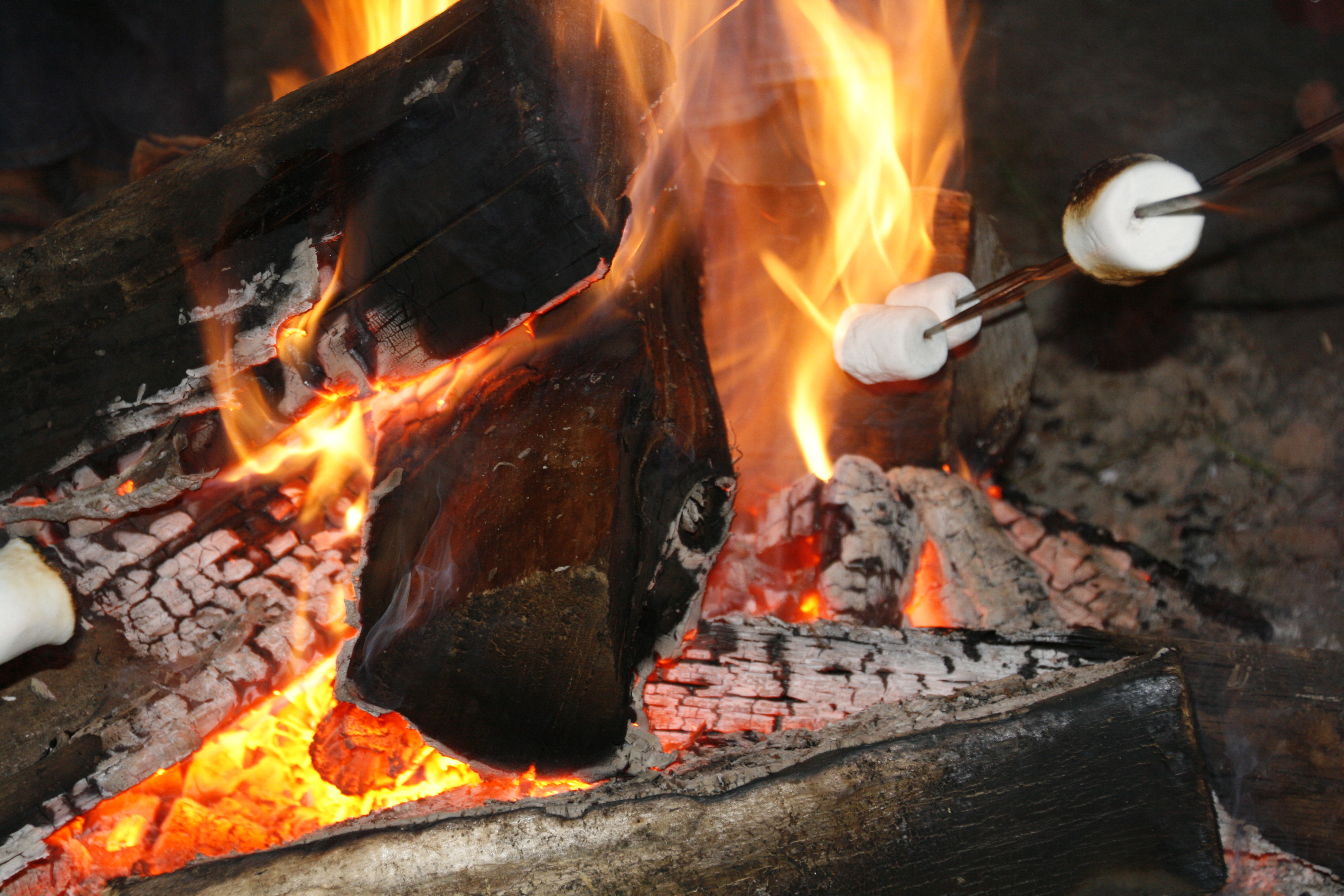
Be sure to serve the lobsters and steamers with melted butter, lemon, crackers and picks. Additional food items often include: potatoes, corn on the cob, clam chowder, corn bread, cole slaw or green salad. Serve with the beverage of your choice. For dessert, we like to follow our lobster with s’mores over a separate campfire (not over the pit!).

Enjoy!

Up, up, and away!

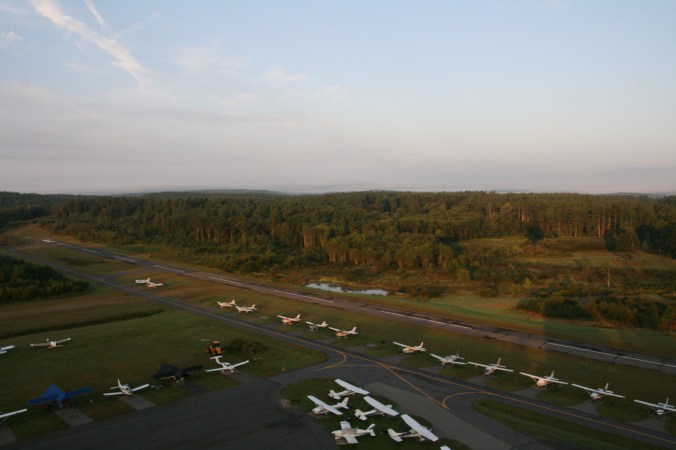
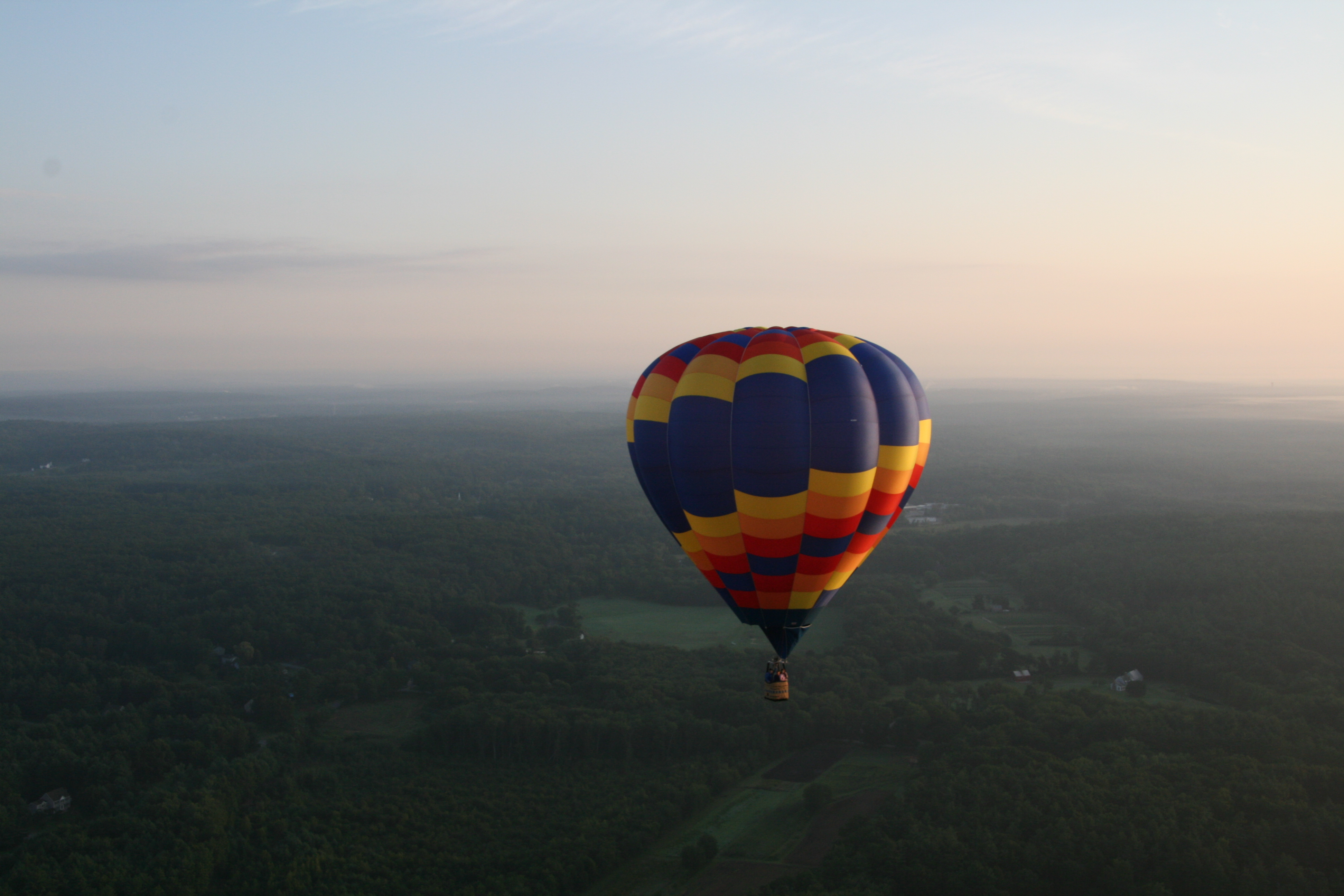
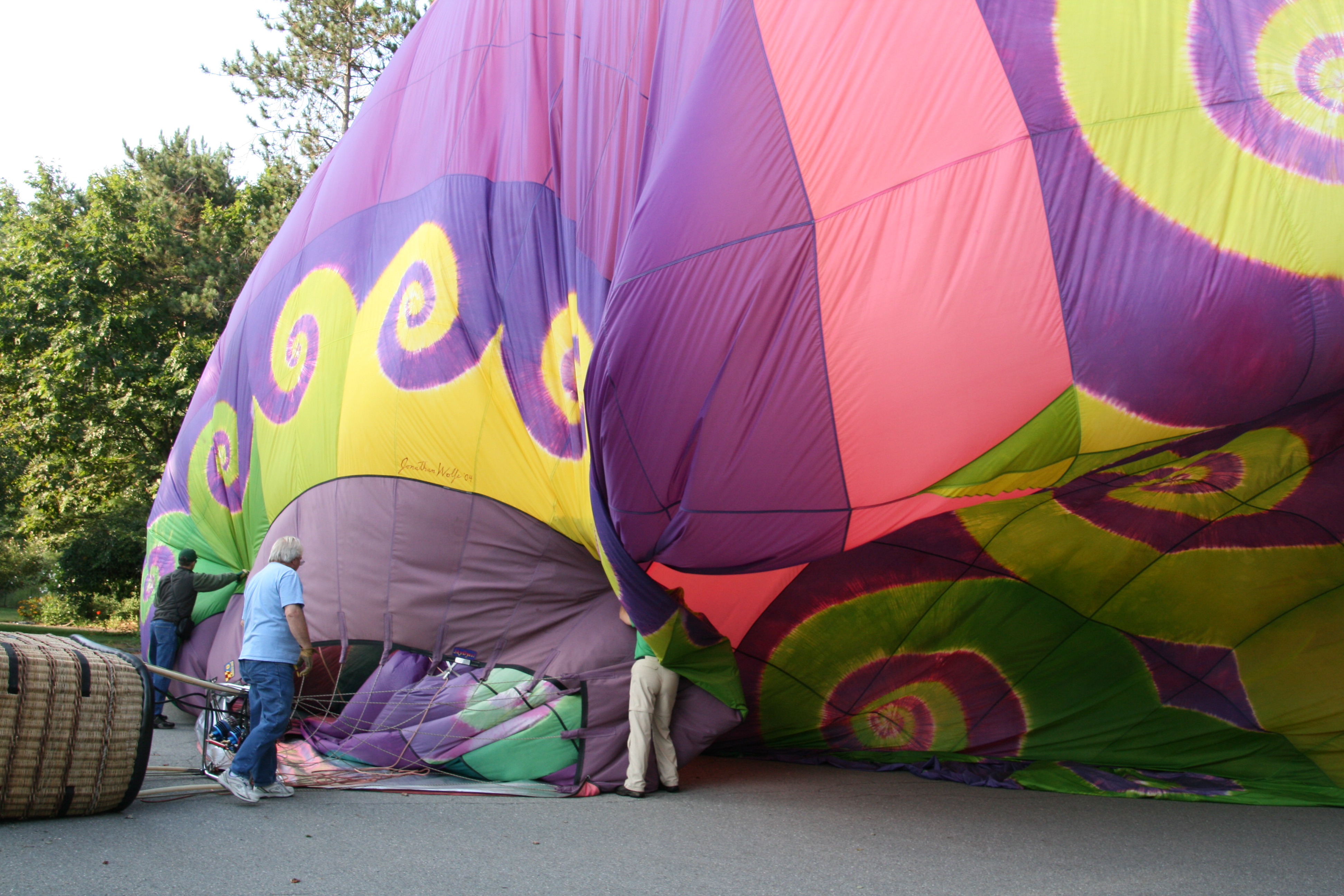
It’s 6 a.m. on a Sunday the end of August, and I am in one of two hot air balloons rising up over a small town in Massachusetts with the pilot, Rudi of Dragon Fire Balloon Adventures, my husband, and my teenage son.  We are in Lucy, one of Rudi’s two hot air balloons, this one featuring a tie dye design and formally called Lucy in the Sky with Diamonds.
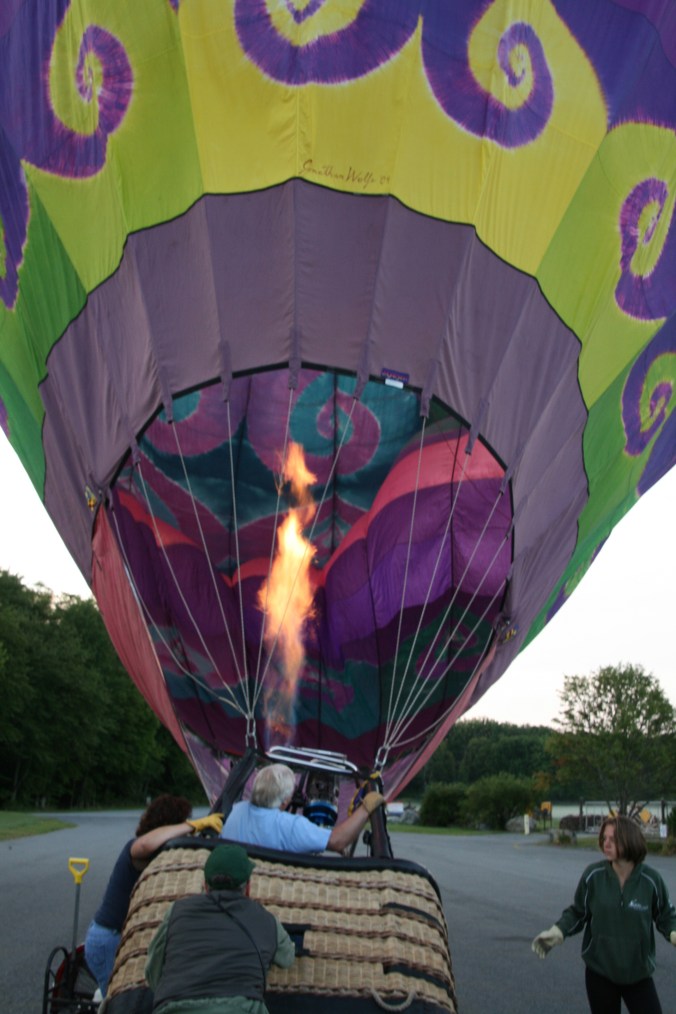
 

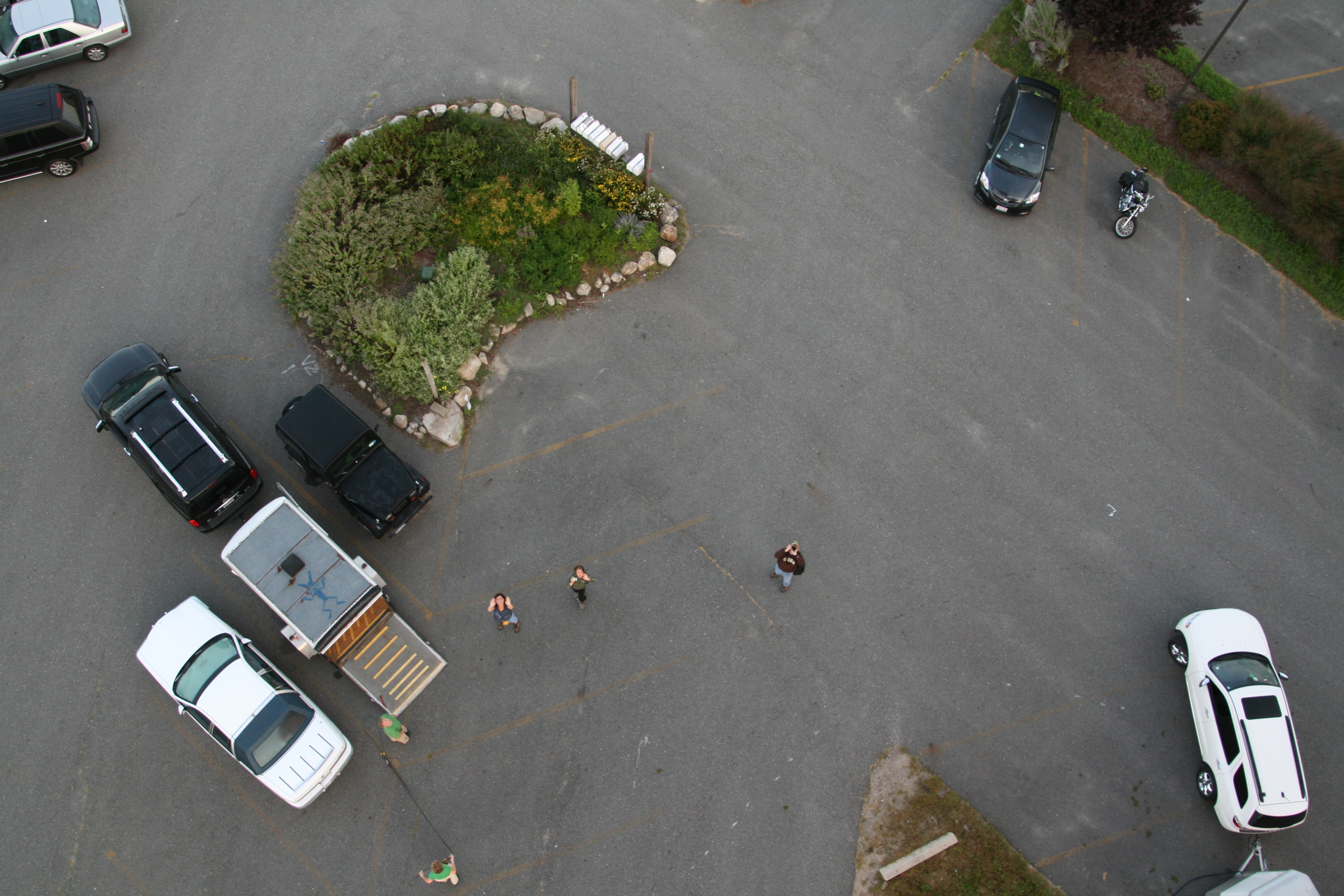
The sun has just risen; the air is cool and still. So still, in fact, that at first we don’t go anywhere except straight up. The cars and planes and people get smaller and smaller as we rise to about 900 feet.

We can see beyond the airport to more trees and houses and hills in the distance. We watch as the other balloon moves further west while we hang out above the runway.

It is peaceful up here in the sky. There is no sound except for the noise of the burner and the occasional sounds of our voices.

Rudi expertly controls the hot air flow and lets us down a little, hoping to catch a breeze at a different altitude to move us away from the airport and beyond, and slowly we do move, now just above the trees and telephone wires, now just above the houses.

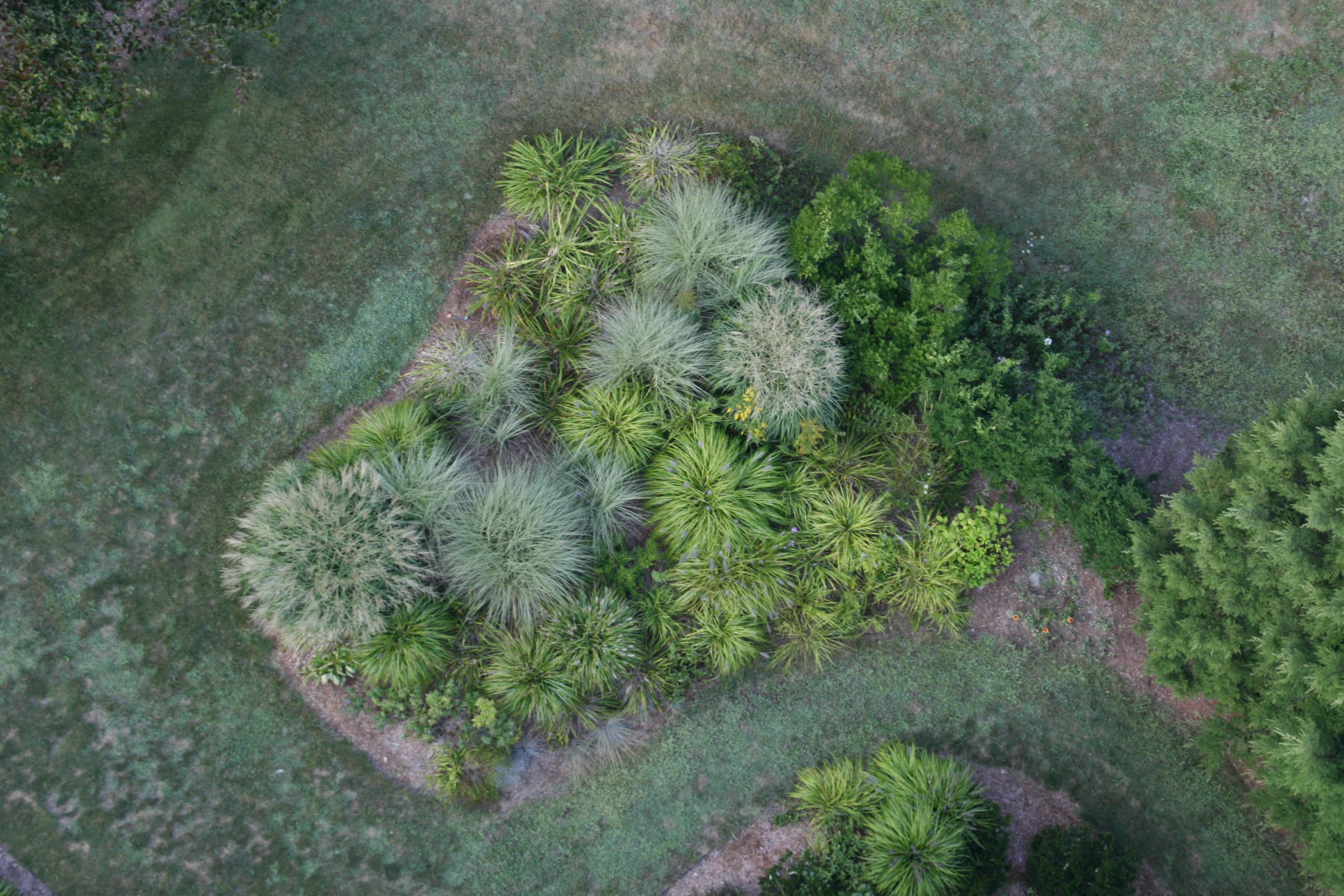
We check out the landscaping designs, the decks and patios and discover what’s hidden behind some of those houses.

We watch our reflection in a pond full of lilypads and touch down on a nearby road to change passengers. While the crew holds the basket, our teenage son gets out and our teenage daughter gets in.

And up we go again, followed by the chase vehicles, as we travel not as high but further with the wind.

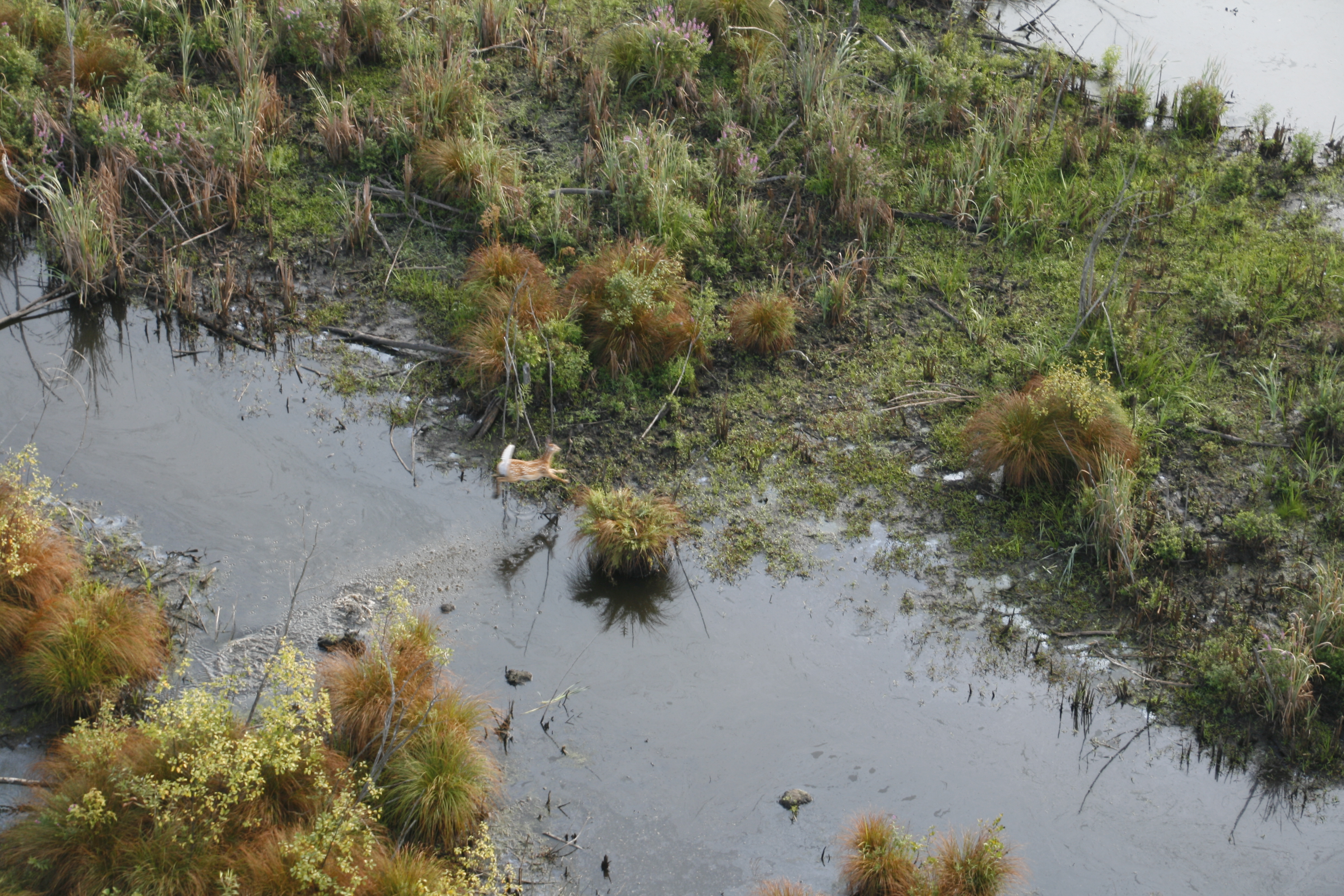
We see deer, startled by the inconsistent noise of the fire’s hot air.

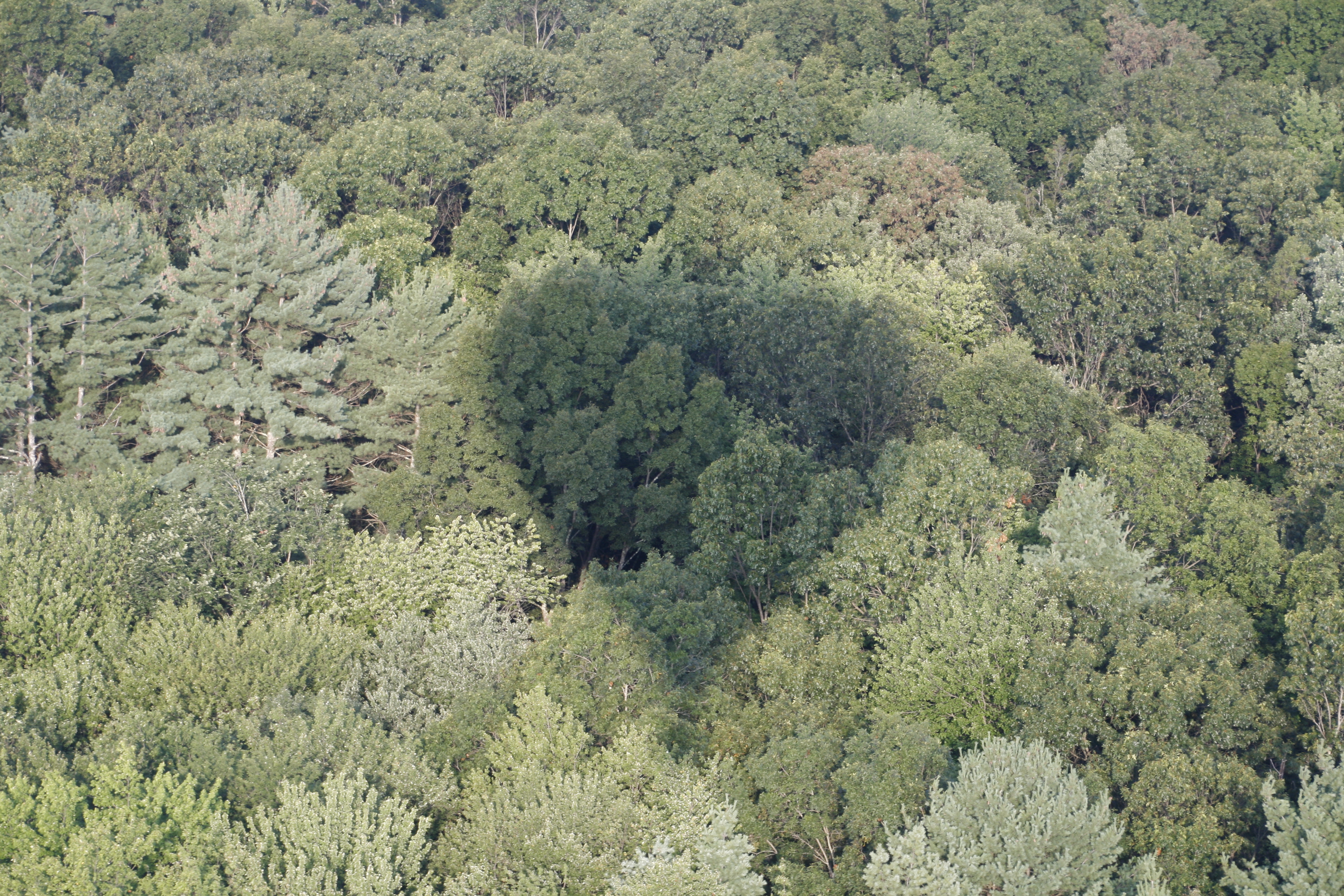
We pass over conservation land and farm fields and more houses, finally landing in someone’s front yard at the end of a cul-de-sac.
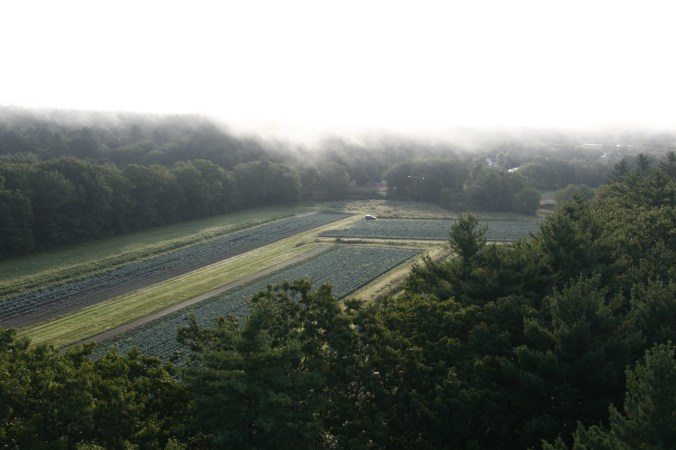
As we wait for the chase vehicles to arrive with our crew, we notice that no one is home. The pool is covered, the shutters closed. They will miss the thrill of a hot air balloon in their front yard and the complimentary bottle of champagne.

We are watched by the neighbors as we help the crew pack up the balloon, quickly and efficiently, and head back to the airport where we join the other balloon’s crew and passengers for our own champagne.

To learn more about hot air balloons and how they work, click here.

Trip taken August 2012.